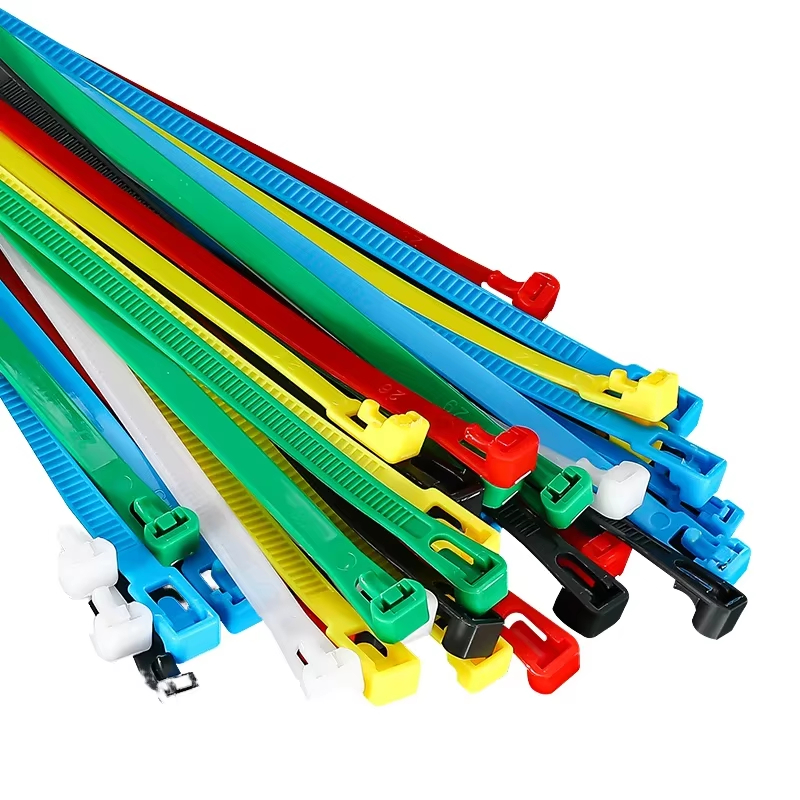
This PA12 GF30 material guide explains when glass-filled PA12 is useful, how it compares with PA6 GF30 and PA66 GF30, and what buyers should check before molding or sourcing parts.
What Is PA12 GF30?
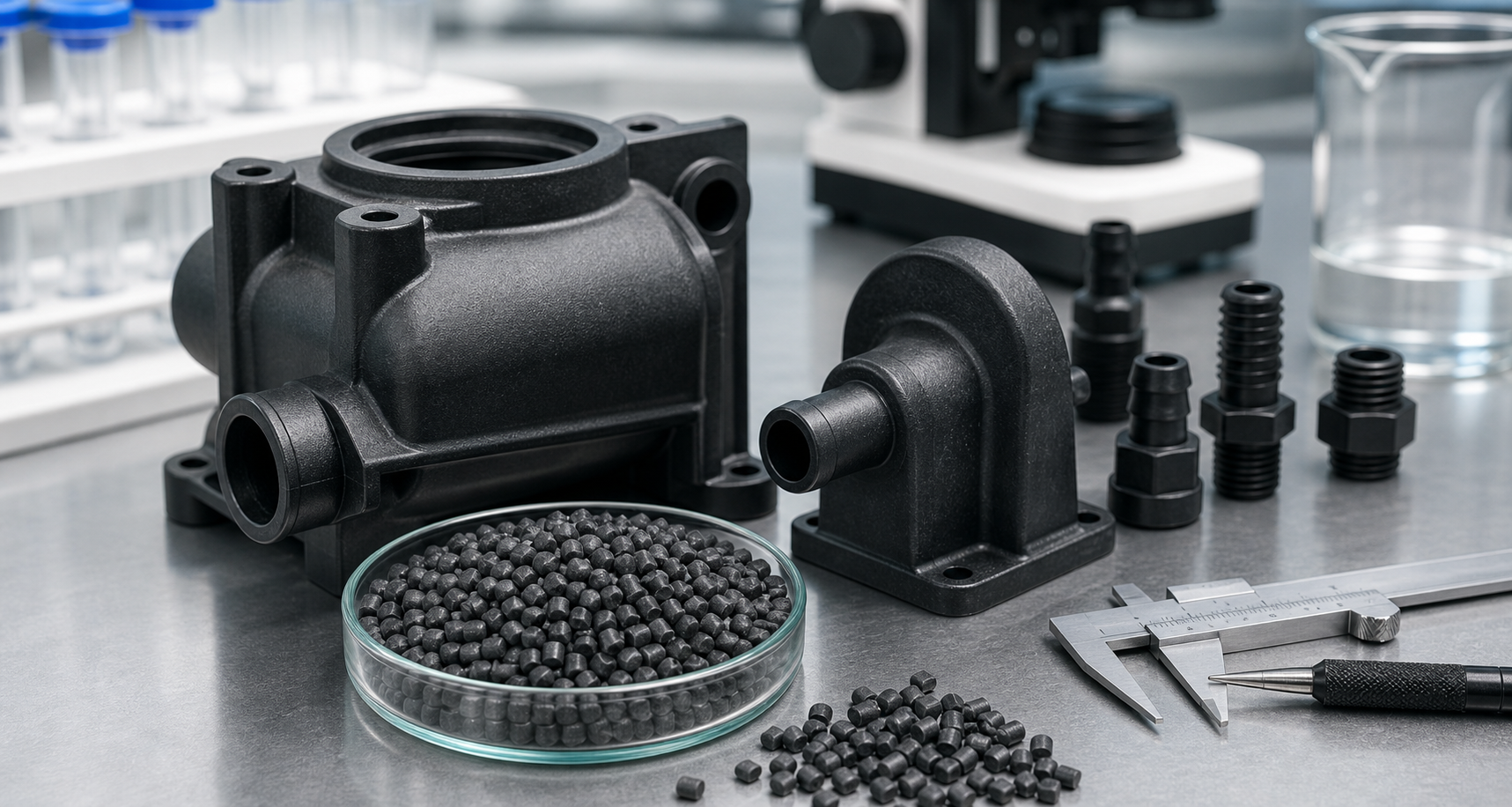
PA12 GF30 is a polyamide 12 material reinforced with about 30% glass fiber. It combines the lower moisture absorption of PA12 with the improved stiffness and strength of glass reinforcement.
Compared with unfilled PA12, PA12 GF30 is more rigid and dimensionally stable under load. Compared with many PA6 and PA66 grades, it can offer better moisture-related dimensional stability, although the right material still depends on temperature, load, chemical exposure and cost.
PA12 GF30 Properties at a Glance
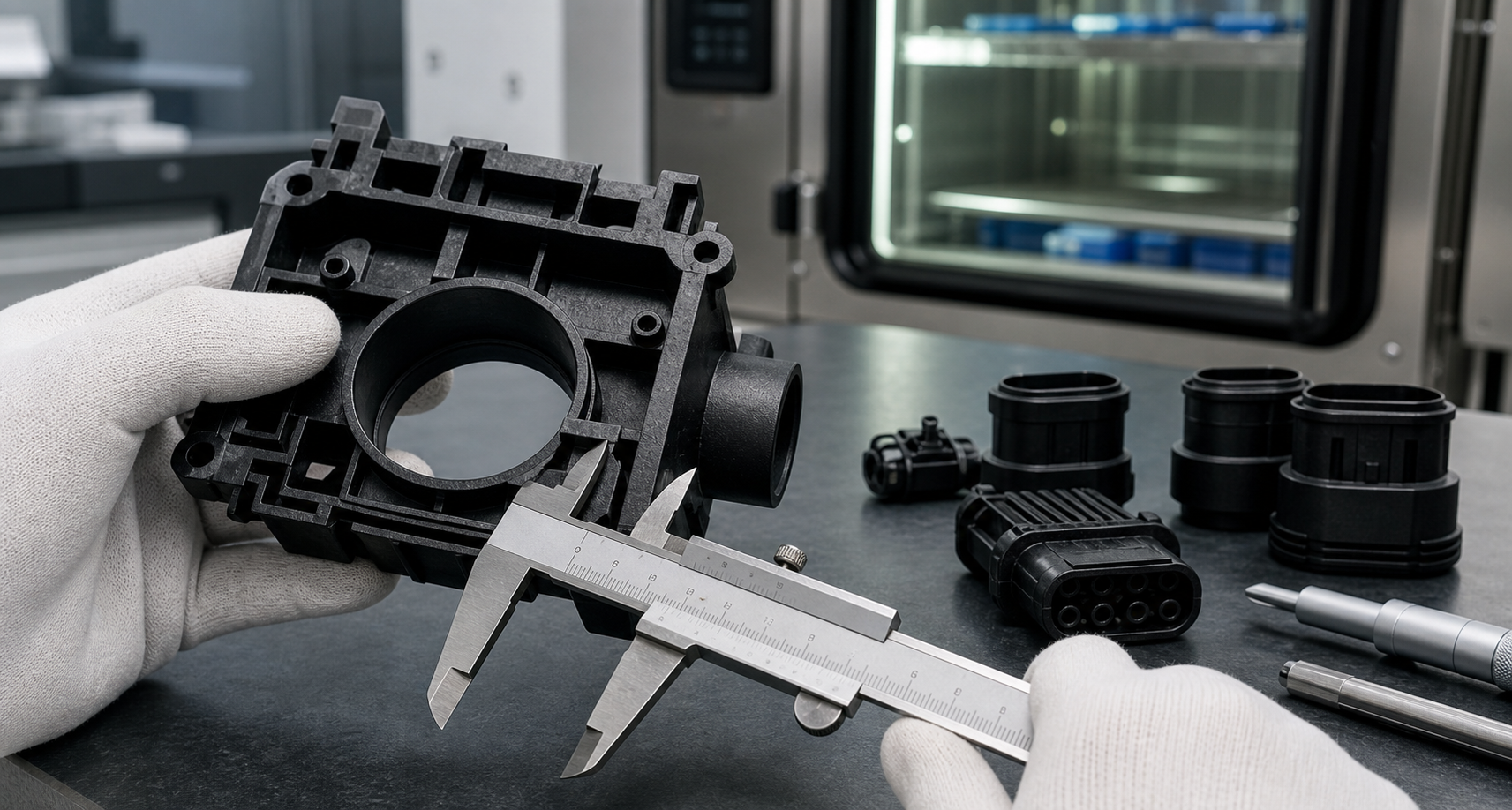
| Property area | Practical meaning | Note de conception |
|---|---|---|
| Rigidité | Higher than unfilled PA12 | Useful for brackets, housings and supports |
| Comportement face à l'humidité | Lower absorption than PA6/PA66 | Helps precision fit in humid environments |
| Résistance chimique | Often good against oils and fuels | Confirm exact chemical compatibility |
| Rétrécissement | Lower than unfilled nylon but directional | Gate location and fiber orientation matter |
| Comportement en cas de choc | More rigid but less ductile | Avoid sharp corners and fragile snap features |
Why Engineers Choose PA12 GF30
PA12 GF30 is often used when dimensional stability is more important than the lowest material cost. It is a good candidate for precision housings, brackets, connectors, fluid-handling parts, lightweight structural parts and industrial components exposed to humidity.
The glass fiber reinforcement helps the part resist deformation. The PA12 base resin helps reduce moisture-related dimensional movement compared with PA6 or PA66.
PA12 GF30 vs PA6 GF30 vs PA66 GF30
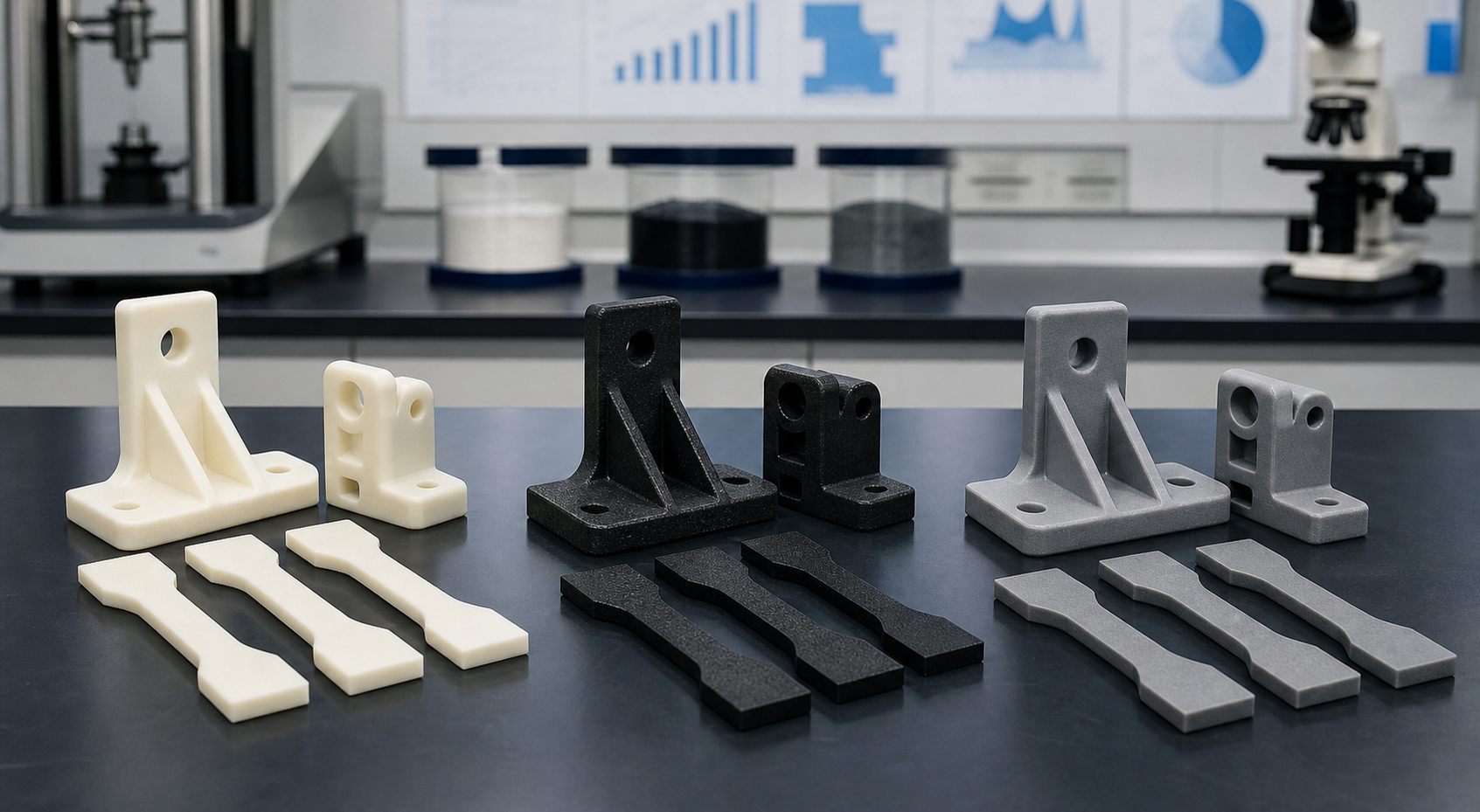
| Matériau | Main strength | Main limitation | Typical reason to choose it |
|---|---|---|---|
| PA12 GF30 | Moisture stability and chemical resistance | Higher cost, lower heat performance than some PA66 grades | Humid environments and precision fit |
| PA6 GF30 | Tough and cost-effective | Higher moisture absorption | General mechanical parts |
| PA66 GF30 | Heat resistance and stiffness | Moisture still affects dimensions | Higher-temperature structural parts |
PA12 GF30 is not simply better or worse than PA6 GF30 or PA66 GF30. It is a different balance. If the part sees humidity, fuel, oils or tight assembly fit, PA12 GF30 deserves attention.
Molding and Design Requirements
PA12 GF30 should be designed as a reinforced engineering plastic. Glass fibers affect flow, shrinkage, strength direction and surface appearance.
Important checks include:
- Drying conditions for the selected grade.
- Gate location relative to load direction.
- Wall thickness and rib balance.
- Draft angles for clean ejection.
- Steel and gate wear from glass fiber.
- Measurement condition after molding and conditioning.
Common PA12 GF30 Design Problems
| Problème | Why it happens | Prévention |
|---|---|---|
| Caractéristiques de rupture fragile | Glass fiber reduces ductility | Use larger radii and validate assembly strain |
| Déformation | Fiber orientation and uneven wall thickness | Balance wall sections and review gate position |
| Poor surface appearance | Fiber-rich flow fronts | Adjust gate, speed and surface expectations |
| Fit change after conditioning | Moisture and thermal expansion | Define inspection state and use-condition tolerance |
Best Applications for PA12 GF30
PA12 GF30 is a strong option for:
- Precision molded housings.
- Fluid system connectors.
- Lightweight structural brackets.
- Industrial parts exposed to humidity.
- Components where PA6 moisture absorption creates fit problems.
- Parts needing a balance of stiffness and chemical resistance.
Buyer Risks Before Approving PA12 GF30
- Choosing PA12-GF30 from low moisture uptake alone without checking temperature, creep, weld lines, or cost.
- Comparing flow-direction tensile values with a part loaded across the fiber direction.
- Leaving fluid compatibility, pressure cycling, and fitting pull-out tests until after tooling.
- Specifying only PA12-GF30 without heat stabilization, color, approvals, COA, or lot-traceability requirements.
Comment le plastique nylon contribue à l'évaluation
Nylon Plastic has worked across material modification and finished plastic-part manufacturing since 2005. This allows buyers to connect the resin decision with mold filling, fiber orientation, fluid testing, machining, and dimensional inspection rather than approving a grade from a family name or one dry data-sheet value.
- Comparez les types PA non chargé, PA-GF20 et PA-CF30 au mode de défaillance réel.
- Envisager une formulation sur mesure lorsqu'un grade standard ne répond pas aux exigences en matière de rigidité, de résistance aux chocs, de couleur, de résistance à l'usure, de résistance à la chaleur ou de souplesse.
- Définissez les exigences relatives au TDS, au COA, à la teneur en humidité, à l'approbation des échantillons, à la traçabilité et à la mise en circulation des lots avant de passer une commande en grande quantité.
Consultez le PA12-GF30 product page and compare it with the main unfilled, GF20, and CF30 nylon routes before locking the material.
Conclusion: Use PA12 GF30 for Stability, Not Just Strength
PA12 GF30 is most valuable when a part needs dimensional stability, chemical resistance and reinforced stiffness. It is not the lowest-cost nylon grade, but it can reduce risk in humid or precision-fit applications.
Nylon Plastic can help evaluate PA12 GF30 against PA6 GF30, PA66 GF30 and other engineering plastics based on your working environment and part drawing.
Lire la suite
Questions fréquemment posées
Need PA6 GF30 datasheet values including tensile, flexural, HDT, shrinkage and injection molding parameters? See our complete PA6 GF30 properties and processing guide.
What does PA12 GF30 mean?
PA12 is the nylon 12 matrix and GF30 indicates about 30% glass fiber by weight. The name does not define heat stabilization, color, impact modification, or approvals.
When is PA12 GF30 preferred over PA6 GF30 or PA66 GF30?
It is often considered when lower moisture uptake and dimensional stability justify its higher material cost. Heat, stiffness, impact, creep, and chemical requirements may favor another matrix.
Does PA12 GF30 still absorb moisture?
Yes. Glass fiber reduces the polymer fraction but does not make the nylon matrix moisture-proof. Define conditioning and inspection state for critical dimensions.
What is needed for a PA12 GF30 quotation?
Send the drawing, annual volume, fluid exposure, pressure, temperature, load direction, critical dimensions, approvals, and current grade.
Request a PA12-GF30 Review
Send the application, drawing, and validation requirements so the grade and production route can be reviewed together.