À l'attention des équipes d'ingénierie et d'approvisionnement
Setting a Stable Nylon Injection Molding Window?
Injection molding nylon requires control of resin moisture, melt temperature, mold temperature, fill speed, packing and conditioning. Process settings should be validated for the exact grade and part geometry.
- Record incoming moisture and drying conditions by batch
- Set melt, mold, fill and pack conditions as one validated window
- Inspect warpage and dimensions in the agreed conditioning state
Request a nylon molding process review → Découvrir nos services de moulage par injection de nylon
Why Nylon Requires Special Processing Attention
Nylon is one of the most demanding engineering plastics to injection mold successfully. Its combination of high melt viscosity, moisture sensitivity, and crystallinity kinetics makes it fundamentally different from polypropylene or polystyrene.
The three biggest challenges in nylon injection molding:
- Sensibilité à l'humidité: Nylon must be dried to below 0.2% moisture before molding. Even 0.1% excess moisture causes splay, surface roughness, and part brittleness.
- High melt viscosity: Nylon melts flow poorly at low shear rates, requiring high injection speeds and pressure to fill thin-walled sections.
- Warpage and shrinkage: High mold shrinkage (1.0-1.5% for PA6, 1.3-1.8% for PA66) combined with anisotropic shrinkage causes warpage in unsymmetric parts.
Mastering these three factors — drying, processing temperature, and mold design — accounts for 90% of successful nylon molding outcomes.
Core Processing Parameters
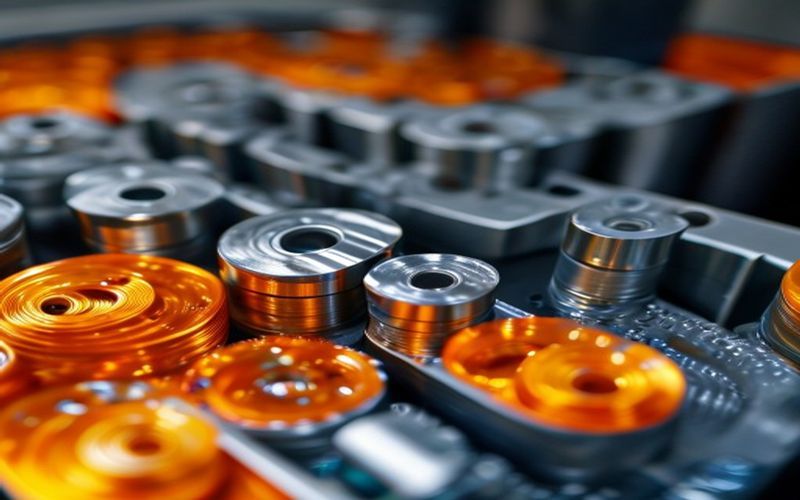
Temperature settings are the foundation of nylon injection molding. The correct melt temperature ensures proper polymer chain entanglement while avoiding thermal degradation. Here are the recommended settings by nylon grade:
| Paramètre | PA6 | PA66 | PA12 | PA6-GF30 | PA66-GF30 |
|---|---|---|---|---|---|
| Melt Temp (°C) | 230-260 | 270-290 | 240-270 | 240-270 | 280-300 |
| Température du moule (°C) | 60-80 | 80-100 | 40-60 | 80-100 | 80-110 |
| Nozzle Temp (°C) | 230-260 | 270-290 | 240-270 | 245-275 | 285-300 |
| Front Zone (°C) | 230-250 | 265-280 | 235-255 | 235-255 | 270-285 |
| Middle Zone (°C) | 235-255 | 270-285 | 240-260 | 240-260 | 275-290 |
| Rear Zone (°C) | 230-250 | 265-280 | 235-255 | 235-255 | 270-285 |
| Drying Temp (°C) | 80-85 | 80-85 | 80-85 | 80-85 | 80-85 |
| Drying Time (hrs) | 4-6 | 4-6 | 4-6 | 4-6 | 4-6 |
Injection and Pressure Parameters
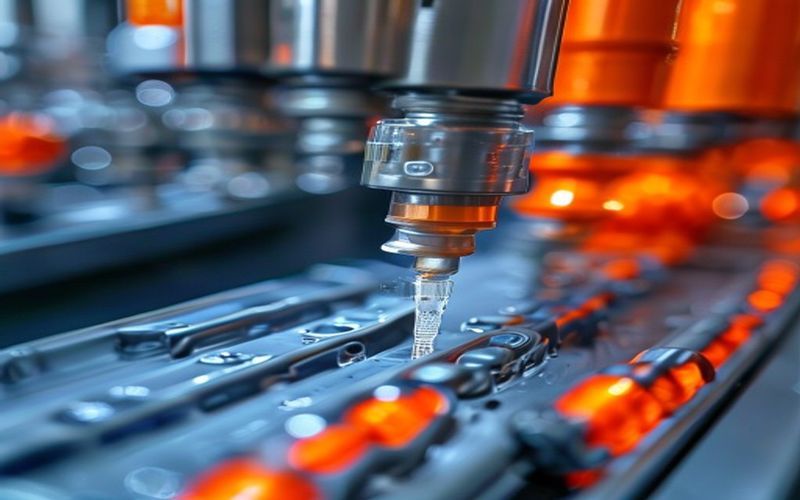
Beyond temperature, injection pressure and speed are critical for filling nylon molds properly. Nylon’s high viscosity requires higher pressures than polypropylene, but excessive pressure causes flash and mold wear.
| Paramètre | PA6 | PA66 | PA6-GF30 | Notes |
|---|---|---|---|---|
| Vitesse d'injection | Moyen-élevé | Moyen-élevé | Moyen | Fast fill to minimize air entrapment |
| Injection Pressure (MPa) | 80-120 | 100-140 | 100-150 | Higher for thin walls |
| Holding Pressure (MPa) | 40-60 | 50-80 | 50-70 | 60-80% of injection pressure |
| Back Pressure (MPa) | 0.3-0.5 | 0.3-0.5 | 0.5-0.8 | Low for nylon to avoid shear degradation |
| Cooling Time (s/mm) | 0.8-1.0 | 0.8-1.0 | 1.0-1.2 | Thicker parts need more time |
| Screw Speed (rpm) | 50-80 | 50-80 | 30-50 | Lower for reinforced grades |
Problèmes courants et solutions
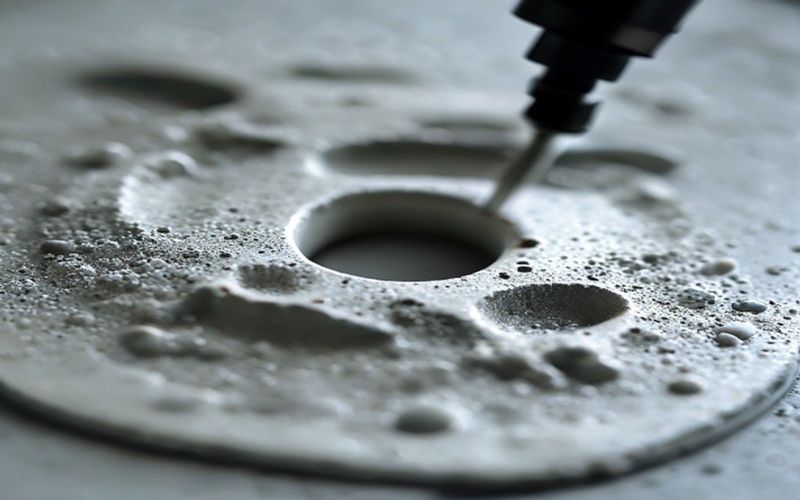
Understanding the root causes of nylon defects allows targeted solutions rather than guesswork:
- Splay (silver streaks): Caused by moisture or volatile contaminants. Solution: Dry material thoroughly, purge with nylon-specific purge compound, check vent zones.
- Weld lines: Occur where two flow fronts meet. Solution: Increase melt temperature, raise injection speed, add gas vents at weld line locations.
- Tirs courts: Caused by insufficient flow length or low pressure. Solution: Increase injection speed and pressure, raise melt temperature, redesign gate location.
- Déformation: Results from uneven shrinkage. Solution: Increase mold temperature, balance wall thickness, add ribs for stiffness, use symmetric gating.
- Bubble formation: Indicates moisture, air entrapment, or material degradation. Solution: Verify drying, lower back pressure, check for insufficient venting.
Cycle Time Optimization
Nylon cycle time is dominated by cooling requirements. Since nylon molds at elevated temperatures (60-110°C vs 20-40°C for PP), significantly more cooling time is needed. Optimizing cooling is the most effective way to reduce cycle time for nylon parts.

- Mold cooling design: Baffle and bubbler cooling channels positioned 1.5x the cavity depth from the parting surface
- Cooling water temperature: Use chilled water (8-15°C) for large or thick nylon parts to reduce cycle time by 15-30%
- Ejection temperature: Parts should reach 60-80°C at ejection to minimize warpage
- Hot runner optimization: Nylon requires precise hot runner temperature control (within ±2°C) to prevent material degradation in the runner
Material Changeover and Purging
When switching from nylon to another material (or vice versa), proper purging prevents contamination and equipment damage. Nylon leaves significant residue in the barrel due to its adhesive nature.
- Purging from nylon: Use PA-specific purge compound or polypropylene as a purging agent at processing temperatures 20°C above nylon melt temperature
- Purging to nylon: Ensure barrel is completely clean of previous material; purge with nylon-compatible intermediate material
- Color change: Perform two full barrel purges with natural material before adding color concentrate
KSAN offers technical on-site support for nylon processing optimization and troubleshooting for customers running trial production batches.
Moisture and Shrinkage Checks Before Process Approval
A stable machine setting is not enough to approve a molded nylon part. The trial record should connect incoming moisture, flow direction, shrinkage and conditioning state to the drawing dimensions. Otherwise, a parameter change may hide the real source of splay, warp or dimensional drift.
| Check | PA6 | PA66 | Reinforced nylon | Approval evidence |
|---|---|---|---|---|
| Pre-molding moisture target | Confirm against the resin supplier; the merged process reference used 0.20% maximum | Confirm against the resin supplier; the merged process reference used 0.15% maximum | Confirm the exact GF/CF grade; the merged reference used 0.12% maximum | Moisture reading, dryer set point, drying time and sealed-transfer record |
| Directional shrinkage | Review flow and cross-flow dimensions separately | Review flow and cross-flow dimensions separately | Expect fiber orientation to increase directional behavior | Cavity-specific measurements with flow direction marked on the report |
| Conditioning state | Record dry-as-molded versus conditioned measurement | Record dry-as-molded versus conditioned measurement | Use the same conditioning definition for every trial | Measurement time, temperature, humidity and acceptance condition |
| Corrective action | Separate material preparation, fill/pack, cooling and tooling changes instead of adjusting several variables at once | Controlled trial sheet showing one change and one observed result per step | ||
These values are starting references, not universal specifications. Resin supplier data, reinforcement level, color package, recycled content, wall thickness and mold design can change the allowable moisture and shrinkage window. Buyers should require the molder to state the tested grade and conditioning method in the sample-approval record.
Quelles possibilités de personnalisation le plastique nylon offre-t-il pour ce projet ?
Nylon Plastic associe la modification des matériaux à la conception de produits, à la conception et à la fabrication de moules, au moulage par injection, à l'usinage CNC et à l'impression 3D. Le choix du matériau approprié se fait en fonction du plan et des conditions d'utilisation, et non sur la base d'une simple appellation générique.
| Zone de personnalisation | Options à examiner | Informations requises |
|---|---|---|
| Material preparation | Grade review, drying and sealed material-handling plan | Resin grade, supplier data and incoming moisture condition |
| Tool and DFM | Gate, vent, cooling, draft, ejection and shrinkage review | CAD, drawing, cosmetic zones and critical dimensions |
| Process development | Melt, mold, fill, pack and cycle-window validation | Defect history, machine constraints and sampling quantity |
| Production support | Molding, inspection, documentation and packaging planning | Annual volume, acceptance criteria and delivery requirements |
Liste de contrôle pour les appels d'offres
- Exact nylon grade, reinforcement and color
- CAD and drawing with critical and cosmetic requirements
- Service temperature, humidity, load and chemical exposure
- Existing defects, sample parts or current process data if available
- Sampling quantity, annual volume and required inspection documents
La prise en charge de la conception pour la fabrication (DFM), les accords de confidentialité (NDA), la documentation relative aux matériaux ou aux compositions, ainsi que les exigences en matière d'inspection peuvent être abordés lors de l'établissement du devis. La disponibilité dépend de l'étendue du projet et du plan qualité convenu.
De la révision à la production
- Définir : partager le dessin, l'application, l'environnement et le volume.
- Critique : comparer les risques liés aux matériaux, aux procédés, à la conception pour la fabrication (DFM) et à la validation.
- Valider : recourir à des échantillons, à l'impression 3D, à l'usinage CNC ou à la fabrication de prototypes, selon les besoins.
- Produits : ne valider l'outillage ou la production qu'une fois les contrôles convenus effectués.
Questions fréquemment posées
Which nylon grades can be reviewed for injection molding?
Nylon Plastic works across engineering plastic material selection and injection molding. The review can compare PA6, PA66, PA12 and reinforced options when the exact grade has not been locked.
Can the drying and molding window be developed for a specific part?
Yes, but it must be based on the exact resin, wall thickness, gate, machine and quality targets. Generic temperatures are a starting point, not a validated production window.
What is included in a nylon molding DFM review?
The review can cover material behavior, wall transitions, ribs and bosses, draft, gate and weld-line risk, cooling, ejection, shrinkage, warpage and the inspection condition.
Can Nylon Plastic support prototypes before volume molding?
The site presents product design, 3D printing, CNC, mold making and injection molding capabilities. The appropriate sequence depends on whether the team needs geometry proof, functional samples or production-equivalent molded parts.
Lire la suite
- Moulage par injection du nylon : paramètres de transformation et dépannage
- Guide du moulage par injection du nylon : Paramètres de traitement, meilleures pratiques et dépannage
- Comprendre les différents types de moules pour le moulage par injection du nylon
En bref
| Point de décision | Processing Takeaway | Remarque à l'attention de l'acheteur |
|---|---|---|
| Séchage | Critical for quality | Moisture control is a must before molding |
| Tooling heat | Stability matters | Use consistent mold and barrel conditions |
| Déformation | Common risk | Gate, wall and cooling choices matter |
| Utilisation optimale | Functional molded nylon parts | Lock process window before volume production |
Pourquoi choisir le plastique nylon ?
Nylon Plastic can support processing review and DFM decisions when nylon molding needs a practical window for production instead of a generic process summary.
Request a Process Review
Send the part drawing, target tolerance and material grade for a molding process check.
Sources techniques et vérification
Utilisez les données fournies par le fournisseur pour vérifier la nuance exacte et les conditions d'essai. L'homologation finale doit tenir compte du processus de fabrication, de la géométrie de la pièce et de l'environnement d'utilisation.