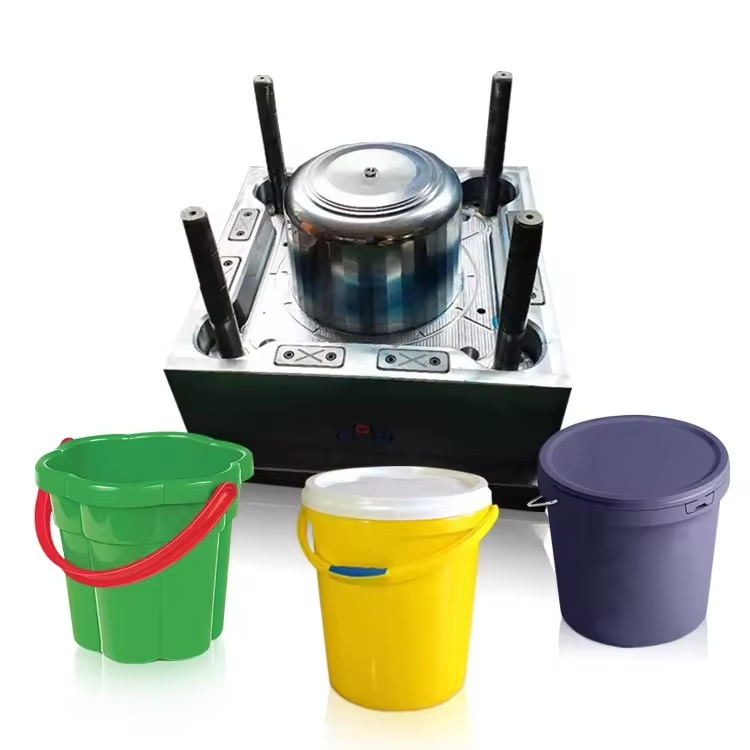
When it comes to manufacturing nylon components at scale, injection molding stands unrivaled. The process combines speed, precision, and cost-efficiency in ways that alternative manufacturing methods simply cannot match. Understanding why injection molding dominates helps you make informed decisions for your production needs.
The Core Advantages
High-Volume Efficiency
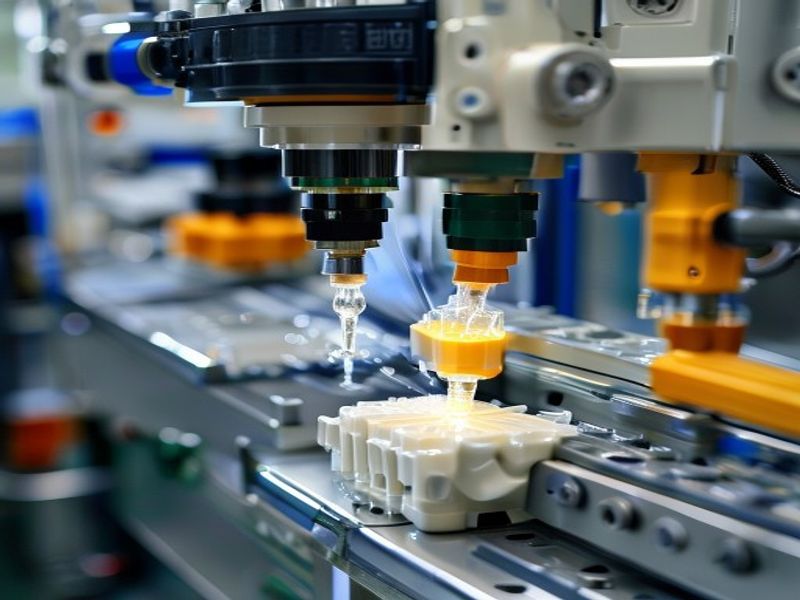
Once the mold is built and validated, injection molding produces identical parts at remarkable speed. Cycle times for nylon parts typically range from 15 to 60 seconds depending on wall thickness and complexity. This throughput enables cost-effective production of thousands to millions of parts annually.
Liberté de conception
Injection molding creates complex geometries that would be impossible or prohibitively expensive with other methods. Undercuts, internal threads, living hinges, and intricate surface details are all achievable. For nylon specifically, the material’s toughness allows molded-in snap-fits and flexible features.
Material Properties Optimization
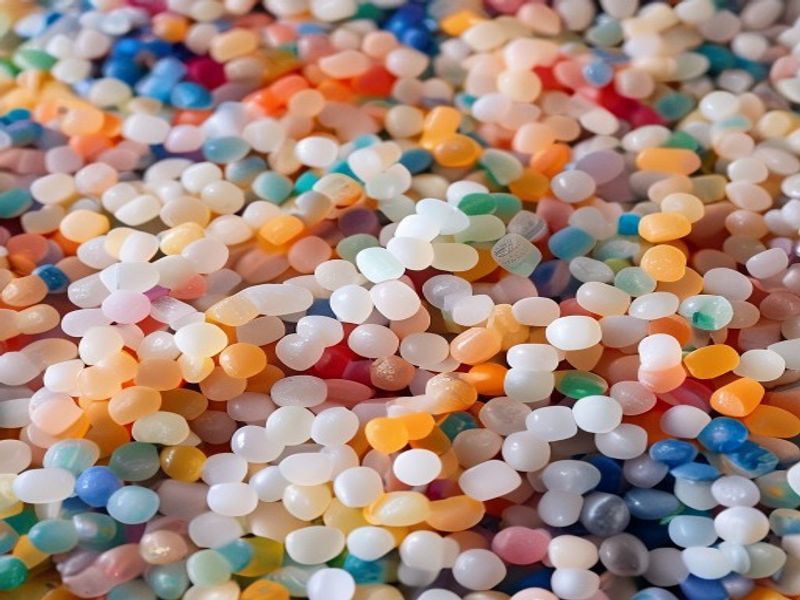
The injection molding process can enhance nylon’s inherent properties. Proper processing ensures optimal crystallinity for strength and stiffness. Additives—glass fiber, mineral fillers, impact modifiers—can be compounded into the material to tailor properties for specific applications.
Comparing Manufacturing Methods
| Facteur | Moulage par injection | Impression 3D | Usinage CNC |
|---|---|---|---|
| Per-part cost (100k+ qty) | Le plus bas | Haut | Moyen-élevé |
| Initial tooling cost | Haut | Aucun | Low (s) |
| Finition de surface | Excellent | Variable | Excellent |
| Material properties | Optimal | Reduced | Same as stock |
| Production speed | Very fast | Lent | Moyen |
| Design complexity | Haut | Very high | Limité |
Nylon-Specific Benefits
Crystallinity Control
Nylon is a semi-crystalline polymer. The injection molding process—with controlled cooling rates—allows optimization of crystallinity levels. Faster cooling produces lower crystallinity (tougher, more flexible), while slower cooling increases crystallinity (stiffer, more dimensionally stable). Mold temperature control enables this tuning.
Fiber Orientation
For glass-reinforced nylons, injection molding creates beneficial fiber orientation. Fibers align in the flow direction, significantly increasing strength and stiffness along that axis. Understanding this allows designers to orient parts in the mold to maximize strength in critical directions.
Une qualité constante
Once process parameters are established, injection molding delivers exceptional consistency. Statistical process control can maintain critical dimensions within tight tolerances batch after batch. This repeatability is essential for automotive and medical applications where consistency is non-negotiable.
FAQ
When does Why Injection Molding is the Preferred Choice for Nylon Components make sense?
Why Injection Molding is the Preferred Choice for Nylon Components makes sense when the part volume, material choice, geometry, and repeatability needs justify mold design and tooling investment.
What design factors matter most for Why Injection Molding is the Preferred Choice for Nylon Components?
L'épaisseur des parois, les nervures, les bossages, l'angle de dépouille, l'emplacement de l'entrée de matière, le retrait, la ligne de joint et l'éjection sont autant de facteurs qui influent sur la qualité des pièces moulées.
Quelles informations faut-il fournir avant la fabrication d'un moule ?
Le fournisseur doit confirmer le modèle 3D, le matériau, le volume annuel prévu, les exigences en matière d'aspect, les tolérances requises, ainsi que toute exigence relative à l'assemblage ou aux essais fonctionnels.
What is the biggest risk in Why Injection Molding is the Preferred Choice for Nylon Components?
Le risque le plus important consiste à valider l'outillage avant d'avoir vérifié de manière exhaustive le comportement du matériau, le retrait, l'écoulement et le fonctionnement de la pièce dans le cadre de l'application réelle.