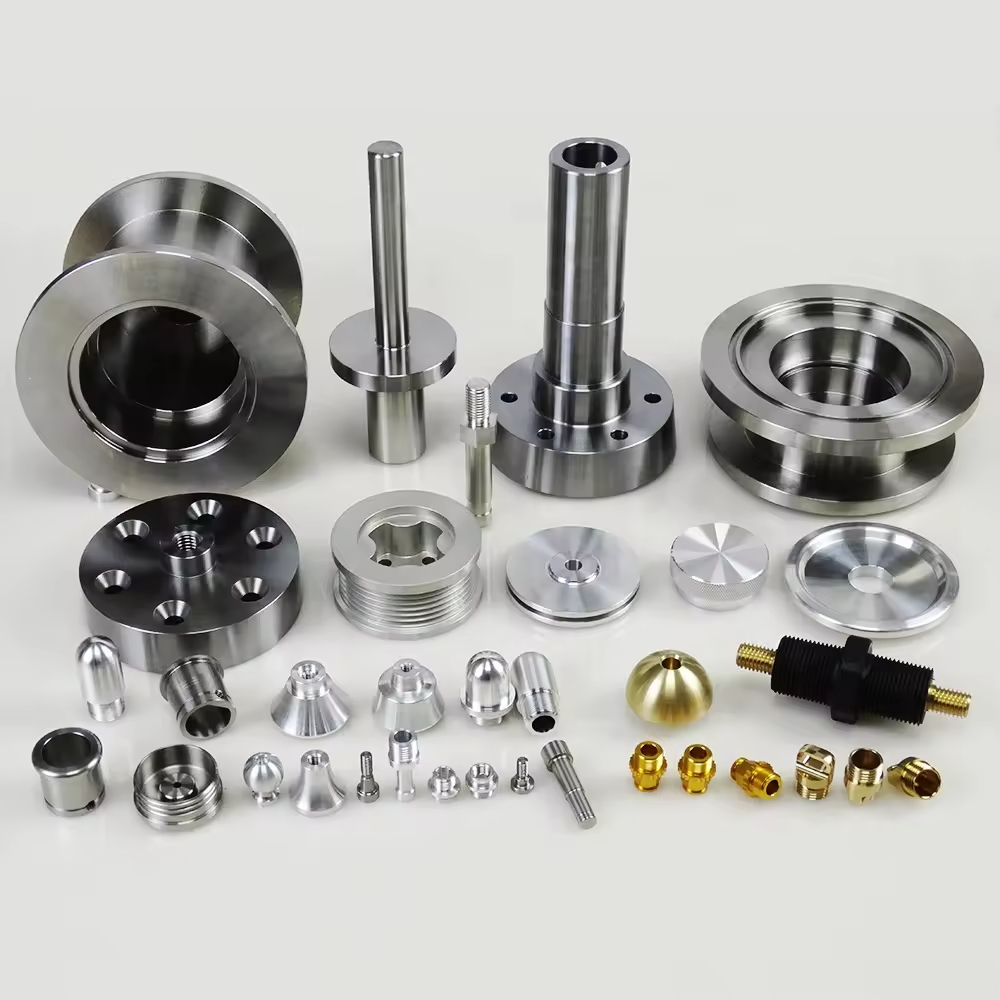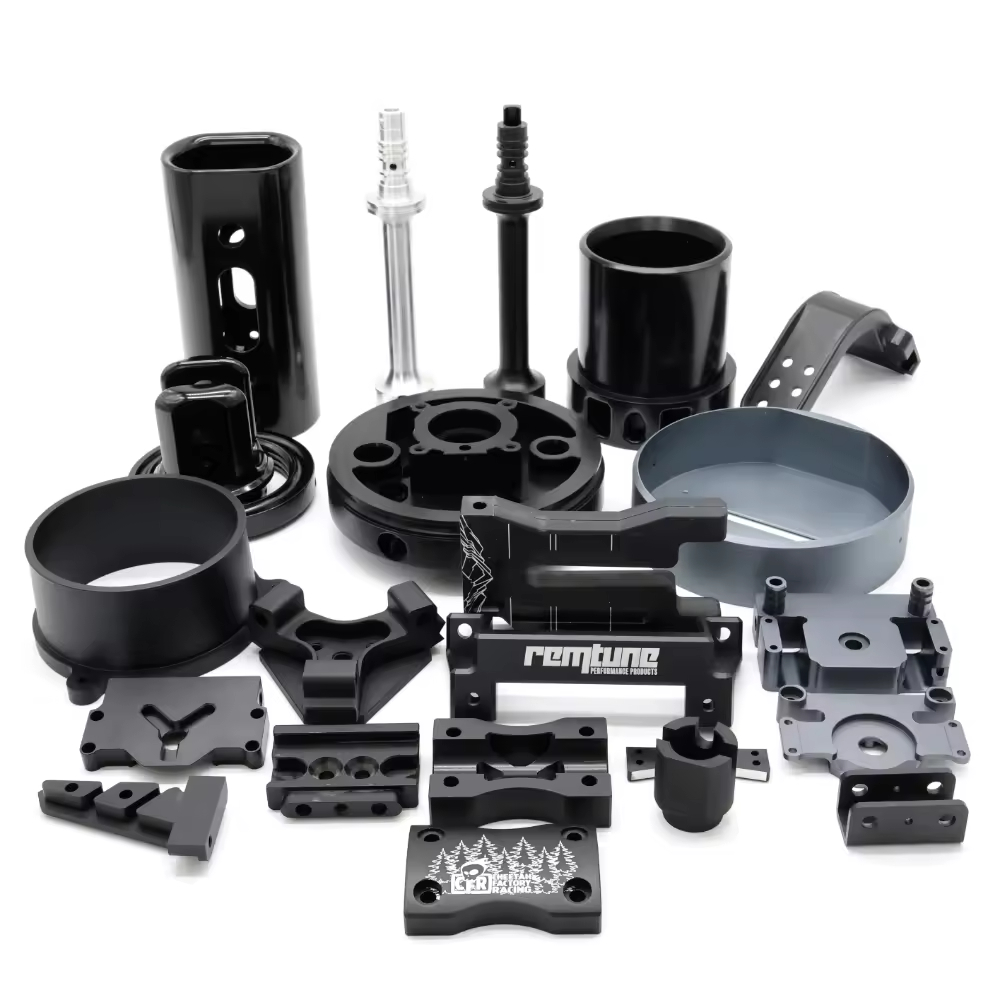
This CNC machining engineering plastics guide explains how to specify material, geometry and inspection for precision plastic parts. CNC can support prototypes and repeat production from stock shapes without an injection mold, provided tool access, material behavior and critical dimensions are reviewed together.
Start with the Drawing and Service Conditions
Send CAD, the drawing revision, material or required performance, quantity and the dimensions that control function. Nylon Plastic can review the machining route and material choice together, then define a quotation around the part, inspection and delivery scope.
For a ready-to-quote project, use our custom machined plastic parts guide. For early selection, continue with the material and design checks below.

Choose the Exact Material and Stock Form
Specify the polymer family and the exact grade or permitted alternative. A resin-pellet datasheet alone does not identify the extruded or cast stock used for a machined part. Record stock form, reinforcement, color, condition and required supplier documents before accepting a substitution.
| Material candidate | Typical reason to review | Before approving the stock |
|---|---|---|
| Nylon / PA6 / PA66 | Mechanical parts, sliding interfaces and wear applications | Moisture condition, dimensional change, load, temperature and the exact cast or extruded stock grade. |
| POM / acétal | Gears, bushings and precision mechanical features | Grade, chemical exposure, mating surfaces and any wear or low-friction modification. |
| PEEK | Applications needing a high-performance material review | Actual temperature and media exposure, reinforcement, machining stock and application-specific documents. |
| Polycarbonate | Housings or parts where impact or transparency is relevant | Stress, cleaners, appearance acceptance and the offered stock condition. |
Engineering plastics can offer lower weight, insulation or useful wear behavior, but those benefits depend on the exact grade and application. Compare density, mechanical data and chemical compatibility under stated conditions. Food-contact or other regulated use requires documentation for the offered grade and intended use.
Define Precision by the Critical Features
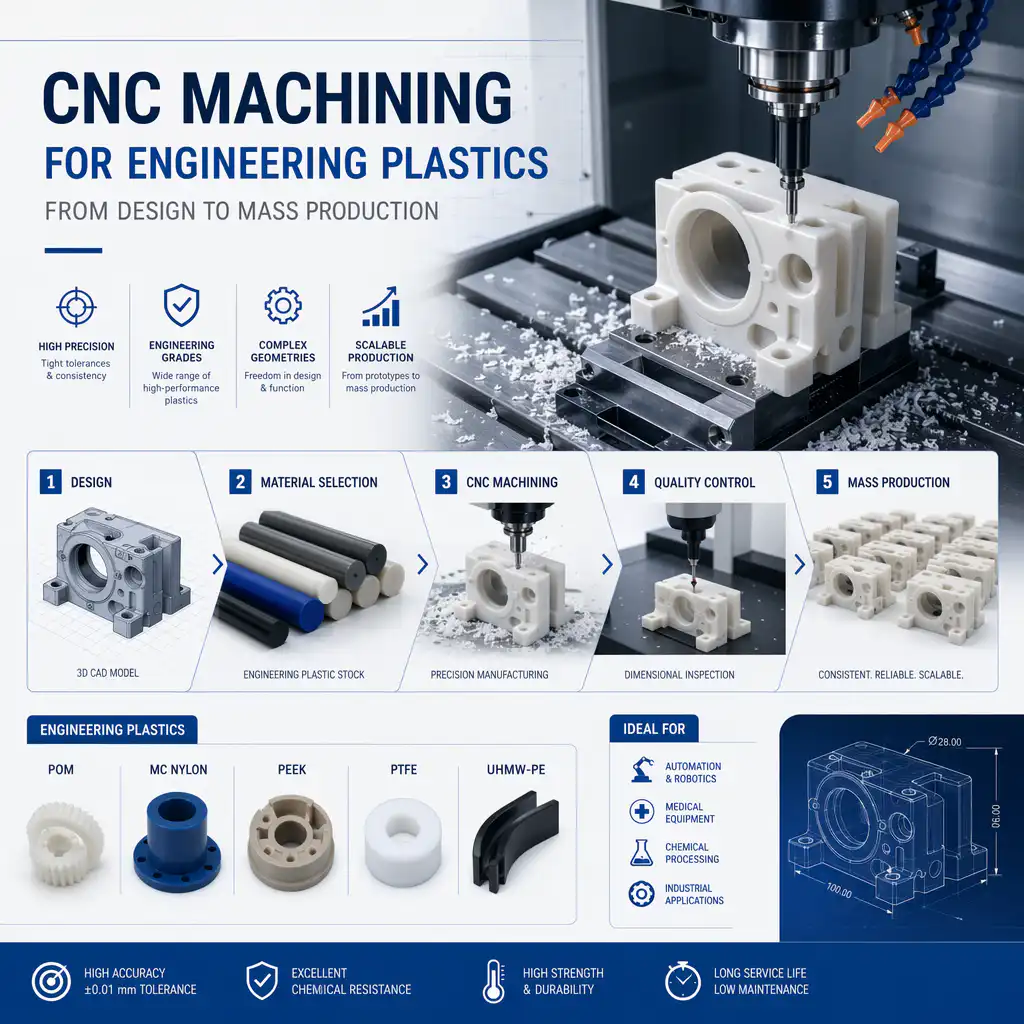
A close tolerance is meaningful only when the drawing states where it applies and how it is inspected. Mark datums, fits, hole positions, sealing faces and thread requirements. Separate those features from general dimensions so the machining and inspection effort matches the function.
- Condition at inspection: agree temperature and, where relevant, moisture conditioning before dimensional acceptance.
- Material movement: review thin walls, large material removal, asymmetric geometry and clamping distortion before fixing the process.
- Surface requirements: state roughness or an appearance reference, permitted tool marks and any edge-break requirement.
- Assembly: provide mating-part data for press fits, seals, bearings and fasteners. A part that meets one isolated dimension may still need an assembly check.
Machining Strategy Depends on Material and Geometry
Spindle speed and feed are not universal settings for a polymer family. Tool diameter and geometry, engagement, stock grade, reinforcement, coolant compatibility and chip evacuation all affect the setup. The process review should establish those conditions before a trial rather than treat a generic RPM table as a production instruction.
| Risque | Ce qu'il faut réviser | Approval evidence |
|---|---|---|
| Heat or poor surface finish | Tool sharpness, cut strategy, chip removal and fluid compatibility | Surface and dimensional inspection after the agreed stabilization period. |
| Distortion after unclamping | Fixture pressure, stock stress and the sequence of material removal | Free-state dimensions and assembly fit, not only measurements in the fixture. |
| Reinforced-material variation | Filler, fiber direction, stock processing and tool wear | Defined surface, dimensions and performance for the selected stock. |
| Burrs and damaged edges | Hole exits, threads, tool access and deburring method | Edge condition and cleanliness requirements on the drawing. |
Match CNC to the Development and Production Stage
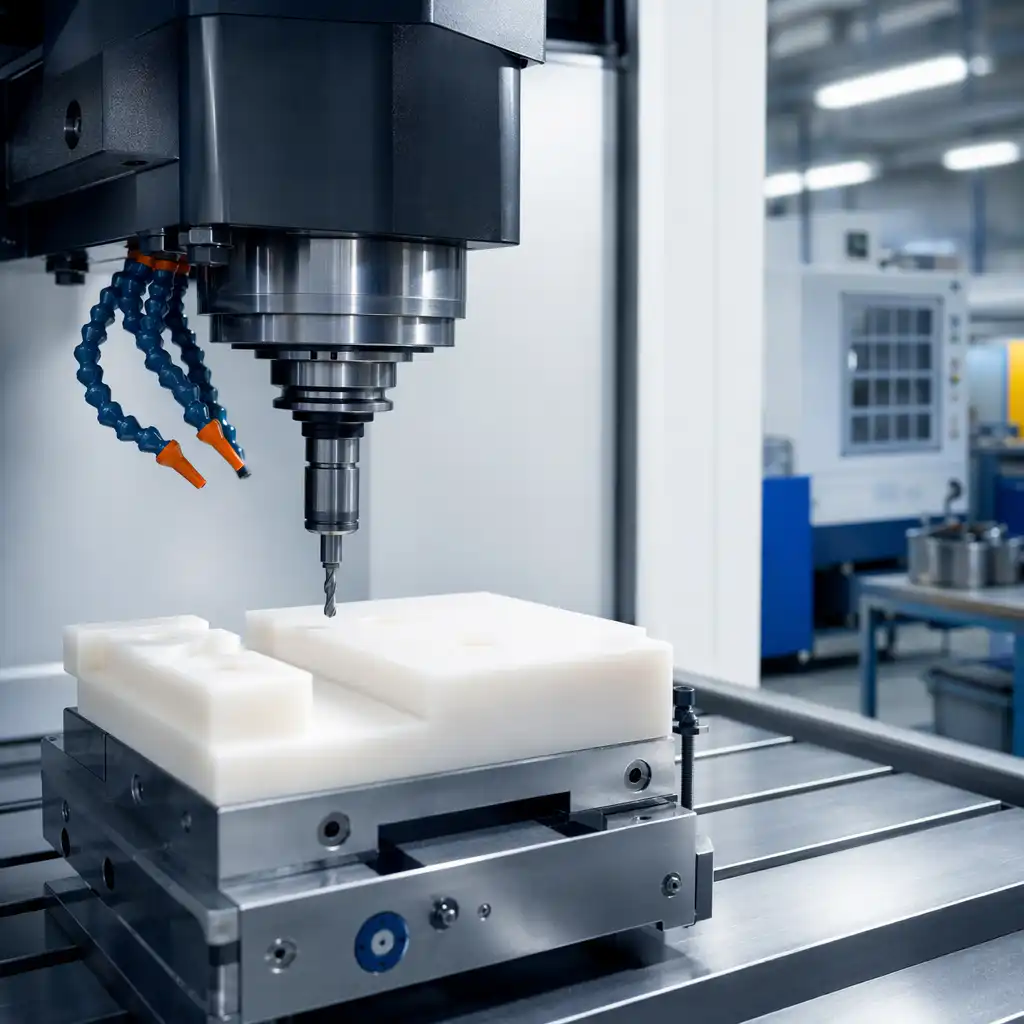
For a fit-check prototype, identify which dimensions must match the final design. For a functional prototype, specify the stock grade and service condition as well. For repeat orders, freeze the drawing, material approval and inspection plan so the next batch can be compared with the accepted sample.
If injection molding is planned later, the machined sample does not establish molding shrinkage, fiber orientation, weld-line performance or cosmetic gate locations. Review the prototype-to-production route et le small-batch molding guide when quantity and geometry justify tooling.
What a Comparable CNC Quotation Should Include
A useful quote identifies the drawing revision, material and stock, quantity, critical tolerances, surface and edge requirements, inspection records, packaging and destination. List secondary operations and identify whether they are included. If alternatives are permitted, ask for them separately so the technical tradeoff is visible.
Compare total accepted-part cost: stock usage, machining setups, tool access, finishing and inspection can matter alongside the material price. A deep pocket, difficult internal corner or unnecessarily tight general tolerance may need a design discussion before the quotation is finalized.

Why Choose Our CNC Machining Services
Our manufacturing facility combines scale, precision, and speed to deliver CNC-machined plastic parts across all industries:
- Plus de 300 machines CNC — 3-axis, 4-axis, 5-axis machining centers and high-precision CNC lathes
- Précision de ±0,005 mm — routine tolerance of ±0.01mm for critical dimensions
- Massive capacity — worktable up to 3000mm × 2000mm; daily output exceeding 10,000 parts
- MOQ 1 pièce — single-piece customization with no mold costs
- Same-day delivery available — standard prototypes within 24 hours; 100,000-piece orders in 15 days
Upload your CAD files or technical drawings — our engineering team will respond with a detailed quote and DFM feedback within 24 hours.
CNC Machining Engineering Plastics Guide FAQ
When is CNC a suitable route for plastic parts?
Consider CNC for stock-material prototypes, design iteration or repeat parts with machinable geometry. Compare tool access, tolerance and quantity against printing or molding before choosing the route.
Can the same tolerance be used for every engineering plastic?
No. Review the exact stock material, part size, geometry, service condition and inspection method. Put functional tolerances on the drawing and confirm them for the actual project.
How does CNC compare with 3D printing?
CNC removes material from an identified stock shape; printing builds the part with process-dependent layers or powder consolidation. Compare geometry, stock-grade requirements, surface finish and the purpose of the sample.
What changes the cost of a machined plastic part?
Stock grade and usage, tool access, number of setups, tolerances, finishing, inspection and quantity change the scope. CNC pricing is not based on print layer height or the number of parts in a printer build.
Request a Plastic CNC Material and Part Review
Envoyer : CAD or drawing revision, material or permitted alternatives, service conditions, critical dimensions, quantity, finish and destination. For repeat production, add annual demand and sample acceptance requirements.
The review can cover: stock selection, machining access, tolerance and inspection questions, and the items to include in the quote. If you only need material guidance, describe the application; a CAD file is not needed to start that discussion.
Lire la suite
- Fraisage CNC des plastiques techniques : Précision et polyvalence
- Services d'usinage CNC sur mesure : Ingénierie de précision pour les prototypes et la production
- Pièces usinées CNC : Ingénierie de précision pour les industries exigeantes
Technical reference: Ensinger plastic milling guidance explains why thermal expansion, stiffness, chip behavior and springback must be considered with geometry, material and tolerances. Supplier capabilities described there are not Nylon Plastic capability claims.