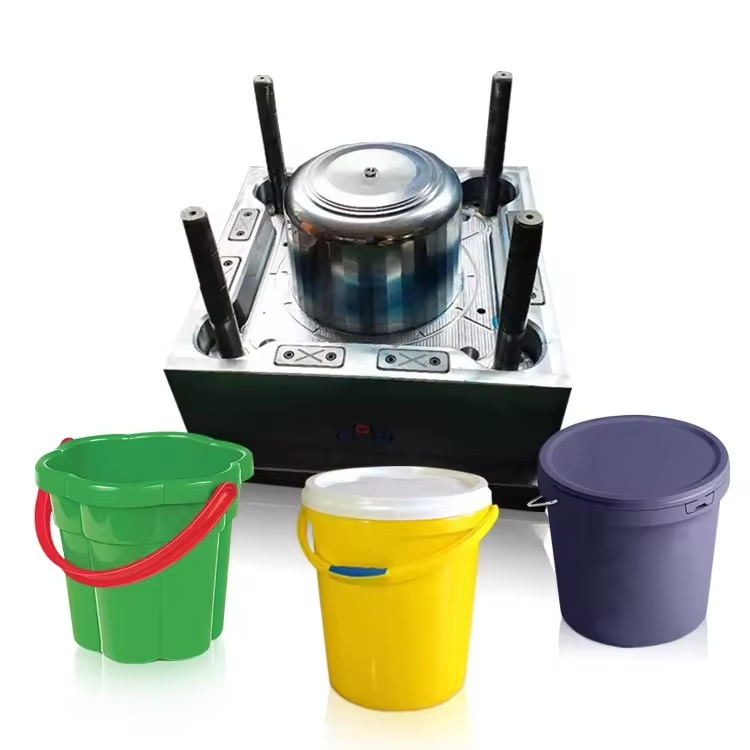
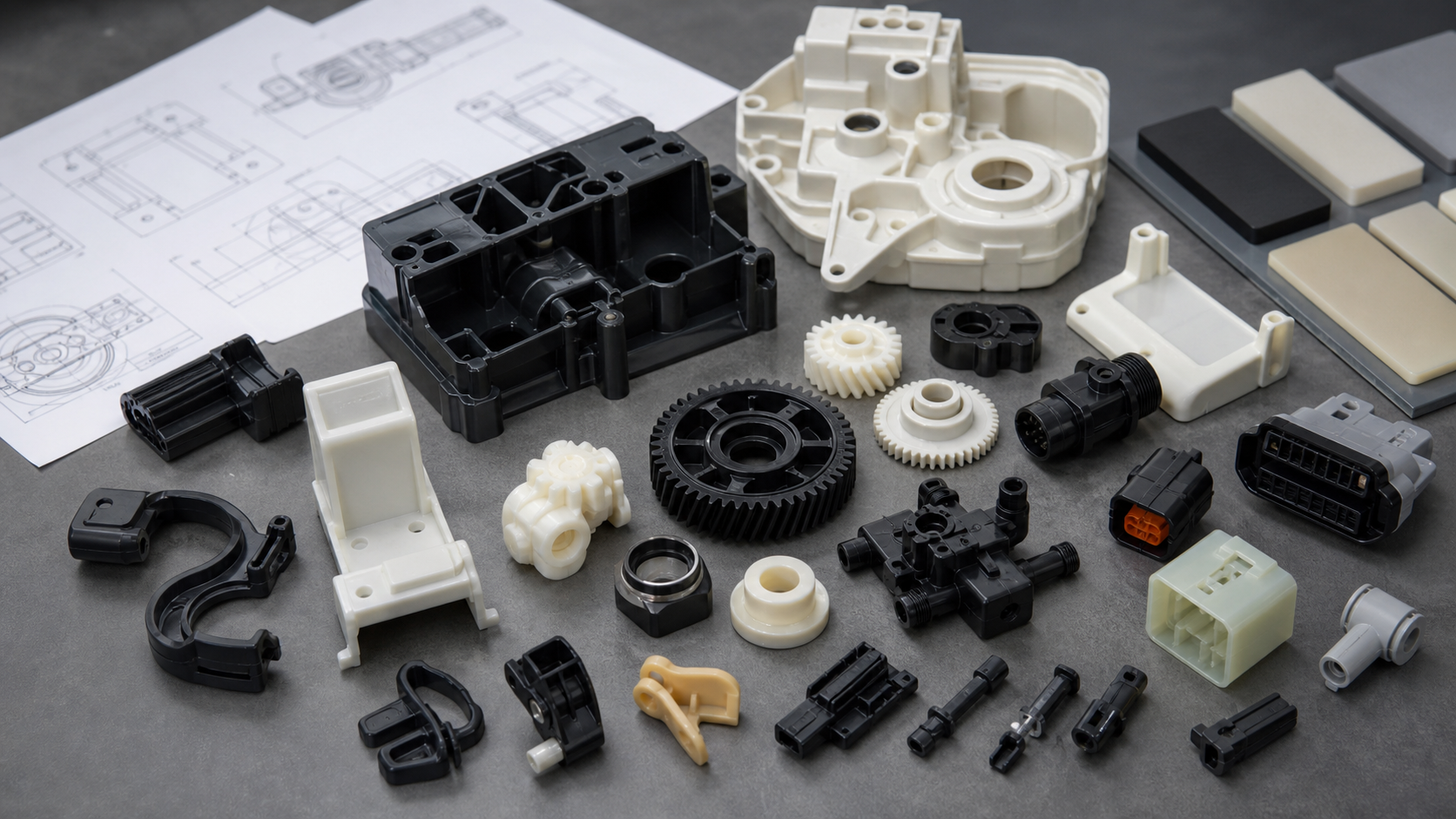
La conception des composants en plastique sur mesure doit avant tout tenir compte de leur fonction : la charge, la température, l'exposition aux produits chimiques, la méthode d'assemblage, les tolérances et le volume de production déterminent le type de plastique et le procédé de fabrication les mieux adaptés.
De nombreux acheteurs partent du nom du matériau, mais il est plus judicieux de définir la fonction du composant. Un connecteur, un engrenage, un boîtier, une agrafe, une douille et un support peuvent tous être des pièces en plastique, mais ils nécessitent des familles de résines, des épaisseurs de paroi, des choix d'outillage et des méthodes de contrôle différents.
Procédés de fabrication de composants en plastique sur mesure
Le choix de la méthode appropriée dépend du degré de maturité de la conception, des quantités, des exigences mécaniques et de la nécessité ou non de tester le comportement du matériau moulé.
| Itinéraire | Utilisation optimale | Remarque à l'attention de l'acheteur |
|---|---|---|
| Moulage par injection | Composants de production reproductibles | Idéal pour les conceptions stables et les volumes évolutifs |
| Usinage CNC du plastique | Pièces fonctionnelles produites en petites séries | Permet d'éviter les coûts d'outillage et prend en charge les caractéristiques de grande précision |
| Impression 3D | Premiers prototypes et itérations de conception | Utile avant de s'engager dans la fabrication d'outillage |
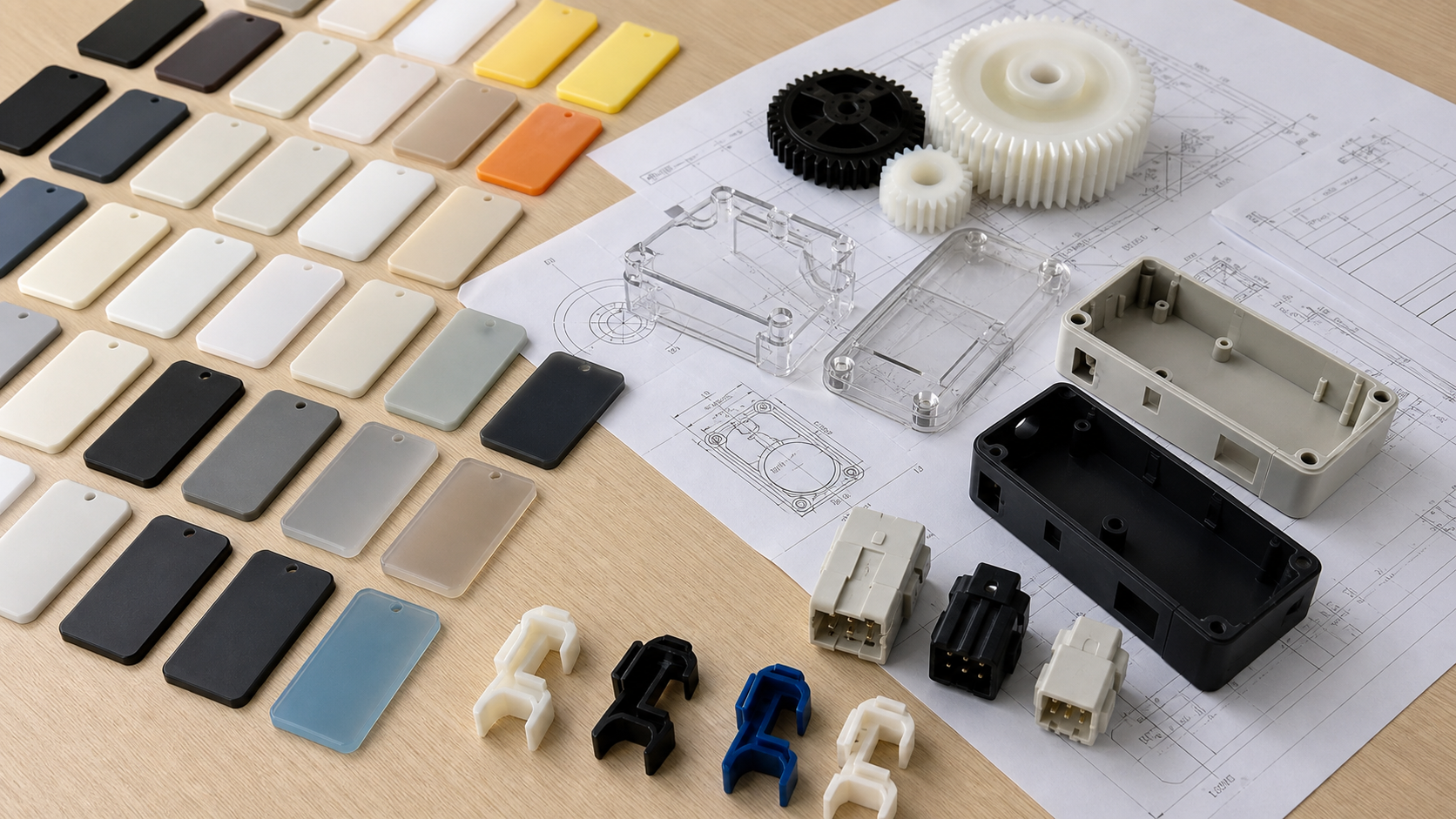
Matériaux couramment utilisés pour les composants fonctionnels
Le choix des plastiques techniques doit tenir compte à la fois de leurs performances et de leur facilité de fabrication.
| Matériau | Idéal pour | Note relative à la sélection |
|---|---|---|
| Nylon PA6 / PA66 / GF | Supports, engrenages et éléments structurels soumis à des charges | Vérifier l'absorption d'humidité et l'orientation des fibres de verre |
| PC / PC-ABS | Boîtiers résistants aux chocs | Idéal pour les capots et les boîtiers résistants |
| PBT / POM | Composants électriques et coulissants | Idéal pour les applications de précision ou les connecteurs |
| PP / TPE | Pièces légères, souples ou au toucher doux | Examiner les exigences en matière d'adhérence, de rigidité et de compatibilité chimique |
Contrôles de conception des composants
Une bonne conception des pièces en plastique permet de trouver le juste équilibre entre résistance, fluidité de moulage, jeu d'assemblage et coût.
- Définissez l'environnement d'utilisation avant de choisir la résine.
- Distinguer les cotes critiques des tolérances générales.
- Passez en revue les éléments de montage tels que les clips, les vis, les inserts et les charnières.
- Vérifiez si la pièce doit être usinée en premier lieu, puis moulée.
- Vérifiez dès le début les spécifications relatives à la finition de surface et à la couleur.
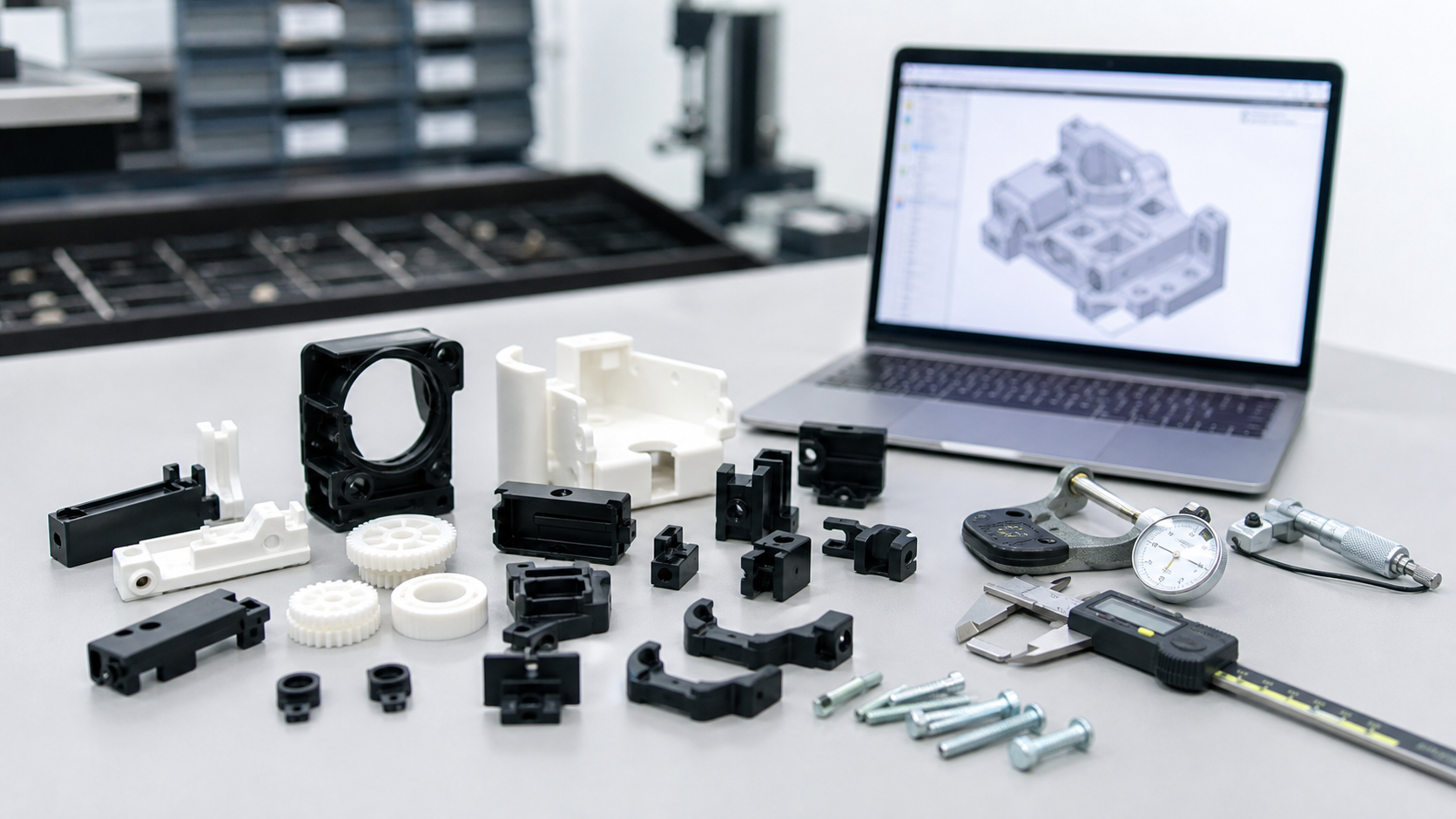
Liste de contrôle pour les appels d'offres relatifs aux composants sur mesure
Une demande de devis portant sur un composant doit préciser la fonction de la pièce, et pas seulement ses dimensions.
Pour obtenir un devis concret, veuillez nous envoyer un dessin en 2D ou un modèle CAO en 3D, le matériau souhaité, la quantité prévue, les exigences en matière de tolérances, l'état de surface, l'environnement d'utilisation, la demande annuelle ainsi que toute exigence de conformité. Nylon Plastic peut analyser la pièce afin d'évaluer le choix du matériau, la fabricabilité (DFM), le processus de prototypage, les risques liés à l'outillage, les délais de livraison et les coûts de production avant que le projet n'entre en phase de fabrication.
Guides techniques connexes
- Fabricant de pièces en plastique sur mesure – page d'accueil dédiée à l'approvisionnement en pièces sur mesure
- Centre de sélection des matériaux – facilite le choix de la résine
- Usinage CNC ou moulage par injection ? – aide à choisir le parcours du processus
Comment le plastique nylon contribue à la réalisation du projet
Nylon Plastic aide les acheteurs à comparer les matériaux et les procédés utilisés pour la fabrication de composants plastiques sur mesure destinés aux secteurs de l'automobile, de l'électronique, des équipements industriels, de la robotique et des produits de grande consommation.
Contact Nylon Plastic pour examiner le plan de votre pièce en plastique sur mesure, comparer les différents procédés de fabrication ou demander des conseils sur les matériaux et l'outillage.
FAQ
Comment fabrique-t-on des composants en plastique sur mesure ?
Les composants en plastique sur mesure peuvent être fabriqués par moulage par injection, usinage CNC du plastique, impression 3D ou outillage rapide, en fonction du degré de maturité de la conception, de la quantité, du matériau et des exigences en matière de tolérances.
Comment choisir un matériau pour des composants en plastique sur mesure ?
Commencez par examiner la charge à laquelle la pièce est soumise, la chaleur, l'exposition aux produits chimiques, la méthode d'assemblage, les tolérances, l'état de surface et le volume de production, puis comparez les familles de résines adaptées.
Un prototype imprimé en 3D peut-il devenir une pièce moulée par injection ?
Oui, mais il convient de revoir la conception en ce qui concerne l'épaisseur des parois moulées, le dévers, les nervures, les bossages, le retrait et le comportement final du matériau en production.
Qu'est-ce qui rend difficile l'établissement d'un devis pour une pièce en plastique ?
L'absence de données CAO, des spécifications de matériaux imprécises, des tolérances irréalistes, des surfaces esthétiques non définies et un volume de production inconnu peuvent nuire à la fiabilité des devis.