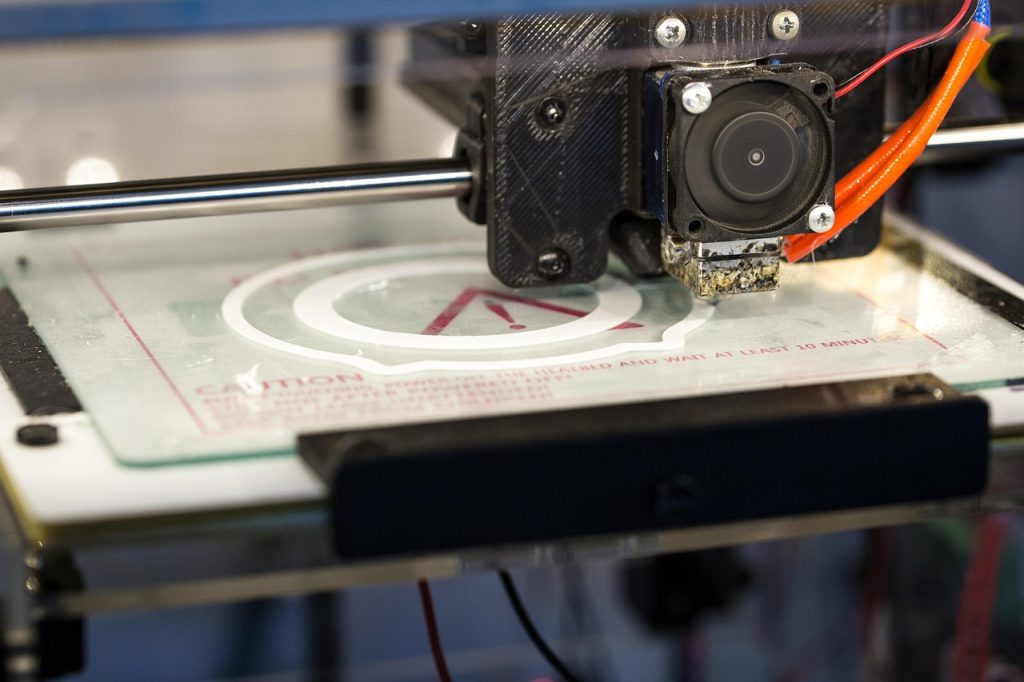
La technologie Digital Light Synthesis (DLS) est à la pointe de l'impression 3D par photopolymérisation en cuve, offrant une qualité de surface et une résolution inégalées pour les pièces en plastique haute performance. Chez NylonPlastic, notre service DLS permet de produire des composants de précision aux finitions lisses, aux tolérances serrées et aux délais d'exécution rapides — une solution idéale pour les prototypes fonctionnels, les pièces destinées à un usage final et les séries de production en résines de qualité technique.
Qu'est-ce que la synthèse de lumière numérique (DLS) ?
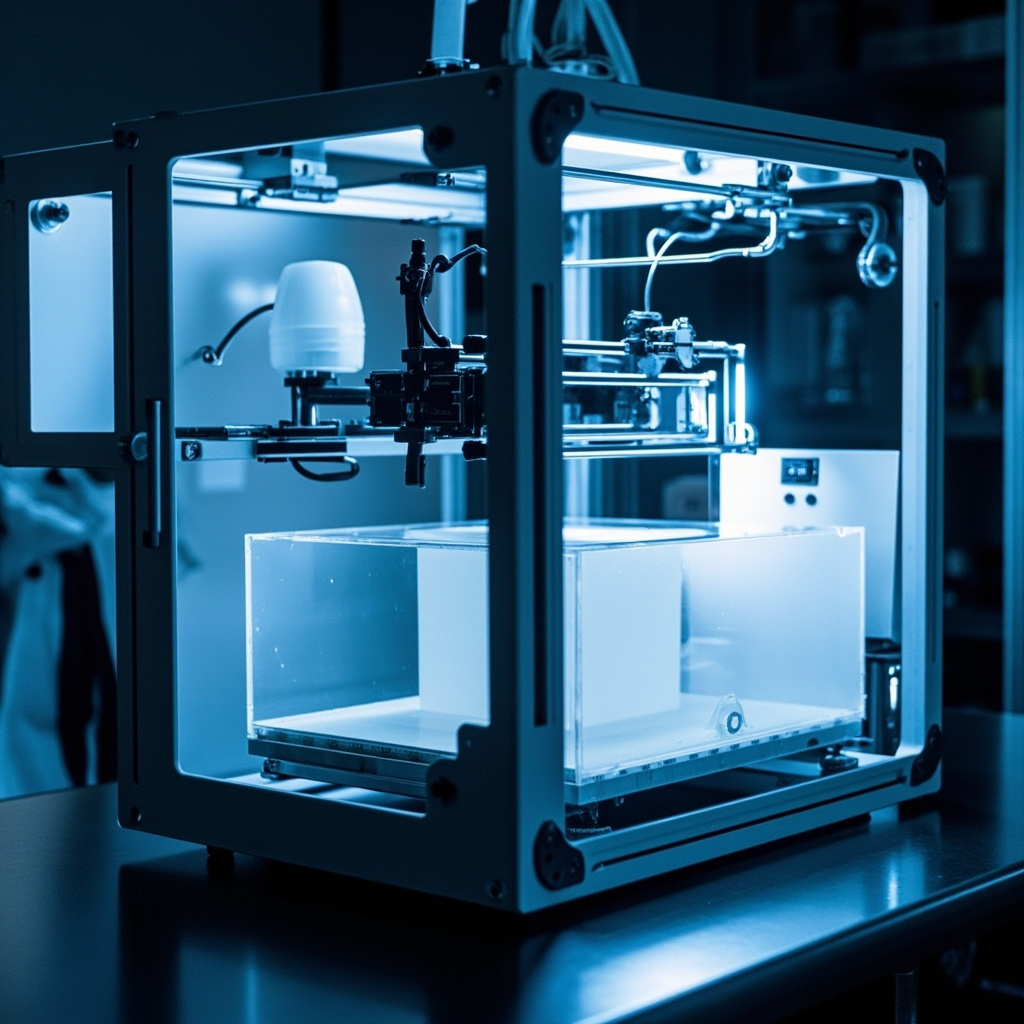
Le DLS est un procédé de photopolymérisation qui utilise un projecteur numérique pour durcir une résine liquide couche par couche. Contrairement au SLA traditionnel, qui utilise un laser pour tracer chaque couche, le DLS projette une section transversale entière en une seule fois, ce qui réduit considérablement les temps de fabrication tout en conservant un niveau de détail exceptionnel. Le procédé se déroule dans un bac de résine photopolymère, où une source lumineuse solidifie le matériau conformément aux données du modèle 3D.
Comment fonctionne le DLS : étape par étape
Le procédé DLS suit une séquence précise qui permet la production à grande vitesse de pièces détaillées. Tout d’abord, une fine couche de résine photopolymère liquide est étalée sur la plate-forme d’impression. Le projecteur de lumière numérique éclaire ensuite l'ensemble de la section transversale de la couche en cours, provoquant la polymérisation et la solidification de la résine. La plate-forme de fabrication se déplace vers le haut, et une nouvelle couche de résine s'écoule sous la précédente. Ce cycle se répète jusqu'à ce que la pièce soit entièrement formée.
Paramètres clés du processus
La qualité des pièces issues de l'impression 3D par photopolymérisation (DLS) dépend de plusieurs paramètres critiques qui doivent être contrôlés avec précision. L'intensité lumineuse et le temps d'exposition déterminent le degré de durcissement et les propriétés mécaniques de la pièce finale. L'épaisseur de la couche, qui varie généralement entre 25 et 100 microns, influe directement sur l'état de surface et la vitesse de fabrication. La température de la résine joue également un rôle essentiel, car les variations de viscosité peuvent avoir un impact sur l'écoulement et le nivellement de la résine.
| Paramètre | Plage typique | Impact sur la qualité |
|---|---|---|
| Épaisseur de la couche | 25 à 100 microns | Des couches plus fines = une surface plus lisse, une durée de construction plus longue |
| Intensité lumineuse | 3 à 8 mW/cm² | Influence la profondeur de durcissement et la résistance mécanique |
| Vitesse de construction | Jusqu'à 1 000 mm/heure | Plus rapide que la SLA pour les pièces de grande taille |
| Résolution XY | 25 à 75 microns | Détermine la fidélité des détails de surface |
| Volume d'impression | Jusqu'à 300 x 200 x 400 mm | Cela dépend du modèle du système DLS |
Matériaux DLS : Résines techniques
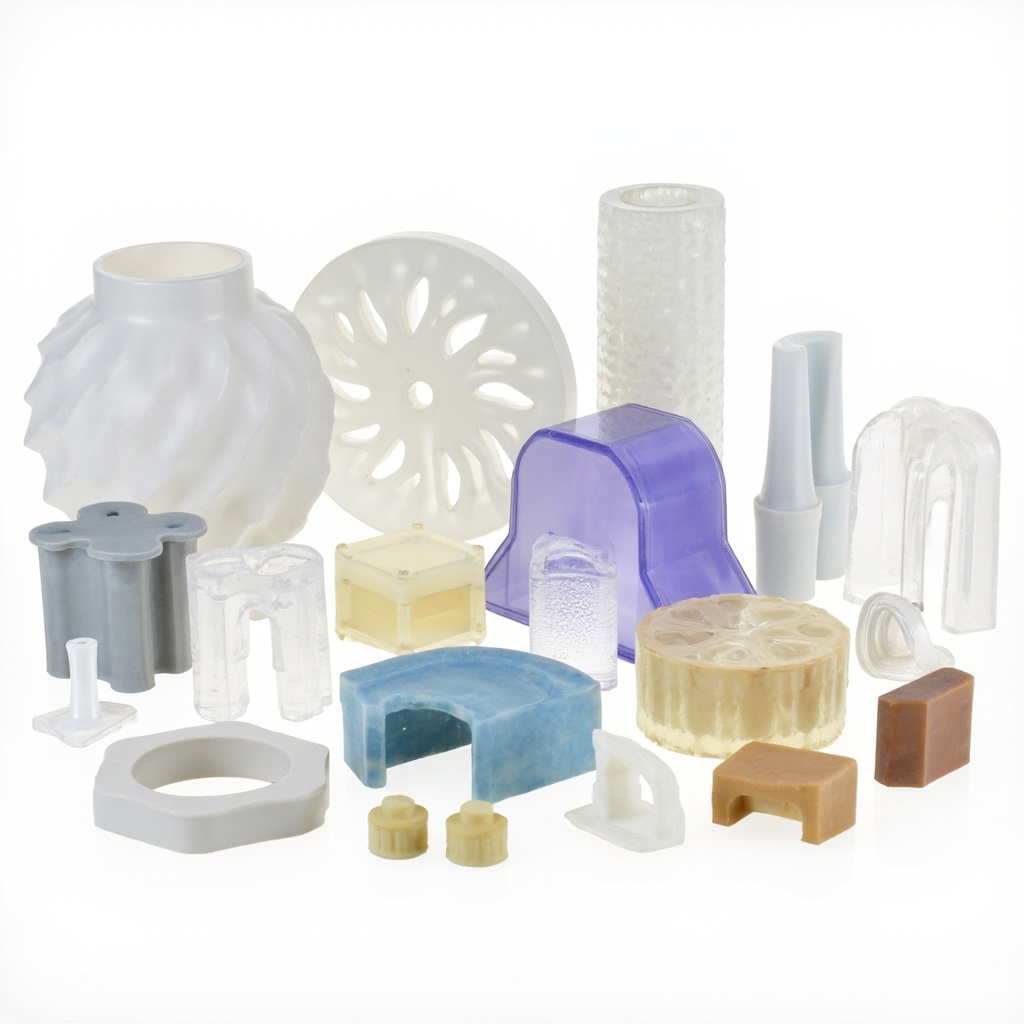
La technologie DLS utilise exclusivement des résines photopolymères, chacune étant formulée pour répondre à des exigences de performance spécifiques. Les résines transparentes standard offrent une clarté optique idéale pour les pièces transparentes. Les résines techniques présentent des propriétés mécaniques améliorées, notamment une meilleure résistance aux chocs, à la température et une rigidité accrue. Les résines souples imitent les matériaux de type caoutchouc pour la fabrication de joints, de garnitures d'étanchéité et de composants surmoulés.
Options de résine DLS disponibles
Chez NylonPlastic, nous proposons une gamme complète de résines compatibles avec la technologie DLS afin de répondre aux exigences variées des différentes applications. Notre résine transparente standard offre une excellente transparence et un fini de surface optimal pour les prototypes visuels et les composants optiques. Les résines haute température résistent à des charges thermiques allant jusqu’à 238 °C (HDT), ce qui les rend adaptées aux essais à l’air chaud et aux essais d’écoulement de fluides. Les résines souples, dont la dureté Shore A varie entre 50 et 90, permettent la production de composants élastomères sans investissement dans des outils de moulage.
DLS par rapport aux autres technologies d'impression 3D
Lors du choix d'un procédé d'impression 3D, il est utile de bien comprendre les différences entre la technologie DLS et les autres technologies afin d'optimiser la qualité des pièces et la rentabilité. La technologie DLS offre des avantages significatifs en termes de finition de surface et de vitesse de fabrication par rapport aux méthodes de fusion sur lit de poudre, tout en garantissant de meilleures propriétés mécaniques isotropes que la modélisation par dépôt fondu.
| Technologie | Qualité de surface | Résistance mécanique | Vitesse de construction | Gamme de matériaux |
|---|---|---|---|---|
| DLS | Excellent | Élevé (anisotrope) | Rapide | Photopolymères uniquement |
| ALS | Excellent | Modéré (anisotrope) | Modéré | Photopolymères uniquement |
| SLS (nylon) | Bien (granuleux) | Élevé (isotrope) | Modéré | Poudres de nylon |
| MJF | Bien (mat) | Élevé (isotrope) | Rapide | PA12, PA11 |
| FDM | Juste (lignes de calque) | Modéré (anisotrope) | Lente à modérée | Thermoplastiques |
Applications de l'impression 3D DLS
La technologie DLS est utilisée dans un large éventail de secteurs où la qualité de surface et la précision sont primordiales. L'industrie dentaire utilise la technologie DLS pour la fabrication de modèles de couronnes, de guides chirurgicaux et d'aligneurs orthodontiques, tirant parti des surfaces lisses qui minimisent l'adhérence bactérienne. L'industrie des appareils auditifs produit des coques sur mesure aux géométries complexes directement à partir de numérisations numériques. Les fabricants d'électronique grand public créent des coques transparentes, des guides de lumière et des composants optiques avec des tolérances dimensionnelles très strictes.
Cas d'utilisation idéaux pour le DLS
La technologie DLS excelle dans les applications où la qualité de surface ne peut faire l'objet d'aucun compromis. Les composants optiques exigeant clarté et transmission de la lumière tirent parti des pièces lisses et transparentes issues de la technologie DLS. Les prototypes fonctionnels soumis à des tests d'ajustement nécessitent la précision offerte par la technologie DLS, ce qui réduit le recours à un usinage secondaire. La production en petites séries de pièces complexes devient économiquement viable sans les coûts liés à l’outillage de moulage par injection lorsque l’on utilise la technologie DLS.

Post-traitement des pièces DLS
Le post-traitement transforme les pièces DLS « telles que fabriquées » en composants finis prêts à l'emploi. La principale étape de post-traitement consiste à éliminer la résine non durcie de la surface de la pièce à l'aide d'alcool isopropylique (IPA) ou d'un solvant similaire. Une étape de post-polymérisation aux UV garantit une polymérisation complète et permet d'obtenir des propriétés mécaniques optimales. Le retrait des supports, le ponçage et le polissage peuvent s'avérer nécessaires en fonction des exigences relatives à la surface.
Étapes de post-traitement
Après l'impression, les pièces sont soumises à un processus de nettoyage minutieux visant à éliminer toute trace de résine non durcie des canaux internes et des détails fins. Les méthodes de nettoyage comprennent le lavage manuel, l'agitation par ultrasons ou l'utilisation de machines spécialisées de lavage et de durcissement. La chambre de durcissement applique une exposition supplémentaire aux UV afin d'obtenir les propriétés matérielles souhaitées, ce qui est particulièrement important pour les pièces nécessitant une résistance thermique ou une résistance structurelle. Les options de finition de surface vont de la finition « telle que construite », avec une intervention minimale, au polissage fin destiné aux applications optiques.
Pourquoi choisir NylonPlastic pour vos services DLS ?
FAQ
Dans quels cas les services d'impression 3D par synthèse de lumière numérique (DLS) constituent-ils une bonne option ?
Les services d'impression 3D par synthèse de lumière numérique (DLS) constituent une bonne option lorsque la rapidité d'itération, la complexité géométrique, le faible coût d'outillage ou la production en petites séries priment sur le coût unitaire des pièces moulées.
Quels sont les éléments à vérifier avant de choisir des services d'impression 3D par synthèse de lumière numérique (DLS) ?
Vérifier la taille de la pièce, les propriétés du matériau, l'état de surface, la tolérance dimensionnelle, l'exposition à la chaleur, la direction de la charge et la nécessité d'un post-traitement.
En quoi les services d'impression 3D par synthèse de lumière numérique (DLS) se distinguent-ils de l'usinage CNC ?
L'impression 3D permet de créer rapidement des formes complexes, tandis que l'usinage CNC est souvent plus performant pour les surfaces précises, les tolérances plus étroites et les matériaux de qualité.
Quels sont les facteurs qui influencent le coût des services d'impression 3D par synthèse de lumière numérique (DLS) ?
Le coût dépend du matériau, du volume de construction, du temps d'impression, de la hauteur des couches, de l'enlèvement du support, de la finition, de l'inspection et du nombre de pièces dans la construction.