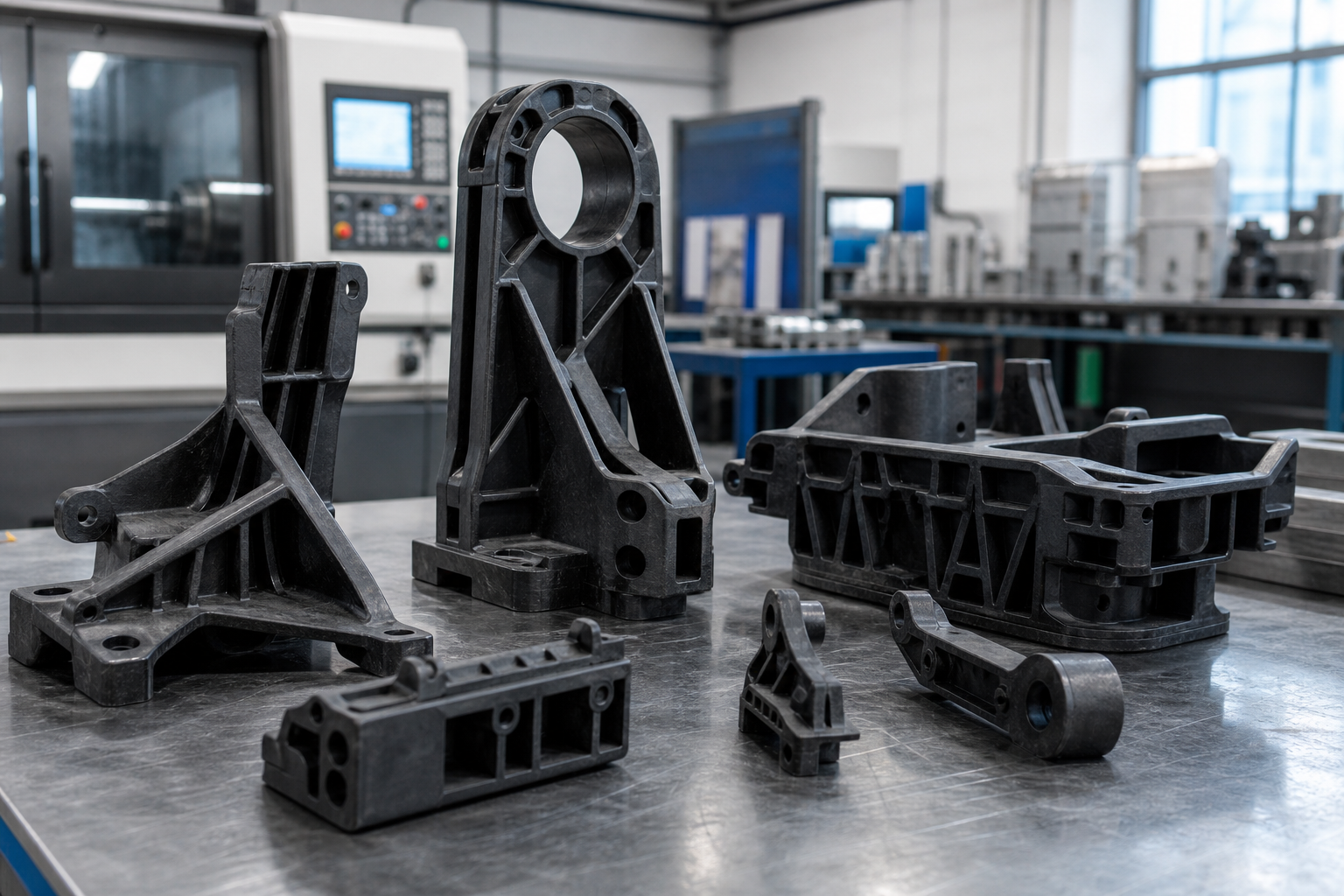
Usinage CNC multiaxial Cette approche s'avère pertinente lorsqu'une pièce en plastique présente des surfaces complexes, des relations de positionnement très précises ou un nombre trop important de réglages pour un simple usinage à 3 axes. L'objectif n'est pas d'utiliser systématiquement la machine la plus sophistiquée, mais de réduire les erreurs de manipulation, d'améliorer l'accès aux caractéristiques et de garantir une qualité constante de la pièce.
Pour les composants en plastique sur mesure, l'usinage multiaxial s'avère particulièrement utile lorsque les changements de fixation entraînent un risque de dépassement des tolérances ou lorsque la géométrie est difficile à atteindre sans faire pivoter la pièce. Nylon Plastic peut examiner le modèle et recommander la stratégie d'axes la plus efficace avant d'établir un devis.
En bref
| Itinéraire | Meilleur pour | Principal compromis | Project Check |
|---|---|---|---|
| 3 axes | Pièces planes simples et cavités de base | D'autres configurations pour les géométries complexes | Vérifiez si les montages répétés nuisent aux tolérances |
| 4 axes | Fonctions latérales indexées et accès rotatif | L'accès en mode libre reste limité | Convient aux pièces cylindriques ou à plusieurs faces |
| 5 axes | Géométrie complexe et réglages réduits | Coût plus élevé des machines et exigences accrues en matière de programmation | C'est l'idéal lorsque la qualité des pièces s'améliore suffisamment pour que cela en vaille la peine |
Quand l'usinage CNC multiaxial s'avère pertinent
Si la pièce doit être usinée sur plusieurs faces, présente des angles composés profonds ou nécessite des relations de position précises entre ses éléments, l'ajout d'axes supplémentaires peut réduire les temps de réglage et améliorer la régularité de l'usinage. Cela est particulièrement important pour les pièces en plastique, car les serrages répétés peuvent déformer les parois minces ou décaler les éléments sur les matériaux plus tendres.
L'usinage 5 axes n'est pas toujours moins coûteux, mais il peut s'avérer être la solution la moins risquée lorsque l'alternative implique l'utilisation de plusieurs dispositifs de fixation, des temps de manipulation plus longs et un cumul d'erreurs de tolérance.
Questions to Ask Before Choosing the Axis Strategy
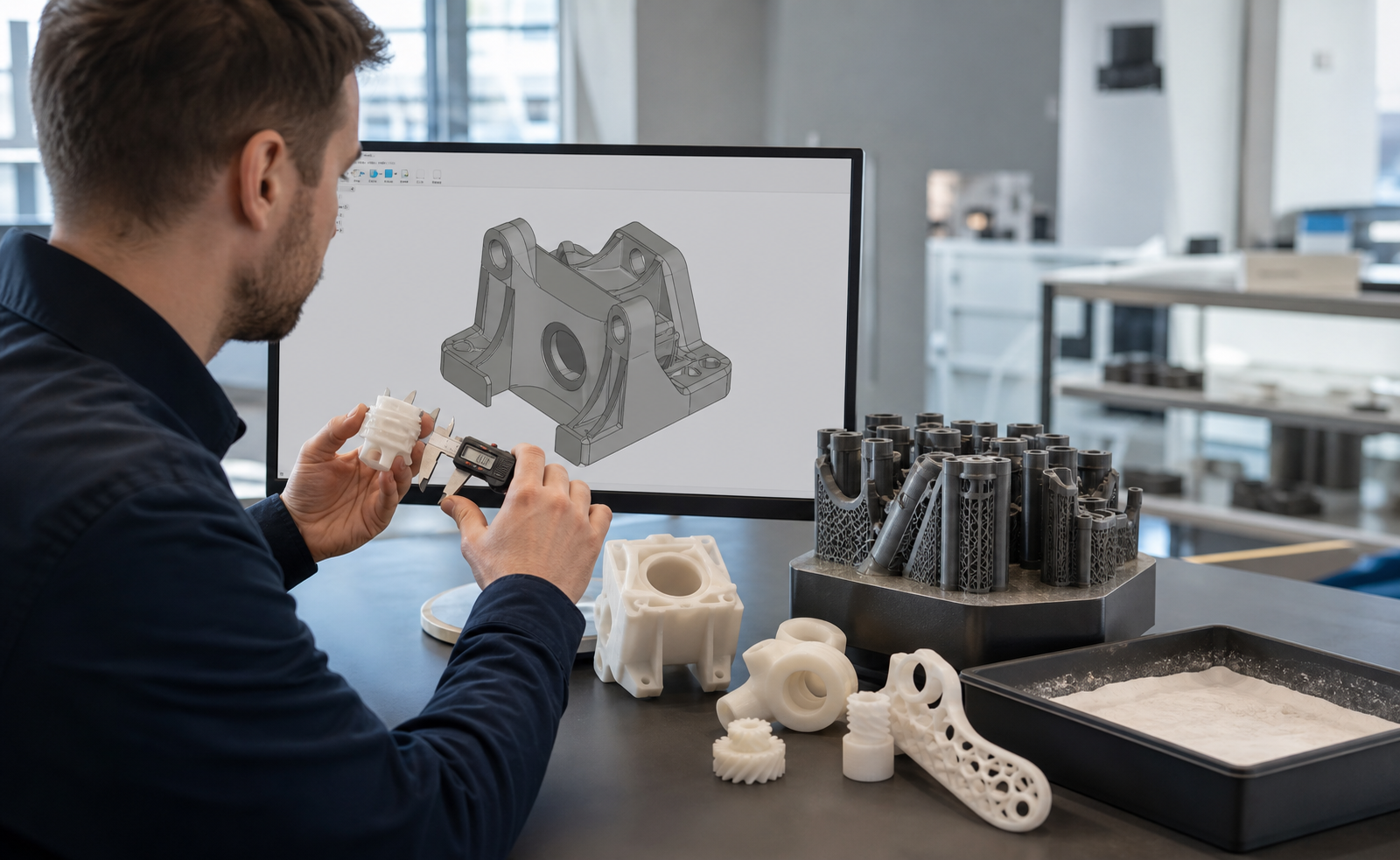
- Combien de réglages nécessite l'usinage sur 3 axes ? Plus il y a de configurations, plus le risque est généralement élevé.
- La pièce en plastique bouge-t-elle pendant le serrage ? Les pièces plus tendres peuvent bénéficier d'un nombre réduit de repositionnements.
- Les éléments inclinés ou enveloppants sont-ils essentiels ? Cela conduit souvent à opter pour un usinage à 4 ou 5 axes.
- La continuité de surface est-elle importante ? L'accès multiaxial permet d'améliorer la finition sur les contours complexes.
- Une meilleure configuration permettrait-elle de réduire les rebuts et le temps consacré aux contrôles ? Le coût de la machine ne reflète pas à lui seul l'ensemble des coûts.
Problèmes courants liés à l'usinage multiaxial et leurs solutions
| Problème | Pourquoi cela se produit-il ? | Corriger |
|---|---|---|
| Devis trop élevé pour une pièce simple | Choix d'un système à 5 axes sans réelle nécessité | Vérifiez à nouveau si une machine à 3 ou 4 axes permet d'effectuer le travail correctement. |
| Pile de tolérances issue de plusieurs configurations | Pièce repositionnée trop souvent | Optez pour un parcours sur un axe plus élevé ou un plan de fixation plus ingénieux |
| Déformation des murs | La pression de serrage modifie la géométrie de la pièce | Réduire les configurations et revoir la stratégie d'assistance |
| Une production lente malgré une machine de pointe | La complexité de la programmation l'emporte sur les avantages | N'utilisez le multiaxial que lorsque la géométrie ou les tolérances le justifient |
3 axes, 4 axes ou 5 axes pour les pièces en plastique
L'usinage 3 axes reste la solution idéale pour de nombreuses pièces en plastique. L'usinage 4 axes est utile pour l'accès latéral et l'usinage de pièces cylindriques. L'usinage 5 axes prend tout son sens lorsque la réduction du nombre de réglages permet d'améliorer sensiblement l'alignement des caractéristiques, la finition ou la stabilité sur des géométries en plastique complexes.
Lire la suite
- Pièces en plastique usinées sur mesure
- Services d'usinage CNC du nylon
- Plastic Machining Tolerances
- Guide des matériaux pour l'usinage CNC
Questions fréquemment posées
When does a plastic part need 5-axis CNC machining?
5-axis is useful when multiple angled features, complex surfaces, tool access, or fewer setups materially improve accuracy or finish. Many parts remain practical with 3-axis or indexed 4-axis machining.
Is 5-axis machining always more expensive for plastic parts?
Not always. It can reduce setups and secondary work, but programming, fixturing, machine time, and inspection must be compared against a stable lower-axis route for the actual geometry.
Why does workholding matter more for thin plastic parts?
Plastic is less stiff than metal and can deform under clamping or cutting heat. Fixtures, support points, machining sequence, and free-state inspection need to be planned around the functional datums.
What should a multi-axis CNC RFQ include?
Send STEP and drawing files, material and stock condition, quantity, machine or axis preference, critical datums, tolerances, surface finish, workholding restrictions, inserts, and inspection reports.
Request a Multi-Axis Plastic CNC Review
For multi axis CNC machining plastic parts, share CAD and a controlled drawing with the critical relationships across faces. Nylon Plastic can review whether fewer setups improve the project, together with the fixture strategy, material, functional datums, inspection and total quoted scope.
Éléments à inclure dans votre demande
- State the exact grade, stock form and source, permitted substitution, quantity by phase, service environment and measurement or conditioning state.
- Mark critical features and datums, workholding restrictions, acceptable clamp marks, surface requirements and any customer-specified axis constraint.
- Include inserts or secondary operations, first-article records, free-state or assembled inspection requirements, traceability, destination and timing.
Nylon Plastic helps project teams choose the right machining route for plastic parts instead of defaulting to either the cheapest setup or the most advanced machine. That keeps quoting grounded in part quality and total manufacturing risk.
Axis strategy questions that affect the quote
- A 5-axis machine is requested for prestige while the part could be machined accurately with 3-axis or indexed 4-axis setups.
- The quote ignores fixture access, workholding marks, thin-wall deflection, tool reach, chip evacuation, and inspection datums.
- The quote review compares machine count instead of comparing setups, critical features, tolerance capability, cycle time, and total inspection scope.
- Nylon or POM stock is treated like metal even though heat, clamping, moisture, and residual stress can move the final dimensions.
Nylon Plastic supports CNC machining of engineering plastic parts and can review the axis strategy together with material, fixture design, machining sequence, tolerances, and inspection. The right question is which setup controls the functional features with the least risk, not simply how many axes a machine has.
- Avant d'établir un devis, examinez le plan, les matériaux, les quantités, les caractéristiques essentielles et l'environnement d'utilisation.
- Reliez les échantillons, les rapports dimensionnels, les documents relatifs aux matériaux, la traçabilité et les critères d'acceptation à la même révision.
- Recourez à la formulation sur mesure, au moulage par injection, à l'usinage CNC ou à l'impression 3D lorsque l'application nécessite une autre méthode.
Multi-axis CNC machining plastic parts is most useful when feature access, fixture reduction or tool orientation matters more than a simple 3-axis setup.
Compare setup and fixture work, programming, machining, stock preparation or stress relief where needed, secondary operations and inspection on the same revision. Agree the sample approval and repeat-production scope; machine axis count alone does not define the accuracy or inspection delivered.