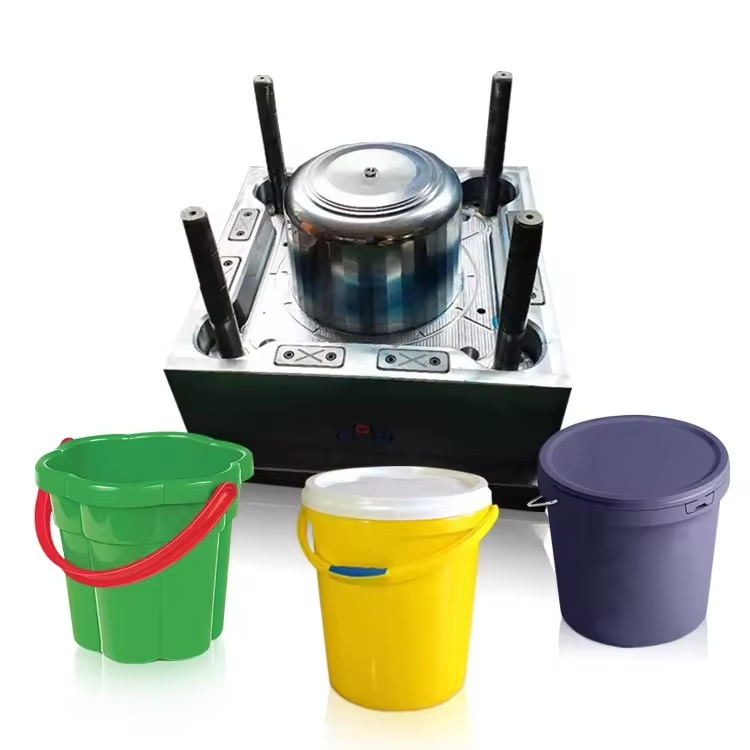
Moulage de composants électroniques est dictée par des exigences en matière de précision, de résistance à la chaleur, à la flamme et de fiabilité, plutôt que par le seul prix de la résine. Les acheteurs doivent trouver le juste équilibre entre la stabilité de l'ajustement, l'isolation, le comportement ESD, les spécifications des connecteurs et les exigences de conformité avant le lancement de la fabrication des outils.
Pour les appareils électroniques amenés à être utilisés à l'extérieur ou à entrer en contact avec des produits chimiques de nettoyage, consultez Nylon stabilisé aux UV, absorption d'humidité du nylon, et le Tableau de compatibilité chimique du nylon avant que la résine ne durcisse.
Le choix d'une résine inadaptée ou d'une stratégie de moulage inappropriée peut entraîner un gauchissement, des clips fragiles, un mauvais ajustement des connecteurs ou des problèmes thermiques bien après que les échantillons semblent acceptables. Nylon Plastic peut analyser l'environnement électrique et le fonctionnement de la pièce avant que le choix du matériau ne soit définitif.
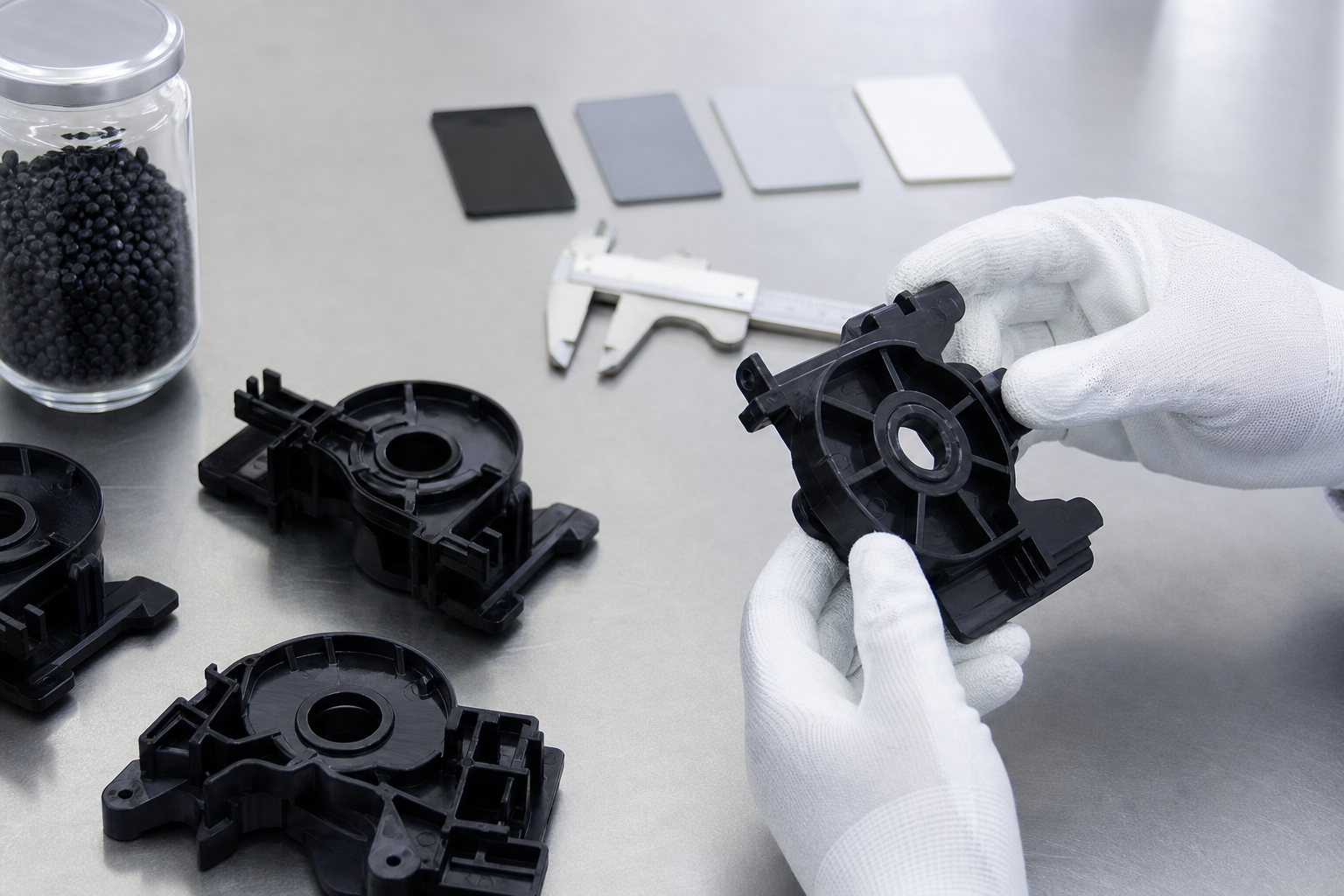
En bref
| Exigence | Éléments à vérifier | Remarque à l'attention de l'acheteur |
|---|---|---|
| Résistance à la chaleur | Température de fonctionnement en continu et points chauds locaux | Les pics de chaleur et les périodes de chaleur prolongées ne sont pas la même chose |
| Comportement au feu | Contexte relatif à la classe de résistance au feu et à l'épaisseur des parois requises | Ne pas spécifier de résine ignifuge sans qu'il y ait une réelle nécessité. |
| Précision dimensionnelle | Ajustement du connecteur, géométrie du loquet et mouvement après moulage | De légères erreurs d'ajustement peuvent nuire au rendement de l'assemblage |
| Comportement électrique | Isolation, protection antistatique ou ESD requise | Sélectionnez la propriété requise par l'appareil concerné |
| Aspect et étanchéité | Interfaces esthétiques, à encliquetage et à joint d'étanchéité | La géométrie du boîtier doit être examinée en tenant compte de sa fonction |
Comment choisir une résine pour le moulage de composants électroniques
Parmi les matériaux couramment utilisés, on trouve le nylon, le PBT, PC, le PC/ABS et les mélanges ignifugés. Le nylon peut convenir aux connecteurs et aux pièces internes structurelles, mais il faut veiller à bien gérer son comportement face à l'humidité. Le PBT est souvent choisi pour les connecteurs électriques en raison de sa stabilité dimensionnelle et de ses performances électriques. Le PC et le PC/ABS sont couramment utilisés pour les boîtiers où l'aspect esthétique et la résistance aux chocs sont importants.
Le choix du matériau le plus adapté dépend de l'environnement d'utilisation du dispositif, de la précision du connecteur, de l'épaisseur de la paroi et de la nécessité réelle de disposer de performances en matière de résistance au feu ou de protection contre les décharges électrostatiques.
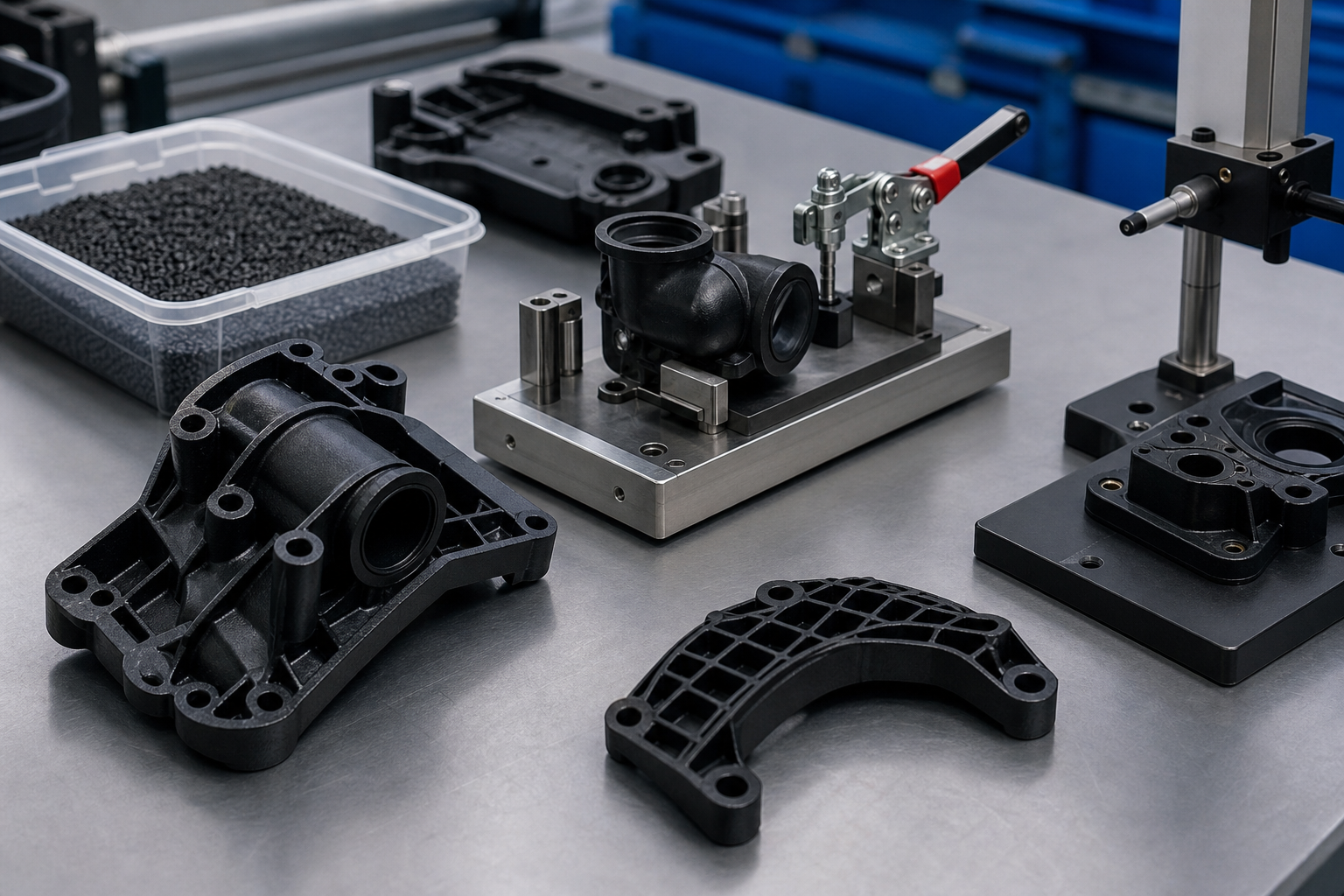
Pour découvrir les différentes options de connecteurs et de composants électriques, comparez nylon et PBT répondant aux mêmes exigences en matière d'humidité, de chaleur et de stabilité dimensionnelle.
Contrôles essentiels avant la fabrication des outillages
- Définir la charge thermique réelle : pas seulement une température indiquée dans les gros titres.
- Précisez si ce sont les performances en matière de protection contre les décharges électrostatiques (ESD) ou d'isolation qui sont requises : Il s'agit de chemins de matériaux différents.
- Vérifier les tolérances des connecteurs et caractéristiques du loquet : De légers décalages au niveau des pièces moulées peuvent entraîner l'arrêt de la chaîne de montage.
- Adapter la puissance de la flamme à l'épaisseur de la paroi : Les performances de la résine dépendent des conditions d'essai.
- Prévoir le retrait et les mouvements après le moulage : Les composants électroniques de précision nécessitent des conditions d'inspection stables.
Problèmes courants liés au moulage des composants électroniques et leurs solutions
| Problème | Cause probable | Corriger |
|---|---|---|
| Problème d'ajustement du connecteur | Déformation ou dérive des tolérances après le moulage | Vérifier le choix de la résine, la disposition des points d'injection et l'état de l'inspection |
| Caractéristiques de rupture fragile | Mauvais matériau ou trop de matière de remplissage | Vérifier à nouveau la géométrie des clips et leur comportement à l'impact |
| Déformation du boîtier à proximité d'une source de chaleur | Besoins thermiques sous-estimés | Utilisez une résine plus résistante à la chaleur et vérifiez la conception des parois |
| Problèmes fonctionnels liés à l'électricité statique | Exigence relative aux propriétés électriques non définie dès le départ | Préciser les exigences en matière de protection contre les décharges électrostatiques (ESD), de protection antistatique ou d'isolation avant d'établir un devis |
Moulage de composants électroniques vs boîtiers en plastique classiques
Les composants électroniques nécessitent généralement un contrôle plus rigoureux en matière d'ajustement, de comportement thermique et de propriétés électriques que les boîtiers à usage général. Un fournisseur qui se contente de considérer le composant comme une simple coque générique risque de ne pas identifier les véritables risques liés à la conception avant les dernières phases du programme.
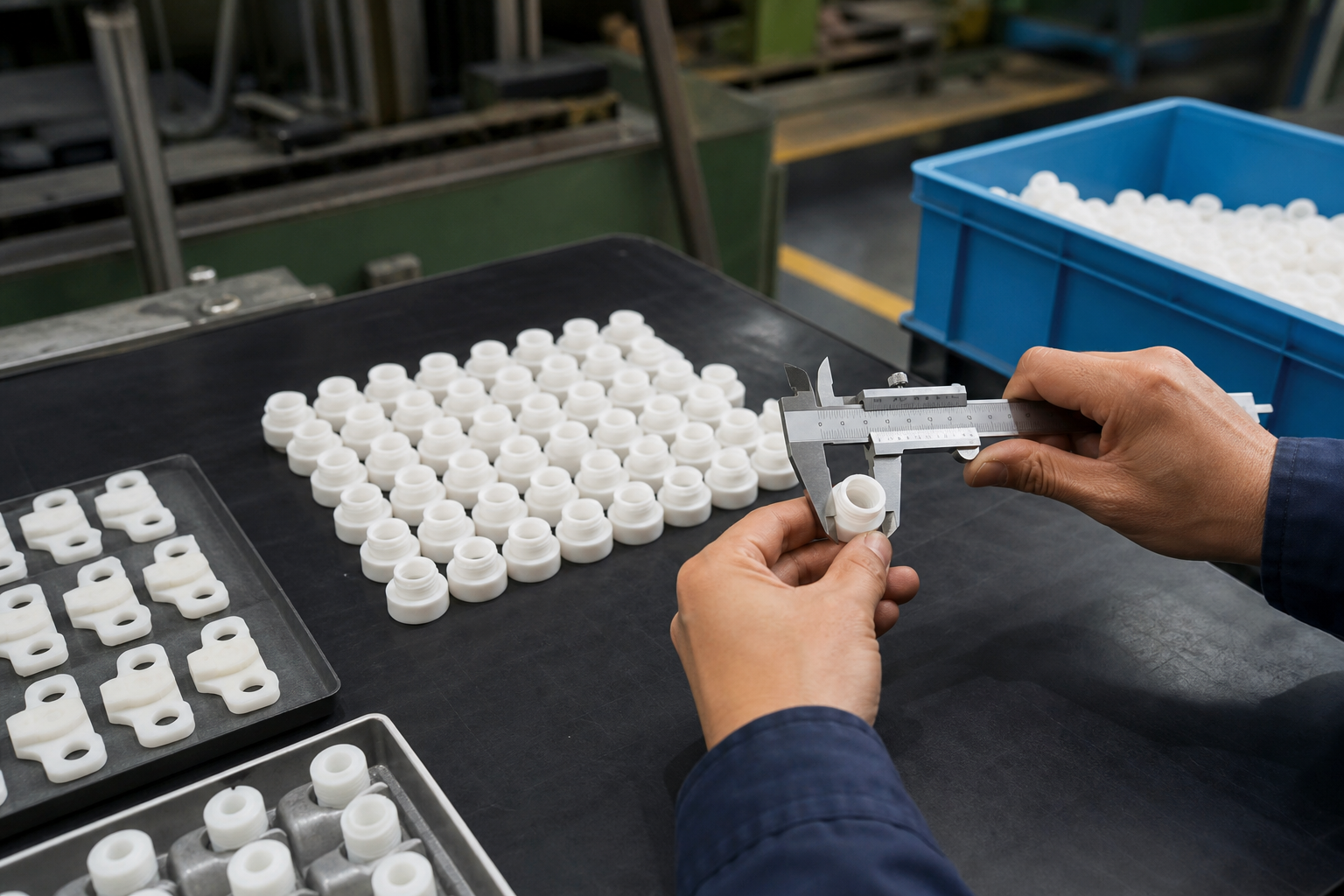
Consultez le Domaine d'application des pièces en plastique moulées sur mesure lors de la préparation des plans, des outillages, des échantillons et des spécifications de production.
Lire la suite
Questions fréquemment posées
Qu'est-ce que le moulage de composants électroniques ?
Il s'agit du moulage de pièces en plastique utilisées dans les produits électriques et électroniques, telles que des boîtiers, des connecteurs, des clips et des composants structurels internes.
Quels sont les matériaux couramment utilisés pour le moulage de composants électroniques ?
Parmi les matériaux couramment utilisés, on trouve le nylon, le PBT, le PC, le PC-ABS et les plastiques techniques ignifugés.
Dans quels cas le nylon constitue-t-il un bon choix pour les composants électroniques ?
Le nylon peut constituer un bon choix pour les connecteurs et les pièces structurelles, à condition que les effets de l'humidité et le contrôle dimensionnel soient correctement pris en compte.
Tous les composants électroniques doivent-ils être fabriqués à partir de résine ignifuge ?
Non. L'utilisation d'une résine ignifuge ne doit être prescrite que lorsque les exigences relatives au produit l'imposent réellement.
Que dois-je fournir pour obtenir un devis de moulage de composants électroniques ?
Veuillez nous envoyer le plan, la température de fonctionnement, les caractéristiques électriques, le volume annuel et les cotes d'ajustement critiques.
Comparer Comparaison entre le nylon et le polycarbonate notamment en matière de résistance, de température, de coût et de recommandations d'utilisation.
Demander une analyse des pièces en plastique utilisées dans les appareils électroniques
Pour le moulage de composants électroniques tels que des boîtiers, des corps de connecteurs, des clips ou des supports internes, veuillez nous transmettre le plan et les spécifications du dispositif. Nylon Plastic peut examiner la résine, l'outillage, l'ajustement, les exigences en matière de finition et les échantillons du composant réel.
Éléments à préciser et à convenir avant l'établissement du devis
- Indiquez les coordonnées géométriques (CAD), la révision, la classe exacte ou l'alternative autorisée, la quantité initiale et annuelle, la destination et le calendrier prévu.
- Indiquez les emplacements des connecteurs et des loquets, des bossages de vis, des inserts, des interfaces de joints d'étanchéité et des zones esthétiques. Précisez les points chauds locaux, la température de fonctionnement en continu, le taux d'humidité et les produits de nettoyage.
- Définir séparément les performances en matière d'isolation ou de protection contre les décharges électrostatiques (ESD), en précisant la méthode d'essai et les limites. Associer la classe de résistance au feu requise et la documentation correspondante à la qualité, à la couleur et à l'épaisseur exactes du produit.
- Précisez les rapports relatifs à l'ajustement des échantillons, à leur aspect, à leurs dimensions, ainsi que tout essai fonctionnel ou de résistance des boîtiers, en indiquant notamment qui valide chaque résultat.
Convenir que la documentation relative à la résine, l'outillage, les pièces moulées, la mise en place des inserts, la finition, l'assemblage et les essais constituent des postes distincts du devis. La documentation relative aux matériaux ne certifie pas un dispositif complet ni son boîtier ; la qualification doit respecter les exigences convenues pour les composants et le produit.