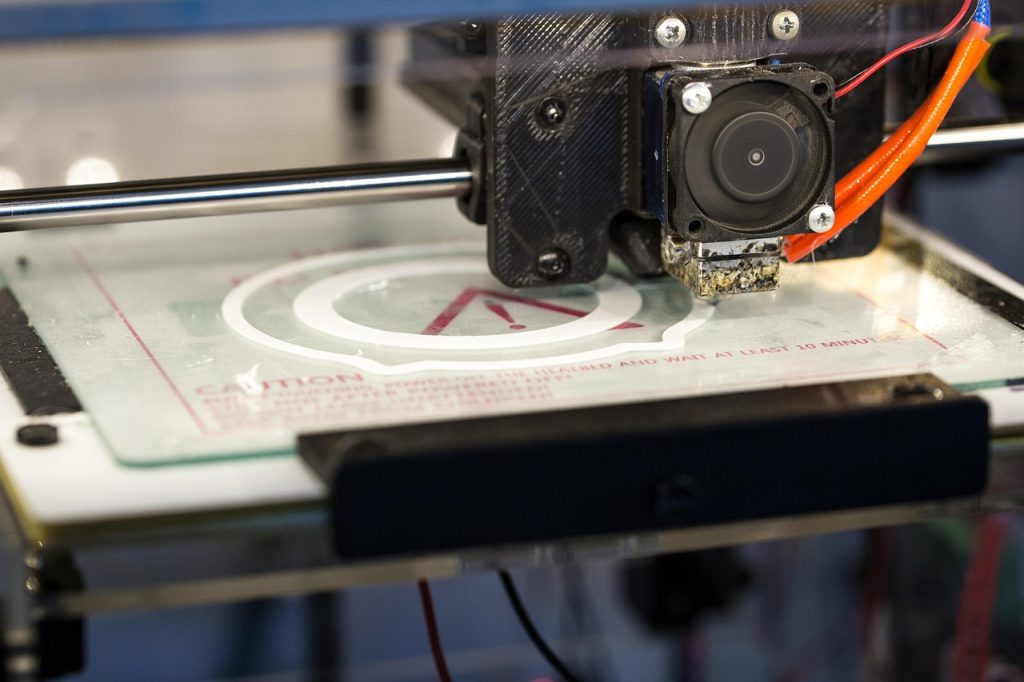
Services de fabrication de nylon Ces techniques sont utilisées lorsque les acheteurs ont besoin de pièces fonctionnelles en nylon sans avoir à deviner quel procédé est le plus adapté. Le procédé le plus approprié peut être l'usinage CNC, le moulage par injection ou l'impression 3D, en fonction du volume, des tolérances, de la géométrie et des exigences en matière de finition de surface.
Ce guide aide les acheteurs B2B à comparer les différentes options de fabrication du nylon, à choisir la qualité de nylon adaptée et à préparer un appel d'offres complet. Il est destiné à la conception de prototypes, à la production en petites séries et à la planification de la production, et non à des projets de loisirs.
En bref
| Domaine de décision | Meilleure option | Vérification de l'acheteur |
|---|---|---|
| Faible volume | Usinage CNC ou impression 3D | Vérifier les tolérances et les quantités avant d'établir un devis |
| Volume stable | Moulage par injection | Vérifier le coût de l'outillage et le choix des matériaux |
| Géométrie complexe | Impression 3D ou usinage CNC à partir de pièces en stock | Vérification de la structure, de l'épaisseur des parois et du post-traitement |
| Pièces d'usure ou de charge | PA6, PA66, PA12 ou nylon chargé | Adaptez la qualité du produit aux besoins en matière d'humidité, de chaleur et de rigidité |
| Meilleure saisie d'appel d'offres | Dessin, quantité, cas d'utilisation, environnement | Envoyez le cahier des charges fonctionnel, et pas seulement le fichier CAO |
Quelle méthode de fabrication du nylon choisir ?
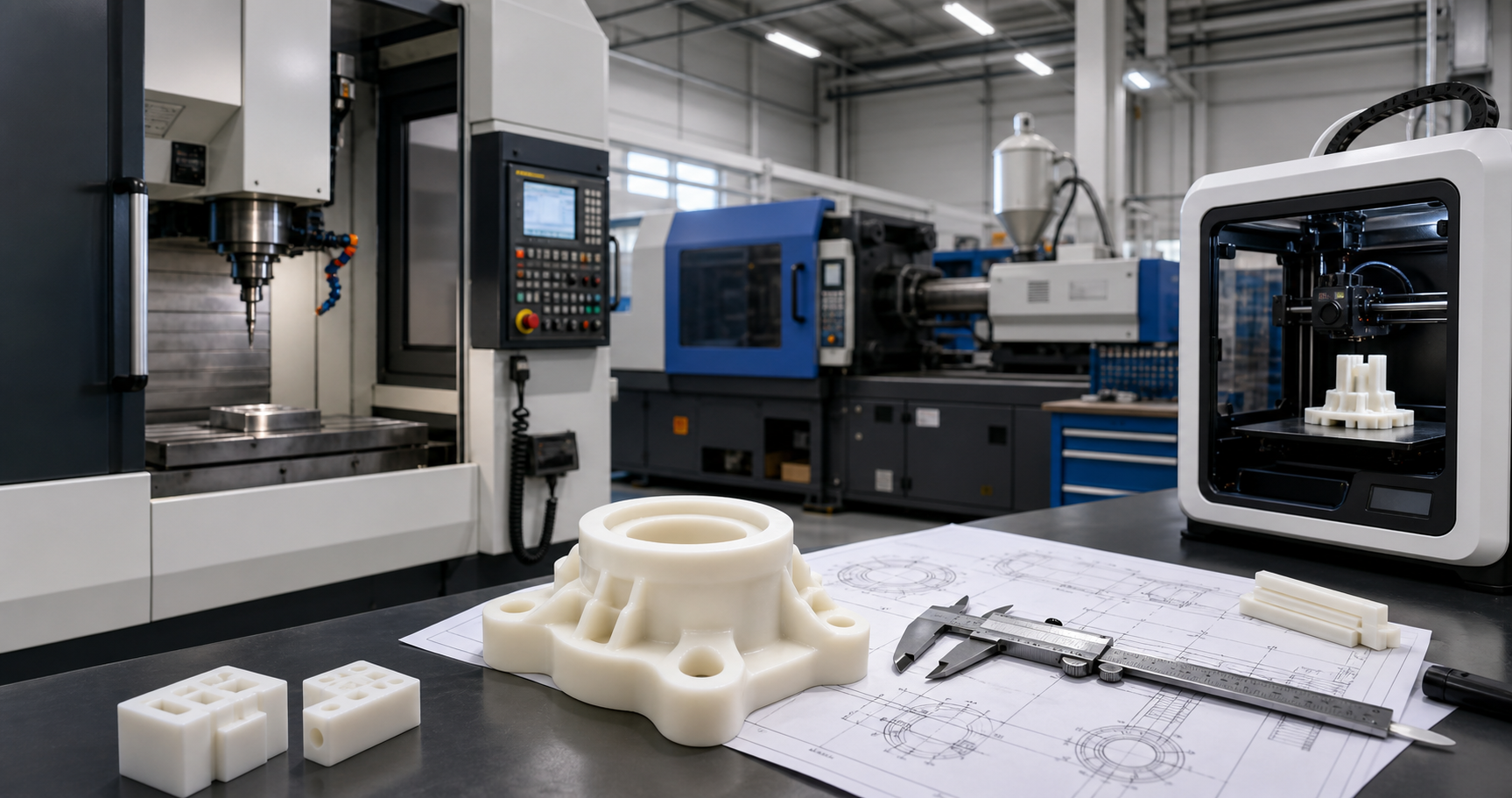
L'usinage CNC est souvent la solution la plus rapide pour les prototypes, les petites séries et les pièces nécessitant une grande précision au niveau des alésages, des filetages ou de la planéité. Le moulage par injection est préférable lorsque la géométrie est stable et que le volume annuel justifie l'investissement dans l'outillage. L'impression 3D est utile pour les itérations rapides, les formes complexes et les pièces fonctionnelles produites en petites séries.
Choix des matériaux pour les pièces en nylon
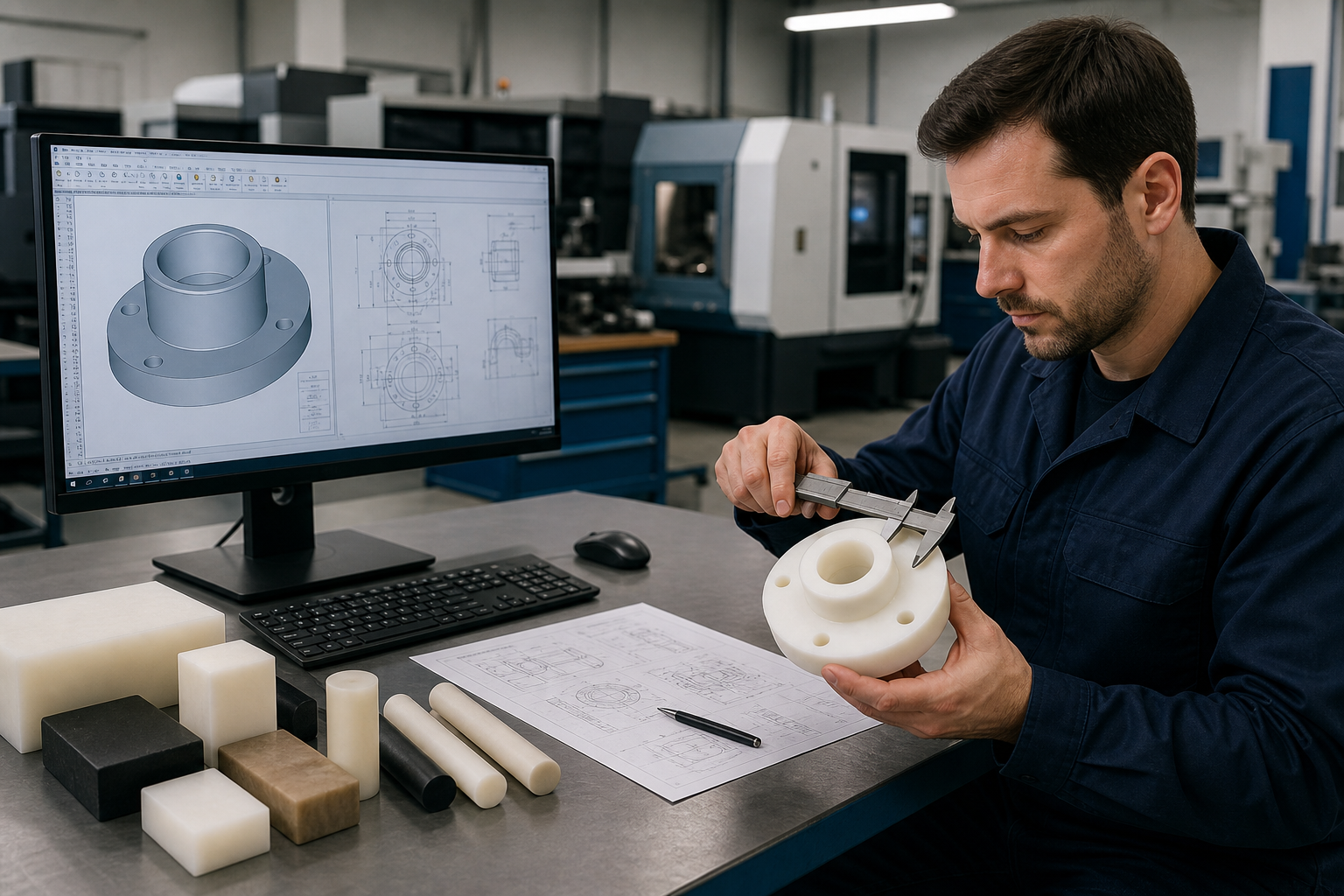
La plupart des projets de fabrication à base de nylon commencent par un choix entre le PA6, le PA66 et le PA12. Le PA6 et le PA66 sont couramment utilisés pour leur solidité et leur résistance à l'usure. Le PA12 est souvent privilégié lorsque l'on privilégie une absorption d'humidité plus faible et une meilleure stabilité dimensionnelle.
- PA6 : une bonne résistance et des performances polyvalentes.
- PA66 : un profil de résistance à la chaleur et de rigidité amélioré pour de nombreuses pièces moulées.
- PA12 : une meilleure stabilité dans des environnements humides ou soumis à des variations.
- Nylon rembourré : une rigidité plus élevée, mais une plus grande sensibilité aux conditions de fabrication.
Problèmes courants et solutions pratiques
| Problème | Cause probable | Solution pratique |
|---|---|---|
| Déformations partielles | Procédé inadapté ou contrôle insuffisant de l'humidité | Vérifier la qualité, l'orientation et le séchage |
| Dérive de tolérance | Changement lié à l'humidité, à la chaleur ou au post-traitement | Définir les conditions d'inspection et les exigences d'ajustement |
| Citation importante | Processus retenu avant l'examen des fonctions | Demander une comparaison entre l'usinage CNC, le moulage et l'impression |
| Défauts de surface | Mauvais réglages de la machine ou mauvais choix de matériau | Définissez dès le début l'objectif final et le cas d'utilisation |
Liste de contrôle pour les appels d'offres
| Envoyer ceci | Pourquoi est-ce important ? |
|---|---|
| Fichier STEP et dessin en 2D | Facilite l'évaluation de la fabricabilité et des tolérances |
| Plan de quantités et de réapprovisionnement | Aide à choisir entre l'usinage CNC, le moulage et l'impression |
| Besoins en matériaux | Évite de proposer un type de nylon inadapté |
| Dimensions critiques | Concentre l'inspection sur les caractéristiques fonctionnelles |
| Environnement d'application | Tient compte de l'humidité, de la chaleur et de l'usure |
Pourquoi choisir le plastique nylon ?
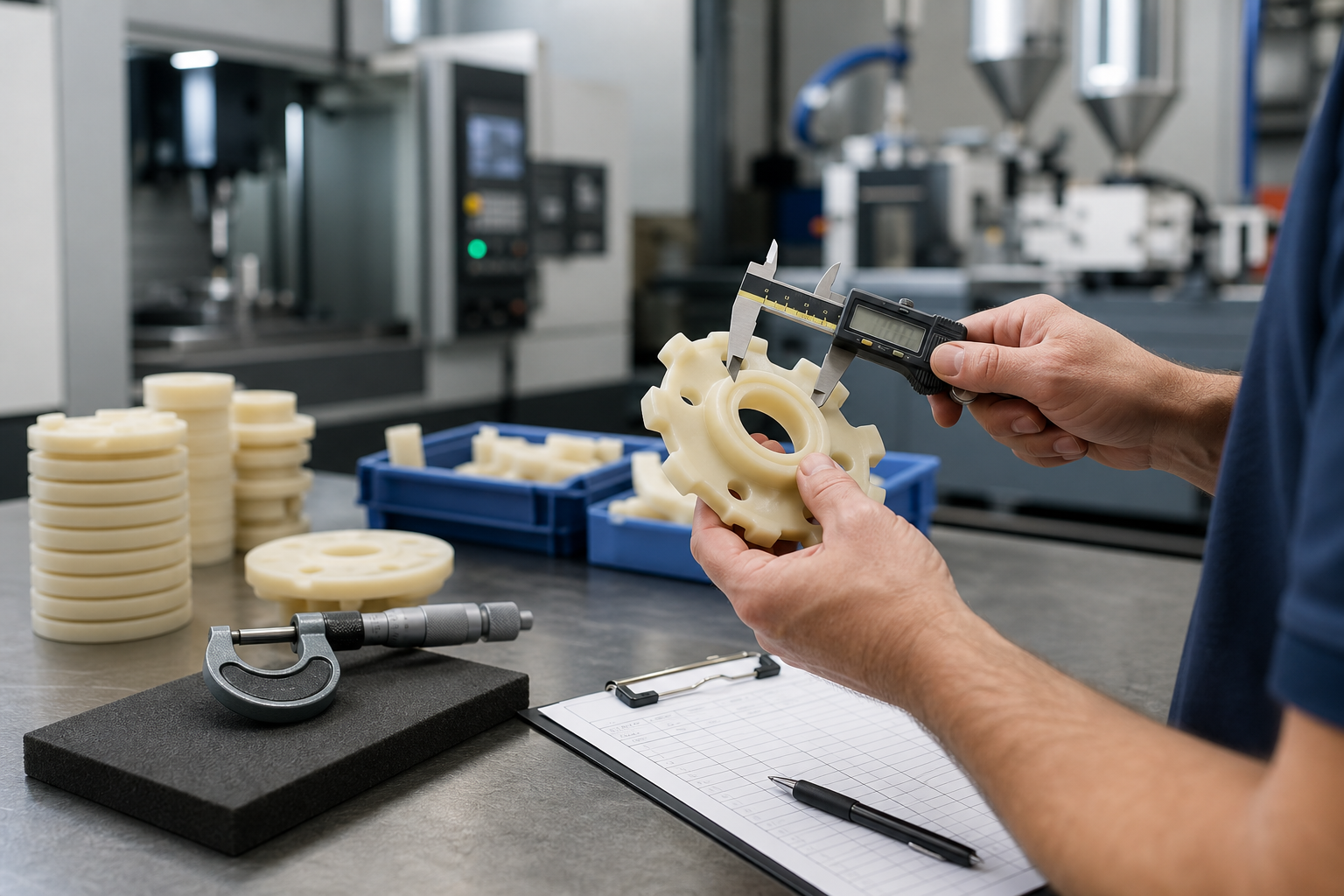
Nylon Plastic accompagne les projets de fabrication en nylon lorsque le client hésite encore entre l'usinage, le moulage et la fabrication additive. Plutôt que d'orienter systématiquement chaque demande de devis vers un procédé unique, nous analysons la géométrie, la quantité, les tolérances, les risques liés au matériau et le stade d'homologation avant de recommander une méthode de fabrication.
- Comparaison des processus : écran Usinage CNC du nylon, moulage par injection de nylon et impression 3D en nylon en termes de coûts, de délais et de risques fonctionnels.
- Conseils relatifs aux matériaux : Comparez le PA6, le PA66, le PA12, le nylon moulé, le nylon renforcé de fibres de verre et les grades modifiés en fonction de leur résistance à la charge, à l'usure, à la chaleur, à l'humidité et aux agressions chimiques.
- Nettoyage des appels d'offres : Aidez-nous à clarifier les plans, les tolérances, l'état de surface, la couleur, la quantité, les exigences en matière de contrôle qualité et les conditions réelles d'utilisation avant d'établir un devis.
- Parcours de montée en puissance : accompagner les décisions relatives aux prototypes, aux projets pilotes et à la production, afin que les acheteurs ne dépensent pas trop pour l'outillage trop tôt et ne s'attardent pas trop longtemps sur les prototypes.
Cela s'avère particulièrement utile lorsque la conception est fonctionnelle, mais que le procédé de fabrication n'est pas encore clairement défini.
Lire la suite
- Services d'usinage CNC du nylon
- Services de moulage par injection de nylon
- Services d'impression 3D en plastique pour pièces fonctionnelles
Questions fréquemment posées
Que signifie « services de fabrication en nylon » ?
Cela implique d'utiliser le procédé le plus adapté pour fabriquer des pièces fonctionnelles en nylon, notamment l'usinage CNC, le moulage par injection ou l'impression 3D.
Par quelle qualité de nylon devrais-je commencer ?
Commencez par choisir entre le PA6, le PA66 ou le PA12 en fonction de la charge, de l'humidité, de la température et des exigences en matière de tolérance. Les grades chargés sont utiles lorsque la rigidité est l'objectif principal.
Le nylon est-il plus adapté à l'usinage CNC ou au moulage ?
Aucune des deux méthodes n'est systématiquement la meilleure. L'usinage CNC est généralement plus rapide pour les petites séries et les ajustements complexes, tandis que le moulage est plus adapté aux volumes stables et à un coût unitaire constant.
Que dois-je fournir pour obtenir un devis pour la fabrication d'articles en nylon ?
Veuillez nous envoyer le fichier CAO, le plan, les quantités, les exigences en matière de qualité, les cotes critiques et les conditions d'utilisation finale de la pièce.
Demander une évaluation de la fabrication de nylon
Envoyez-nous votre plan et vos besoins en matériaux afin que nous puissions vous proposer une recommandation de procédé et un devis.