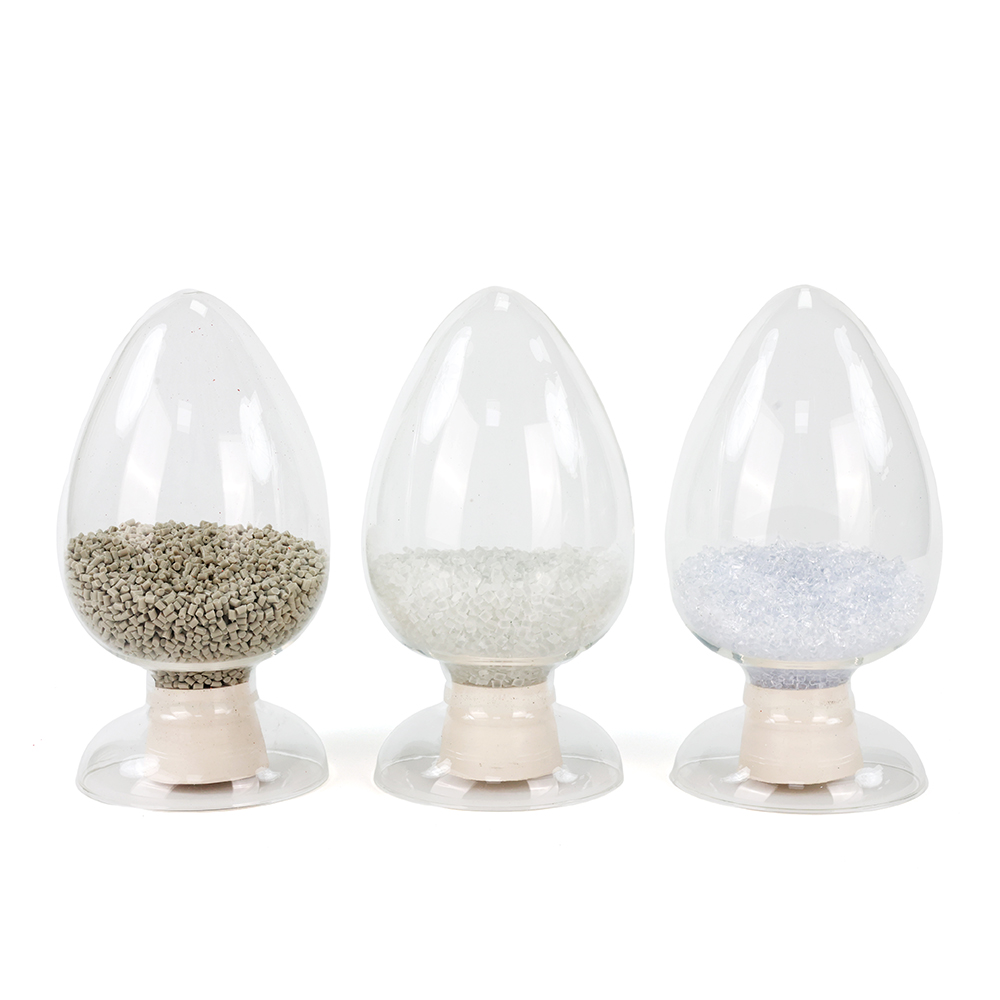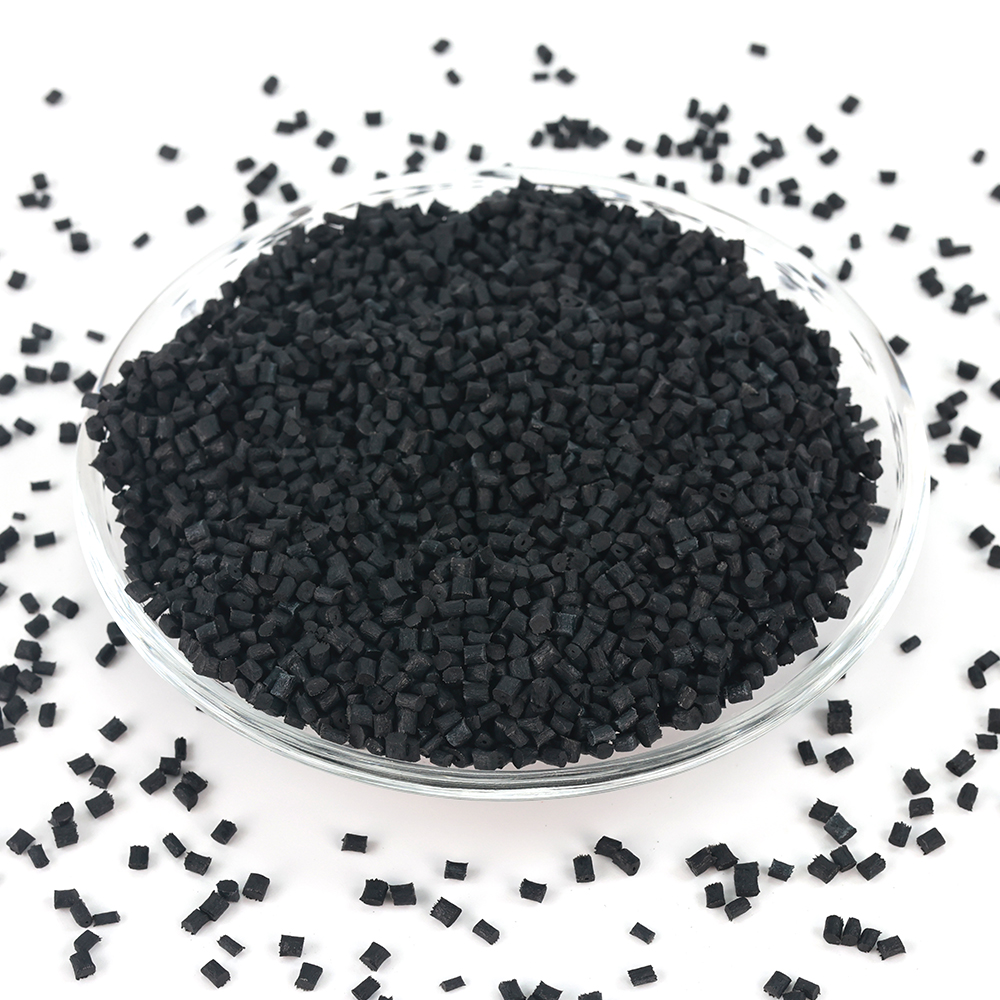
PA66 GF30 is Nylon 66 reinforced with a nominal 30% glass fiber by weight. It is used for parts that need more stiffness and resistance to deformation under load than unfilled nylon. Choosing a usable grade also means checking moisture, temperature, fiber orientation, impact requirements and the form you intend to buy.
Nylon Plastic supports engineering plastic material supply and custom part manufacturing. This guide helps you read a PA66 GF30 datasheet, compare a proposed grade with an existing specification, and prepare either a material request or a molded-part quotation.
PA66 GF30 at a Glance
- Material designation: PA66 identifies the polymer; GF30 identifies the nominal glass-fiber loading. It does not identify one supplier’s complete formulation.
- Named datasheet example: WanHan PA66 WHG30A lists density of 1.38 g/cm³ and tensile strength of 175 MPa. These are typical values for that named grade, with conditioning not stated in the PDF.
- Buying granules: confirm the exact grade, color, quantity, selected-grade TDS and required documentation.
- Ordering parts: add the drawing, load, service environment, critical dimensions and inspection requirements.

What Does PA66 GF30 Mean on a Plastic Part?
A marking such as >PA66-GF30< describes the material family. It is not an automotive part number and does not identify the geometry, fit, supplier or approved grade. To replace a radiator connector, housing or bracket, use the equipment or vehicle reference and the component specification as well as the material marking.
For a new manufacturing project, identify whether you need an injection-molding compound, a rod or plate for CNC machining, or finished components. Data measured on machined stock shapes may differ from data measured on injection-molded test specimens. A shared PA66 GF30 label does not make these products interchangeable.
For the base polymer and wider grade choices, see our Guide des propriétés et des nuances du PA66.
PA66 GF30 Datasheet: WanHan PA66 WHG30A
The manufacturer document below is identified as PA66 WHG30A and is published in WanHan’s PA66 GF30 download collection. WanHan is the manufacturer of this named grade. Nylon Plastic handles material selection, supply inquiries and the related manufacturing review.
The table transcribes the one-page TDS. Its values describe this product; they are not universal PA66 GF30 specifications or guaranteed limits for a finished component.
| Propriété | Valeur | Unité | Method in TDS |
|---|---|---|---|
| Résistance à la traction | 175 | MPa | ISO 527-2 |
| Tensile strain at break | 9 | % | ISO 527-2 |
| Résistance à la flexion | 255 | MPa | ISO 527-2* |
| Module de flexion | 7,000 | MPa | ISO 178 |
| Notched impact, labeled “Izod” | 18 | kJ/m² | ISO 179* |
| Deflection temperature under load | 220 | °C | ISO 75-2/B |
| “Melting index” | 20 | g/10 min | ISO 1183* |
| Densité | 1.38 | g/cm³ | ISO 1183 |
| Retrait de moulage | 0.5 | % | ISO 2577 |
| Inflammabilité | Not specified | — | UL 94; result shown as “-” |
Before approval: the PDF does not state specimen conditioning, shrinkage direction or a processing window. The starred rows contain method-label inconsistencies: ISO 527-2 is a tensile method, ISO 179 is Charpy rather than Izod, and ISO 1183 is a density method. Request clarification from the manufacturer for those rows; they are reproduced here without silently changing the document. HDT is not a continuous-use temperature or a melting point.
Download WanHan PA66 WHG30A TDS (PDF)
For a quotation, the grade in the offer and the grade in the TDS must match. A heat-stabilized, impact-modified, colored or flame-retardant formulation may need a different datasheet and approval record. Other available documents can be reviewed through the WanHan manufacturer download library.
Which PA66 GF30 Properties Matter for Your Part?
| Exigence | Data to compare | Part-level check |
|---|---|---|
| A stiff bracket or housing | Modulus, strength and creep data at the service temperature | Deflection under sustained load, especially across weld lines |
| A tight fit or dimensional interface | Conditioned properties and shrinkage in both flow directions | Critical dimensions after conditioning and temperature cycling |
| Exposition à la chaleur | HDT method and load, heat-aging data and any required long-term rating | The actual load, exposure time and allowable deformation |
| Impact or vibration | Impact method, notch, specimen condition and test temperature | The assembly and stress concentration in the finished part |
| Electrical or flame requirements | Required electrical data, UL 94 thickness and applicable grade documentation | The exact grade, color, wall thickness and end-use requirement |
Glass fibers can improve stiffness and creep resistance while introducing direction-dependent behavior. Nylon still absorbs moisture. Do not compare a dry test value from one grade with a conditioned value from another, or assume that a higher glass percentage will solve every dimensional or impact problem.
Sliding contact also needs attention. Glass fibers can abrade a mating surface, so a wear application may require a different nylon formulation or a different material. Specify the counterface, speed, lubrication and load before selecting a grade solely from tensile strength.
PA66 GF30 vs PA6 GF30: How to Compare Grades
PA66 GF30 is often considered for heat-loaded structural parts; PA6 GF30 remains an important option for engineering components. The resin family is a starting point. A fair purchase decision compares named grades at the same test conditions rather than assigning a universal winner.
- Heat and load: compare HDT at the same load, then request data relevant to long-term service. A short test does not establish component life.
- Moisture and dimensions: compare conditioned dimensions and properties for the intended humidity or fluid exposure.
- Molded performance: check flow, weld lines, shrinkage, warpage and surface requirements in the production geometry.
- Commercial scope: compare the exact formulation, documents, quantity and delivered quotation.
Notre PA6 GF30 datasheet guide provides the separate PA6 WHG30A document. Its values must not be relabeled as PA66 data. For lower reinforcement, review the PA66 GF20 product route; for the material covered here, use the Page produit PA66 GF30.

Where Is PA66 GF30 Used?
Representative applications include automotive housings and brackets, electrical housings and supports, industrial equipment components, and rigid power-tool or appliance structures. These examples indicate selection tasks; they do not establish approval for every grade or assembly.
For automotive or industrial components, share the temperature cycle, load, vibration and fluids. For electrical components, add the required flame rating, wall thickness and electrical tests. For appearance parts, state the texture, color reference and visible surfaces so stiffness is assessed alongside finish.
PA66 GF30 Injection Molding: What to Confirm
Use the selected compound supplier’s instructions for drying, acceptable pellet moisture, melt and mold temperatures, and residence time. The WanHan one-page PDF above does not provide these settings, so it cannot establish a WHG30A molding recipe.
- Confirm the material at the machine: exact grade, lot, color and drying record.
- Review the mold: gate location, weld-line position, flow orientation, venting, draft and ejection.
- Check wear: glass-filled compounds require attention to the screw, barrel, gate and other wear surfaces.
- Approve representative samples: check dimensions, appearance and function at the specified conditioning state before production release.
For context, BASF’s Ultramid A3WG6 TDS separates dry and conditioned data and includes processing recommendations for that specific BASF grade. Those settings are not WHG30A instructions.
Standard, Modified or Flame-Retardant PA66 GF30?
Start with the application. Review heat stabilization for sustained heat exposure, impact modification for impact-critical parts, and color or outdoor requirements where relevant. A flame-retardant requirement must be matched to a separate grade with the required test result and documentation; GF30 alone does not mean V-0.
If replacing an incumbent material, send its full grade name and current TDS along with the acceptance requirements. The review should identify differences, missing data and the sample tests needed before approving a substitute. Matching one tensile number is not an equivalence assessment.
Questions fréquemment posées
Is PA66 GF30 a finished part or a raw material?
The designation can appear on a molding compound, stock shape or finished part. Specify the form you need. For a component replacement, provide the component reference or drawing as well as the material marking.
What is the density of PA66 GF30?
The WanHan PA66 WHG30A TDS lists 1.38 g/cm³ under ISO 1183. That value belongs to the named grade. Use the selected supplier’s current document for another formulation or stock shape.
Is PA66 GF30 waterproof or dimensionally unaffected by humidity?
No. Glass reinforcement does not remove the moisture response of the nylon matrix. Check conditioned dimensions and relevant properties for the intended service environment.
Does PA66 GF30 automatically meet UL 94 V-0?
No. The WHG30A PDF does not report a flammability result. Specify the required rating and thickness, then review the matching flame-retardant grade and documentation.
What should I send for a PA66 GF30 material or part quote?
For material, send the incumbent grade or application, performance requirements, color, documents, order quantity and destination. For molded parts, add CAD or a drawing, critical dimensions, sample and production quantities, and inspection requirements.
Related Material and Manufacturing Guides
- Granulés de nylon modifiés et composés de PA
- Long versus short glass-fiber nylon
- Selecting glass-fiber-reinforced nylon
- Carbon-fiber-reinforced nylon
Data source: WanHan PA66 WHG30A manufacturer TDS. Public third-party datasheets are comparison references for their named products, not specifications for Nylon Plastic’s quoted supply. Content updated October 5, 2026.
Request a PA66 GF30 Datasheet or Grade Review
Tell us what the material must do. We can help identify the PA66 GF30 grade and documentation that should be reviewed before purchase or part approval.
Material Selection or Supply
Share the application, operating temperature, sustained load, moisture or chemical exposure, color, and required documents. An exact drawing is not required for an initial grade review.
Molded PA66 GF30 Parts
Add the drawing or CAD file, critical dimensions, quantity, and destination so the manufacturing scope can be reviewed separately.
Already have a drawing? Use the form below for a manufacturing quotation. For a material-only request, use the TDS / grade review option above.