PET-GF vs PA6-GF is a comparison between easier dimensional control and a tougher nylon-based engineering route. Buyers usually reach this choice when a standard filament is no longer stiff enough and the part needs a reinforced material for fixtures, housings or structural prototype work.
For tougher service conditions, use the Tableau de compatibilité chimique du nylon et nylon moisture absorption guide alongside this comparison.
Both materials can improve rigidity, but they do not behave the same in moisture control, toughness, long-term fit and print workflow. The correct choice depends on how the part will actually be used after it leaves the printer.
En bref
| Selection Point | PET-GF | PA6-GF | Remarque à l'attention de l'acheteur |
|---|---|---|---|
| Stabilité dimensionnelle | Usually easier | More humidity sensitive | PET-GF often behaves more predictably after printing |
| Résistance | Modéré | Usually stronger for engineering abuse | PA6-GF is often chosen for harder-use parts |
| Contrôle de l'humidité | Lower risk | Higher risk | PA6-GF still needs strong drying discipline |
| Rigidité | Haut | Haut | Both can serve rigid fixture and bracket roles |
| Le plus adapté | Stable reinforced prototypes | Tougher reinforced engineering parts | Choose by service behavior, not filler percentage alone |
When PET-GF Is the Better Fit
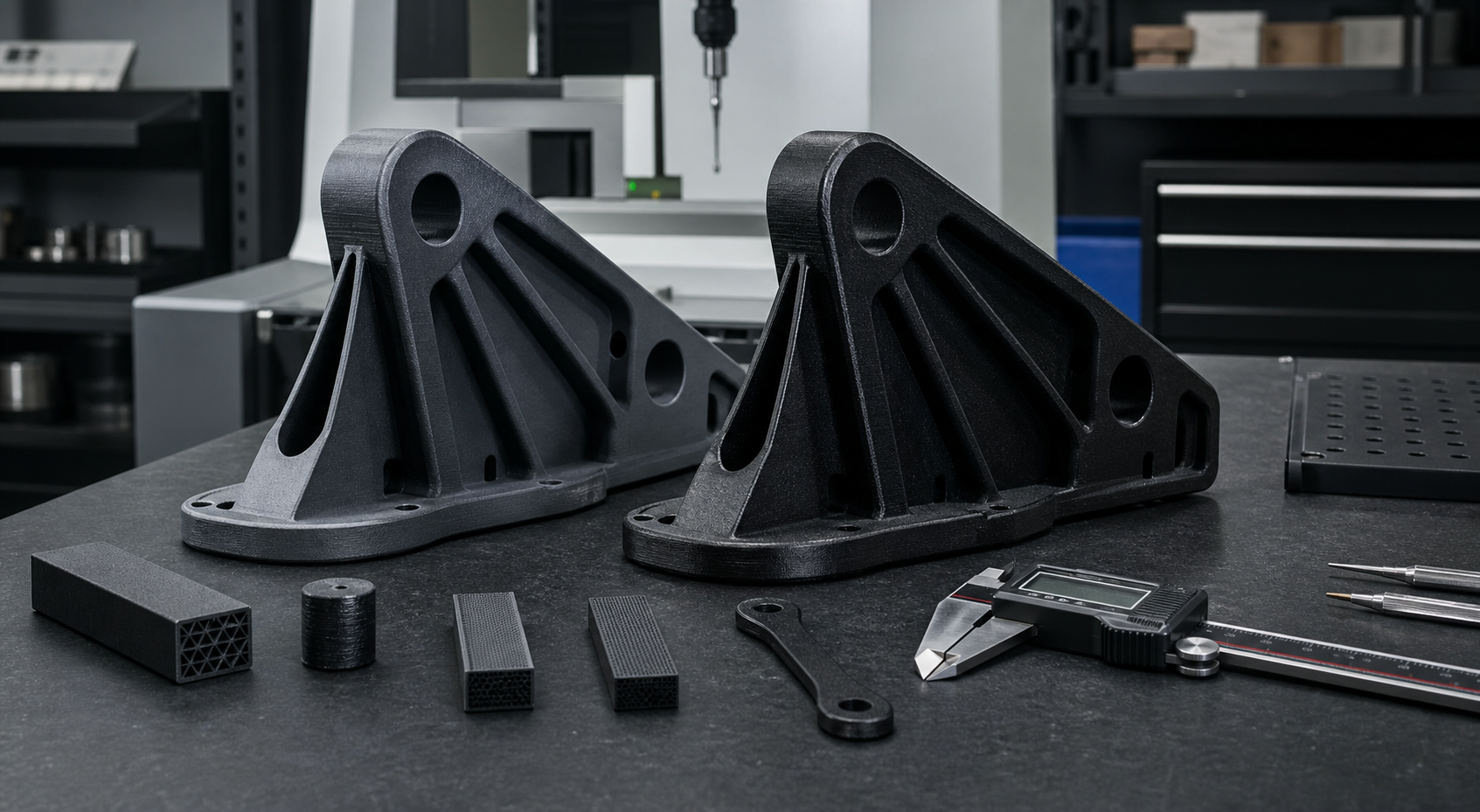
PET-GF is often selected for reinforced prototypes, covers, supports and tooling aids where stiffness matters but humidity-driven variation must stay manageable. It can be attractive when the team wants a reinforced material without taking on the full moisture-management burden of nylon.
When PA6-GF Is the Better Fit
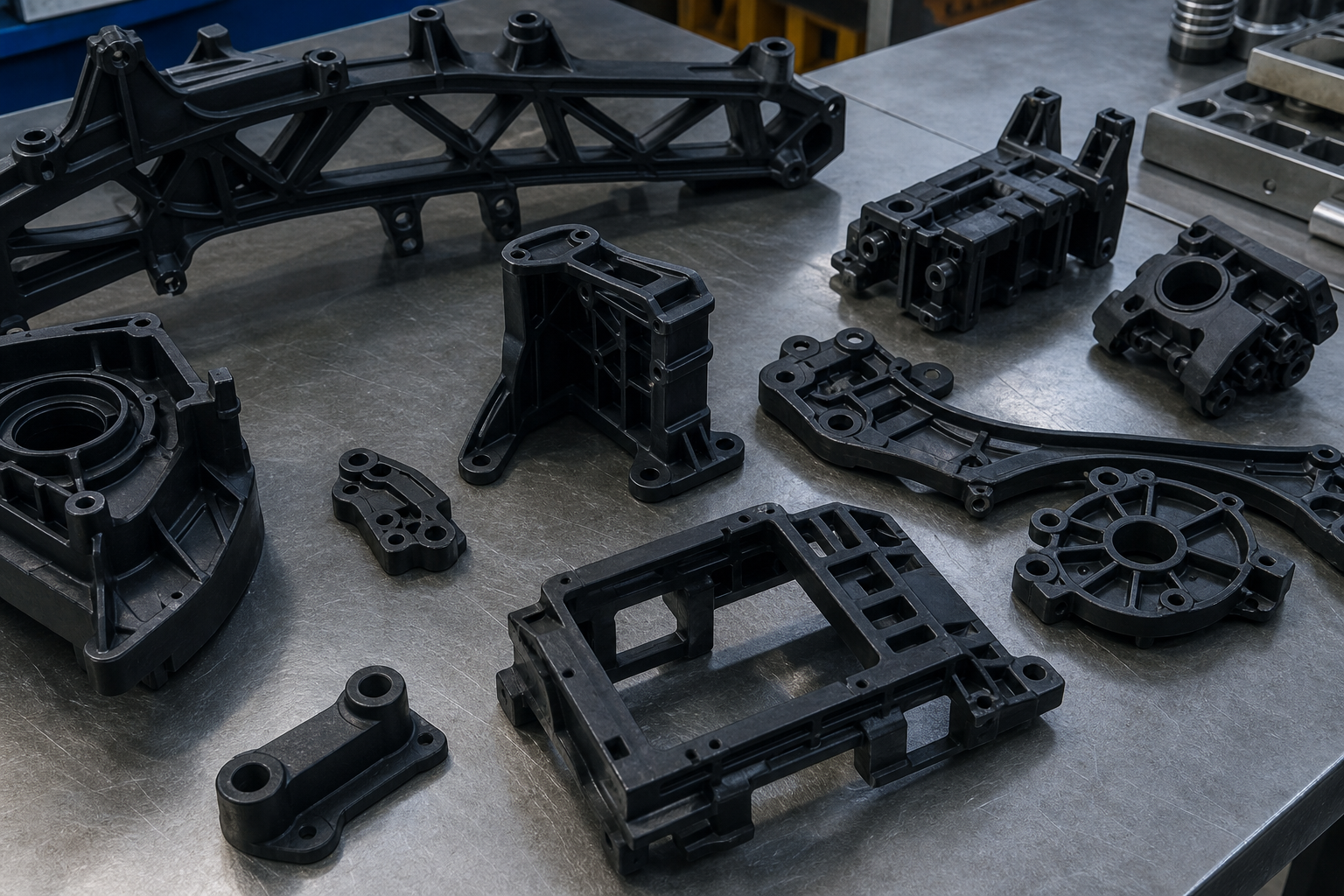
- The part sees more demanding mechanical use: PA6-GF is often the more credible engineering route.
- The final production material is reinforced nylon: PA6-GF can better represent the downstream part direction.
- Wear and load matter more than print convenience: nylon reinforcement often performs better in harder use.
- The team can manage drying and storage correctly: process discipline is critical.
Common PET-GF vs PA6-GF Risks
| Risque | Pourquoi cela se produit-il ? | Solution pratique |
|---|---|---|
| Using PET-GF for a part that really needs tougher nylon behavior | Selection driven by print ease rather than use condition | Match the reinforced filament to the expected service load |
| Using PA6-GF without moisture control | Reinforced nylon is still moisture sensitive | Lock drying, storage and print timing rules early |
| Over-trusting stiffness numbers | Failure mode is often impact or fit drift, not only bending | Review assembly and environment with stiffness together |
| Assuming all glass-filled grades behave the same | Base polymer still changes the result | Compare the polymer family before comparing filler only |
PET-GF vs PA6-GF for Supplier Decisions
PET-GF is often better when the project needs a reinforced prototype with lower process risk. PA6-GF is better when the application needs a stronger nylon-based engineering proxy or a tougher reinforced part behavior.
Pourquoi choisir le plastique nylon ?
Nylon Plastic helps teams compare reinforced filaments against the expected production material path so the prototype material does not mislead the sourcing or engineering decision.
Lire la suite
- Guide sur le nylon renforcé de fibre de verre
- Guide des matériaux PA12 GF30
- Services d'impression 3D en plastique
- PA66 GF15, GF30 et GF60
- Absorption de l'humidité par le nylon
Questions fréquemment posées
Le PET-GF est-il plus facile à mettre en œuvre que le PA6-GF ?
En général, oui. Le PET-GF présente souvent moins de risques d'impression liés à l'humidité que le PA6-GF.
Le PA6-GF est-il plus résistant que le PET-GF ?
Le PA6-GF constitue souvent le meilleur choix technique lorsque la pièce doit présenter des propriétés fonctionnelles similaires à celles du nylon, mais avec une résistance accrue, dans des conditions d'utilisation plus exigeantes.
Quelle est la meilleure option pour des prototypes à stabilité dimensionnelle ?
Le PET-GF constitue souvent le choix le plus sûr lorsque la stabilité dimensionnelle et une moindre sensibilité au processus sont primordiales.
Dans quels cas dois-je utiliser le PA6-GF ?
Utilisez le PA6-GF lorsque la pièce nécessite les propriétés d'un nylon renforcé mieux adaptées aux contraintes techniques, à l'usure ou à un futur procédé de fabrication à base de nylon.
What should I send for a reinforced material review?
Send the part geometry, service load, environment and whether the prototype is intended to predict a future reinforced production material.
Send the part and use case if you want help comparing PET-GF and PA6-GF before sampling.