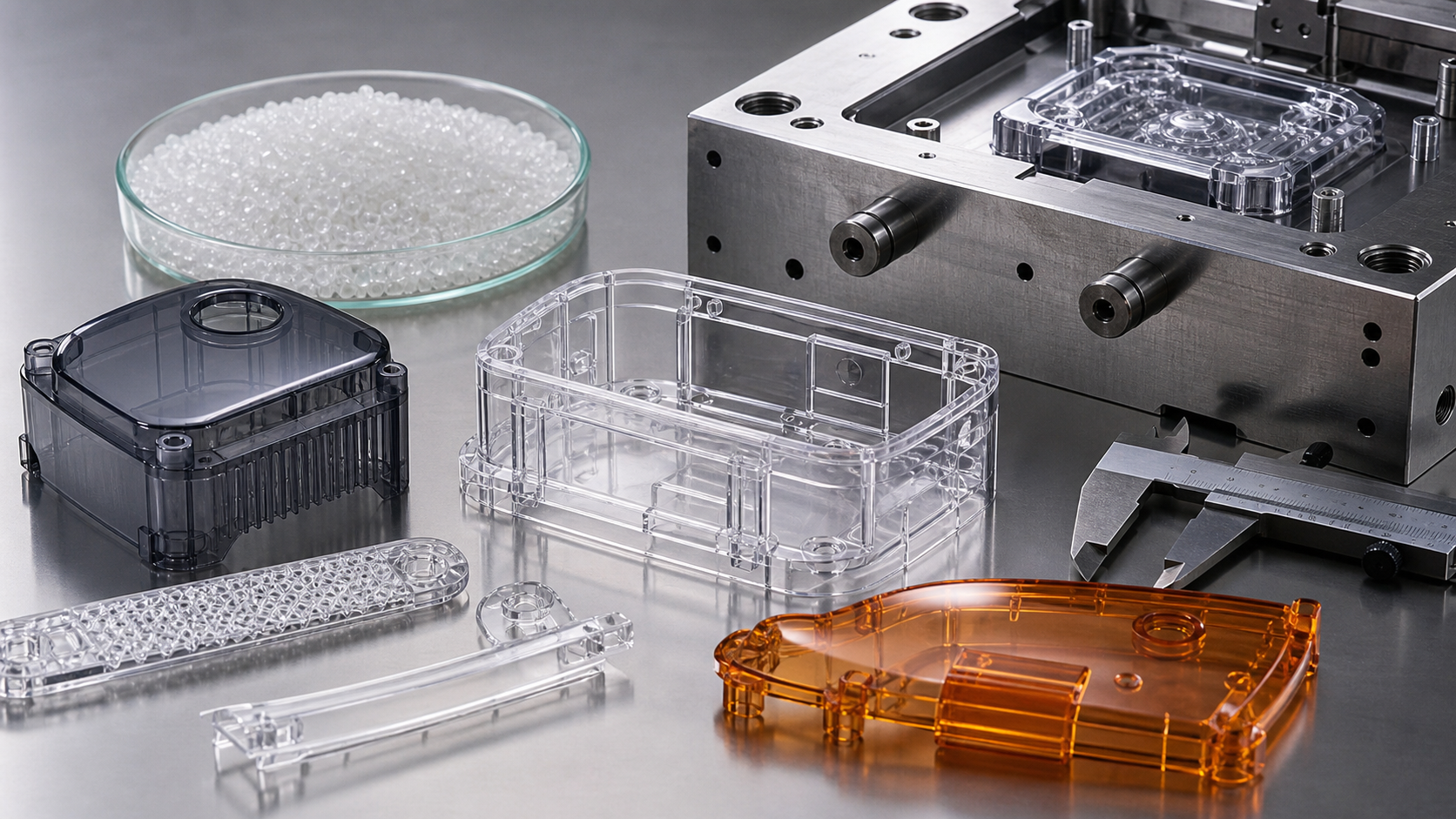
Le moulage par injection de polycarbonate est utilisé lorsqu'une pièce en plastique sur mesure doit présenter une résistance élevée aux chocs, une bonne résistance à la chaleur ou une grande transparence ; toutefois, le PC nécessite un séchage adéquat, un contrôle de la température du moule et une conception tenant compte des contraintes.
Le PC est plus résistant et supporte mieux la chaleur que de nombreux plastiques courants, mais il est également plus sensible à l'humidité, aux contraintes résiduelles et aux conditions de transformation. Une analyse DFM (conception pour la fabrication) rigoureuse permet d'éviter l'écartement, la fragilité, les défauts optiques et la fissuration au niveau des angles vifs.
Considérations relatives au procédé de moulage par injection du PC
Le moulage du PC doit être planifié en tenant compte du séchage, de la température de fusion, de la température du moule, de la ventilation, de la compression et du refroidissement contrôlé.
| Itinéraire | Utilisation optimale | Remarque à l'attention de l'acheteur |
|---|---|---|
| Moulage de PC transparent | Couvercles, lentilles et guides de lumière | Exigences d'ordre optique et esthétique |
| Pièce moulée en PC résistante aux chocs | Boîtiers et protections de sécurité | Vérifier le rayon d'angle et la concentration de contraintes |
| Moulage du PC-ABS | Boîtiers résistants offrant une meilleure aptitude à la mise en œuvre | Réfléchissez aux cas où un PC complet n'est pas nécessaire |
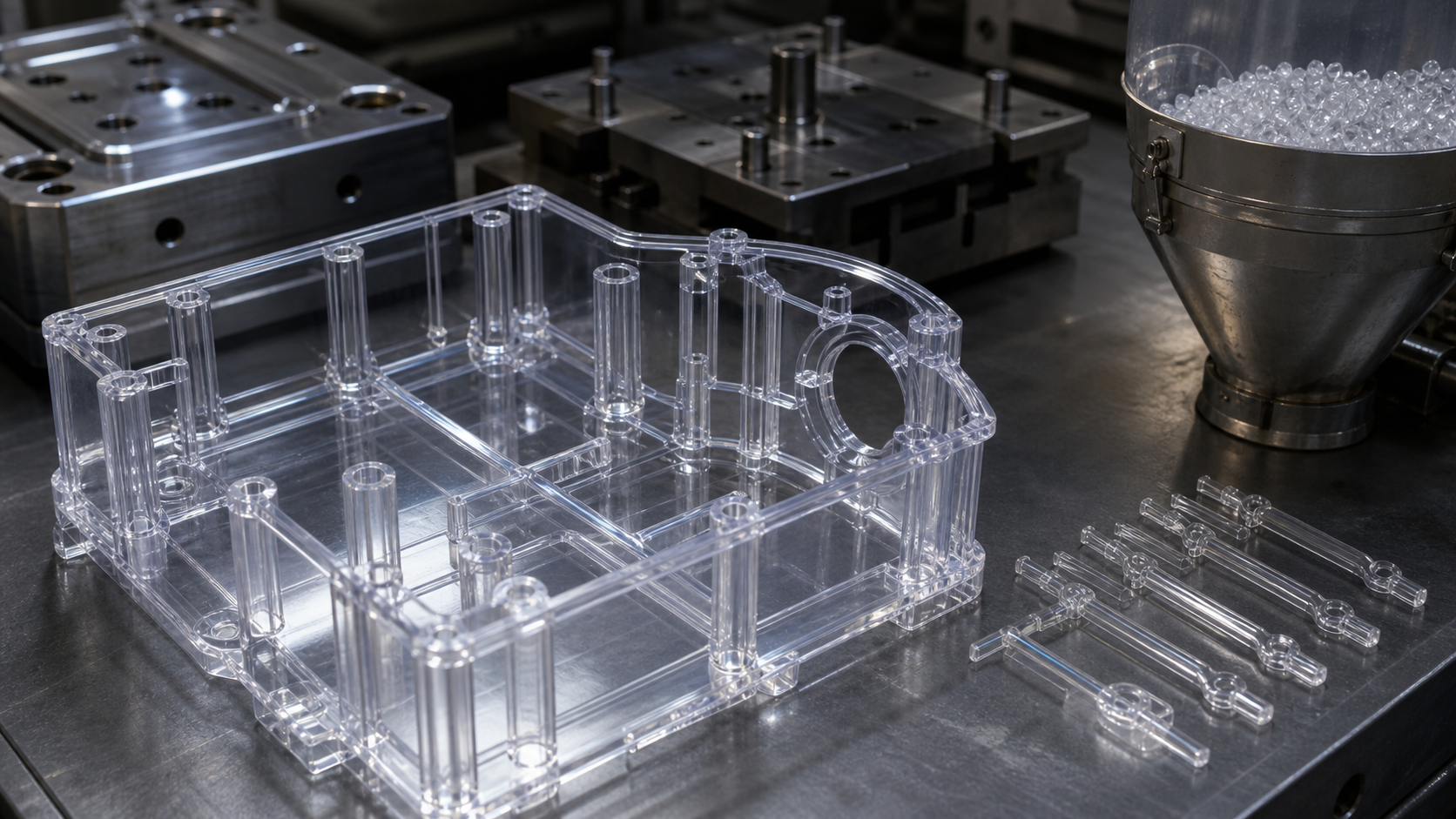
Notes en informatique et ressources associées
Le choix du meilleur type de PC dépend de critères tels que la transparence, la résistance aux chocs, à la chaleur et aux flammes, l'exposition aux UV, ainsi que les exigences esthétiques.
| Matériau | Idéal pour | Note relative à la sélection |
|---|---|---|
| PC transparent | Couvercles et lentilles transparents | Lutter contre le dessèchement, le stress et les rayures |
| PC stabilisé aux UV | Pièces transparentes pour l'extérieur | Vérifier le jaunissement et la durée d'exposition |
| FR PC | Composants électriques et de sécurité | Vérifier la classe de résistance au feu et l'épaisseur de la paroi |
| PC-ABS | Boîtiers robustes | Souvent plus facile à mouler que le PC pur |
Contrôles DFM pour les pièces en polycarbonate
La conception des pièces en plastique doit permettre de réduire la concentration des contraintes et d'éviter les éléments susceptibles de retenir les traces d'écoulement ou de créer un risque de fissuration.
- Faites sécher la résine PC avant le moulage afin de réduire l'écartement et la fragilité.
- Prévoyez des rayons généreux autour des éléments soumis à des charges.
- Évitez les encoches prononcées à proximité des bossages de vis et des assemblages par encliquetage.
- Défini les surfaces optiques indépendamment des surfaces structurelles.
- Vérifiez si un recuit ou un traitement ultérieur est nécessaire.
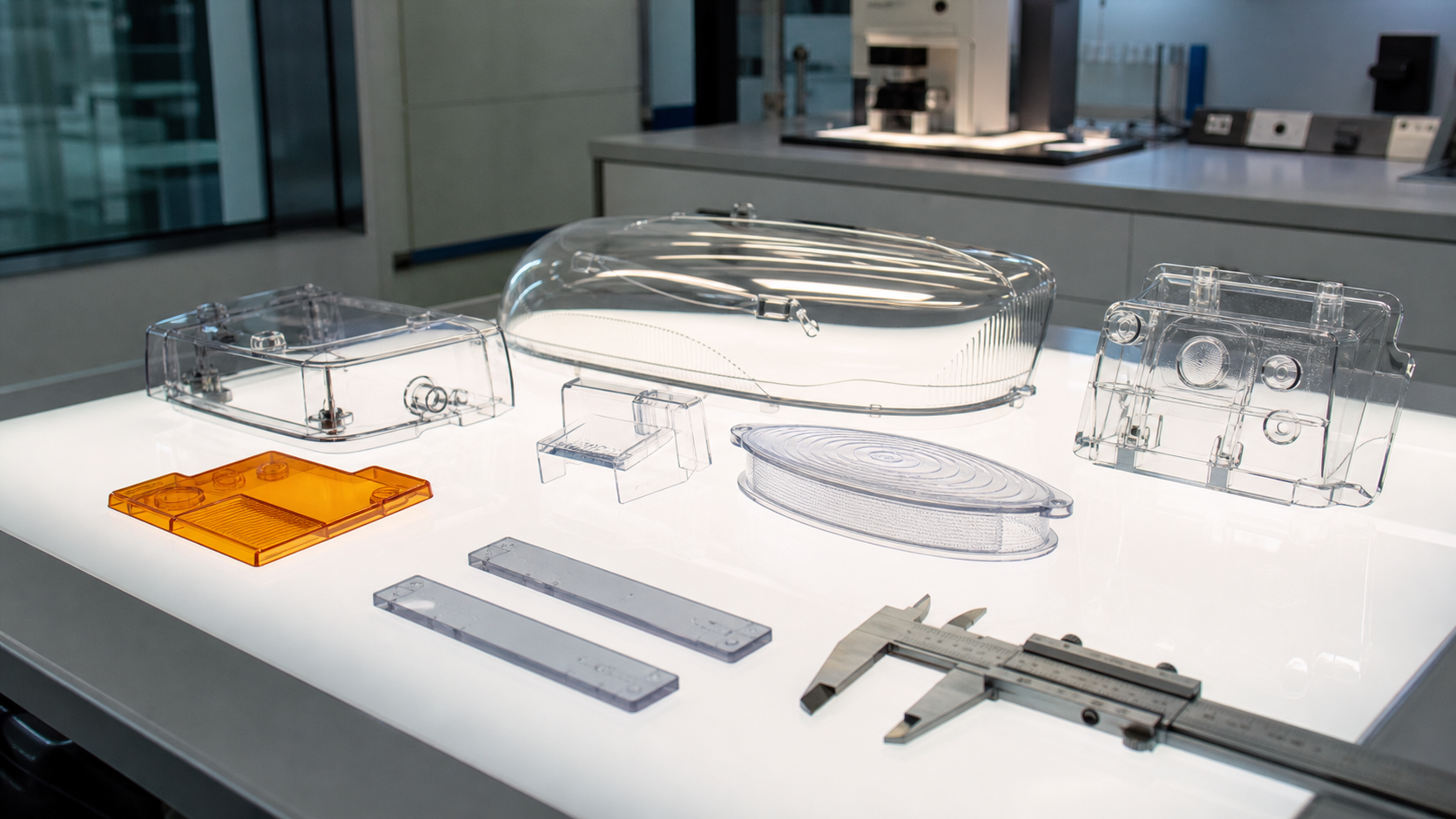
For a polycarbonate molding project, confirm resin drying, melt temperature, mold temperature, gate design, venting and residual stress controls before tooling release. For broader process planning, review our services de moulage par injection de plastique capabilities and include the application environment, annual volume and critical dimensions in the RFQ.
Contrôles du processus de moulage par injection de PC
| Facteur | Pourquoi est-ce important ? | Remarque à l'attention de l'acheteur / DFM |
|---|---|---|
| Séchage | Le PC est sensible à l'humidité et peut présenter des bulles, un écartement ou une résistance réduite s'il n'est pas séché. | Vérifiez les conditions de séchage de la résine avant de procéder au prélèvement. |
| Température du moule | Une température plus élevée du moule améliore la qualité de surface, l'écoulement et le contrôle des contraintes. | Indispensable pour les pièces devant présenter une finition nette, brillante ou des tolérances serrées. |
| Conception de portails | Un cisaillement élevé peut entraîner l'apparition de traces de rougeur, de marques de contrainte ou de défauts d'écoulement visibles. | Vérifier les dimensions de la porte, son emplacement et la position de la ligne de soudure. |
| Contrainte résiduelle | Le stress peut provoquer des fissures lors du montage, de l'application d'un revêtement ou d'une exposition à des produits chimiques. | Évitez les angles vifs, les montages forcés et les produits nettoyants agressifs. |
Défauts courants de moulage du PC et solutions
| Défaut | Cause probable | Parcours de correction |
|---|---|---|
| Écartement ou bulles | Humidité, surchauffe ou présence de gaz emprisonné. | Améliorez le séchage, réduisez le temps de séjour et vérifiez la ventilation. |
| Blush Gate | Cisaillement élevé au niveau d'une entrée étroite ou en pente raide. | Augmentez la surface de la grille, affinez la transition et ajustez la vitesse de remplissage. |
| Creux ou vides | Parois épaisses, protubérances ou givrage précoce de la porte. | Évider les zones épaisses et vérifier le tracé de remplissage. |
| Fissuration | Contraintes résiduelles, angles vifs ou contact avec des produits chimiques. | Optimiser les rayons, réduire les contraintes et vérifier l'exposition aux produits chimiques. |
Liste de contrôle DFM pour les pièces en polycarbonate
- Utilisez une épaisseur de paroi uniforme afin de réduire l'affaissement et les contraintes résiduelles.
- Dans la mesure du possible, installez les vannes à l'écart des surfaces optiques ou à forte valeur esthétique.
- Prévoyez des rayons généreux autour des assemblages par encliquetage, des bossages de vis et des angles soumis à des contraintes.
- Vérifier les spécifications relatives à l'ébauche, au polissage et à la texture avant la découpe du moule.
- Passez en revue les expositions aux produits chimiques, en particulier aux produits d'entretien, aux huiles, aux solvants et aux revêtements.
- Comparez le PC, le PC/ABS et le PMMA si la pièce est transparente ou destinée à un usage esthétique.
Questions fréquemment posées
À quoi sert le moulage par injection de polycarbonate ?
Le moulage par injection de polycarbonate est utilisé pour la fabrication de capots transparents, de boîtiers résistants aux chocs, de protections, de lentilles et de pièces nécessitant une bonne ténacité ou une bonne résistance à la chaleur.
Pourquoi la résine PC doit-elle être séchée avant le moulage ?
Le PC est sensible à l'humidité. Un séchage insuffisant peut entraîner un écartement des bords, la formation de bulles, une fragilité accrue, des défauts optiques et une baisse des performances de la pièce.
Quels sont les aspects de conception importants pour les pièces moulées destinées aux PC ?
La conception des pièces moulées par injection doit éviter les entailles marquées, les concentrations de contraintes, les bossages mal conçus et les surfaces esthétiques non protégées contre les marques d'écoulement ou les rayures.
Dans quels cas faut-il privilégier le PC-ABS plutôt que le PC ?
Le PC-ABS peut être envisagé lorsque la pièce doit présenter une bonne ténacité et une bonne usinabilité, mais ne nécessite pas la transparence totale ni les performances du polycarbonate pur.
Lire la suite
Request a PC Molded-Part Review
For transparent covers, housings, guards or lighting components, send the controlled drawing, exact PC grade or permitted alternative, and quantity by phase. Nylon Plastic can review material selection, tooling, drying, sampling and inspection before quotation.
What information helps quote clear polycarbonate injection molding parts?
Mark optical areas, permitted gate marks, polish or texture, viewing direction, assembly loads and cleaning chemicals on the drawing. Include the exact PC grade or the required transparency and performance. Ask the quote to distinguish molding from polishing, coating, assembly and cosmetic inspection, and agree an appearance reference before releasing the tool.
- Include CAD, revision, critical fits, color, initial and annual quantity, destination and target timing.
- State required optical tests and viewing conditions, permitted scratches or gate marks, assembly loads, cleaners and coatings.
- Match flame, UV or regulatory requirements to the exact grade and relevant part thickness; specify the documents and sample records needed.
Agree whether the quote includes mold polish, part finishing, coatings, assembly and optical or cosmetic testing. A general transparent-PC datasheet does not establish a finished lens or assembly acceptance limit.