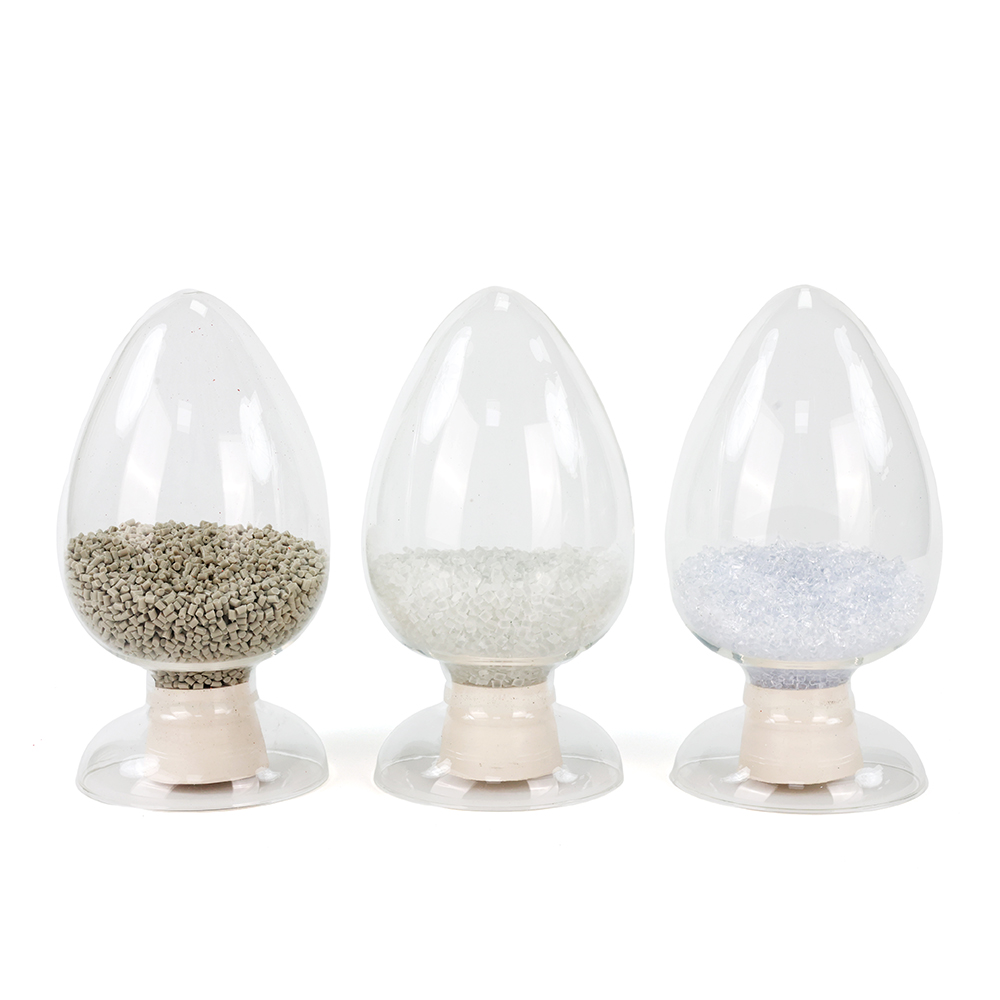
PTFE Il s'agit d'un sujet d'ingénierie concret qui intervient lorsque l'on doit comparer différentes options, vérifier les limites et choisir un procédé présentant moins de risques.
When printing with standard filaments like PLA or PETG, a brass nozzle performs well. However, abrasive filaments containing carbon fiber, glass fiber, or metal particles will rapidly wear through brass, causing dimensional inaccuracies and eventual print failure.
What Makes Filaments Abrasive
Carbon fiber reinforced filaments are highly abrasive with fiber hardness around 200 HB. Glass fiber is even harder at 500 HB. Metal-filled and glow-in-the-dark filaments also cause rapid wear. Our Filament PA6-CF is optimized for reliable printing.
Nozzle Materials Compared
Brass nozzles (hardness 55-100 HB) last 10-50 hours with CF filament. Hardened steel (700-900 HB) provides 200-500 hours of use. Ruby nozzles (1500+ HB) offer unlimited wear life for production environments.
Print Settings for Hardened Nozzles
Increase temperature by 5-10°C vs brass due to lower thermal conductivity. Extrusion may need 2-5% more flow. First layer settings may require adjustment.
Source Quality Abrasive Filaments
As a specialized source manufacturer, we supply carbon fiber and glass fiber reinforced filaments with consistent diameter tolerance (±0.03mm). Contactez nous for technical support and samples.
Obtenez un devis gratuit
Remplissez le formulaire ci-dessous et nos ingénieurs vous répondront dans les 24 heures.
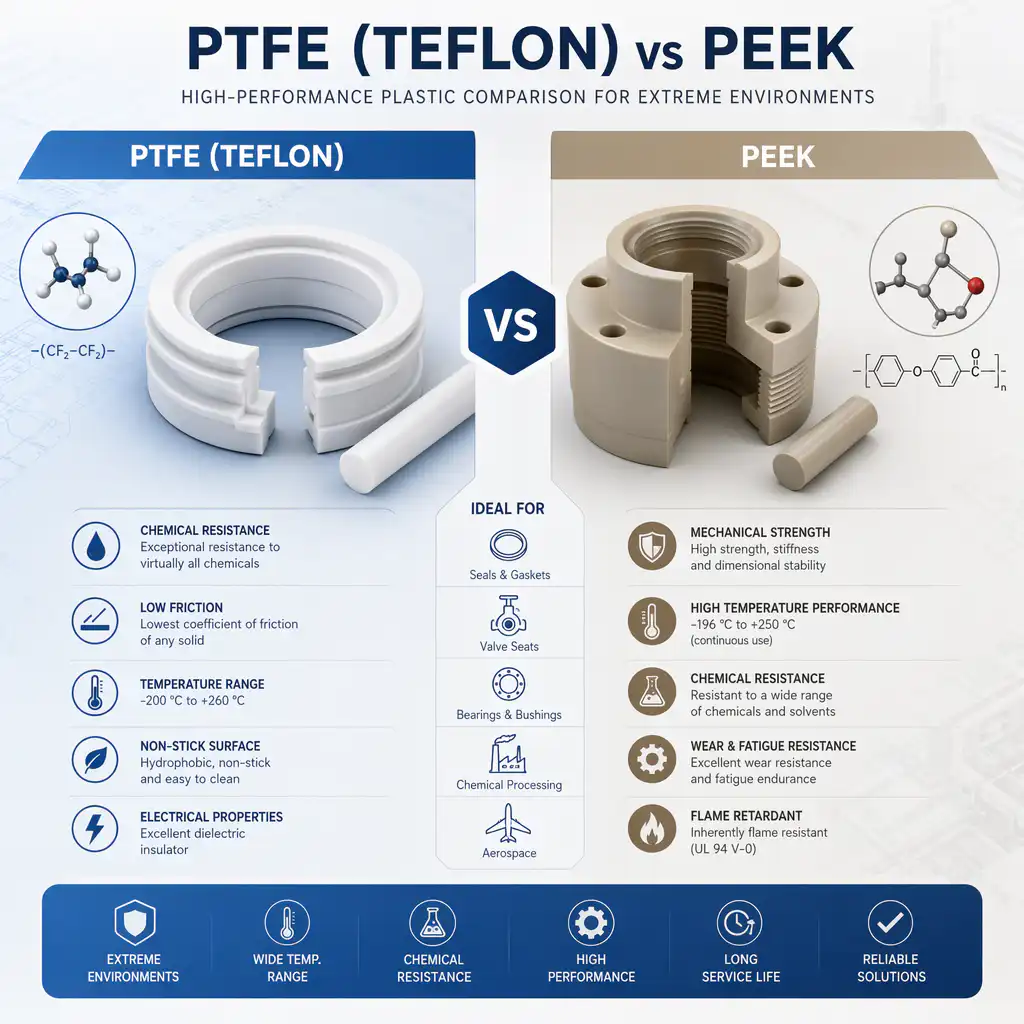
PTFE vs PEEK Material Decision Table
| Exigence | PTFE | PEEK |
|---|---|---|
| Friction and release | Very low friction and strong non-stick behavior | Low friction with much higher structural strength |
| Temperature and load | Excellent chemical and temperature resistance, but limited stiffness under load | High continuous-use capability with better stiffness, wear and creep resistance |
| Processing | Often machined or compression-processed; filled grades change behavior | Requires controlled high-temperature molding, machining or printing |
| Part selection | Seals, liners and low-friction interfaces | Loaded bushings, insulators and precision structural wear parts |
Choose from the completed load, temperature, friction and chemical envelope. Confirm grade, filler, surface finish and dimensional test method rather than relying on the base polymer name alone.
FAQ
When is PTFE (Teflon) vs Peek — High-Performance Plastic Comparison for Extreme Environments a good option?
PTFE (Teflon) vs Peek — High-Performance Plastic Comparison for Extreme Environments is a good option when fast iteration, complex geometry, low tooling cost, or low-volume production is more important than molded-part unit cost.
What should be checked before choosing PTFE (Teflon) vs Peek — High-Performance Plastic Comparison for Extreme Environments?
Vérifier la taille de la pièce, les propriétés du matériau, l'état de surface, la tolérance dimensionnelle, l'exposition à la chaleur, la direction de la charge et la nécessité d'un post-traitement.
How does PTFE (Teflon) vs Peek — High-Performance Plastic Comparison for Extreme Environments compare with CNC machining?
L'impression 3D permet de créer rapidement des formes complexes, tandis que l'usinage CNC est souvent plus performant pour les surfaces précises, les tolérances plus étroites et les matériaux de qualité.
What affects the cost of PTFE (Teflon) vs Peek — High-Performance Plastic Comparison for Extreme Environments?
Le coût dépend du matériau, du volume de construction, du temps d'impression, de la hauteur des couches, de l'enlèvement du support, de la finition, de l'inspection et du nombre de pièces dans la construction.