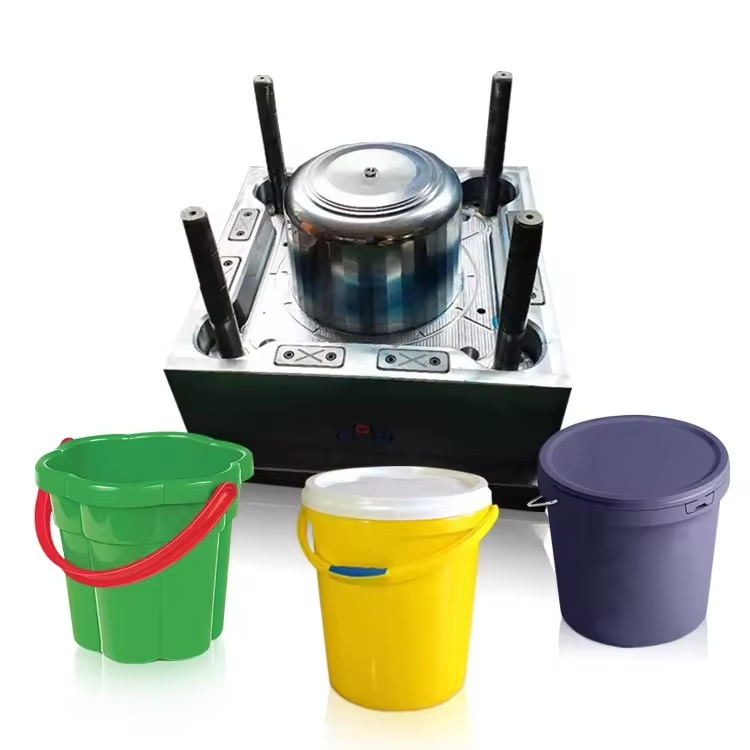
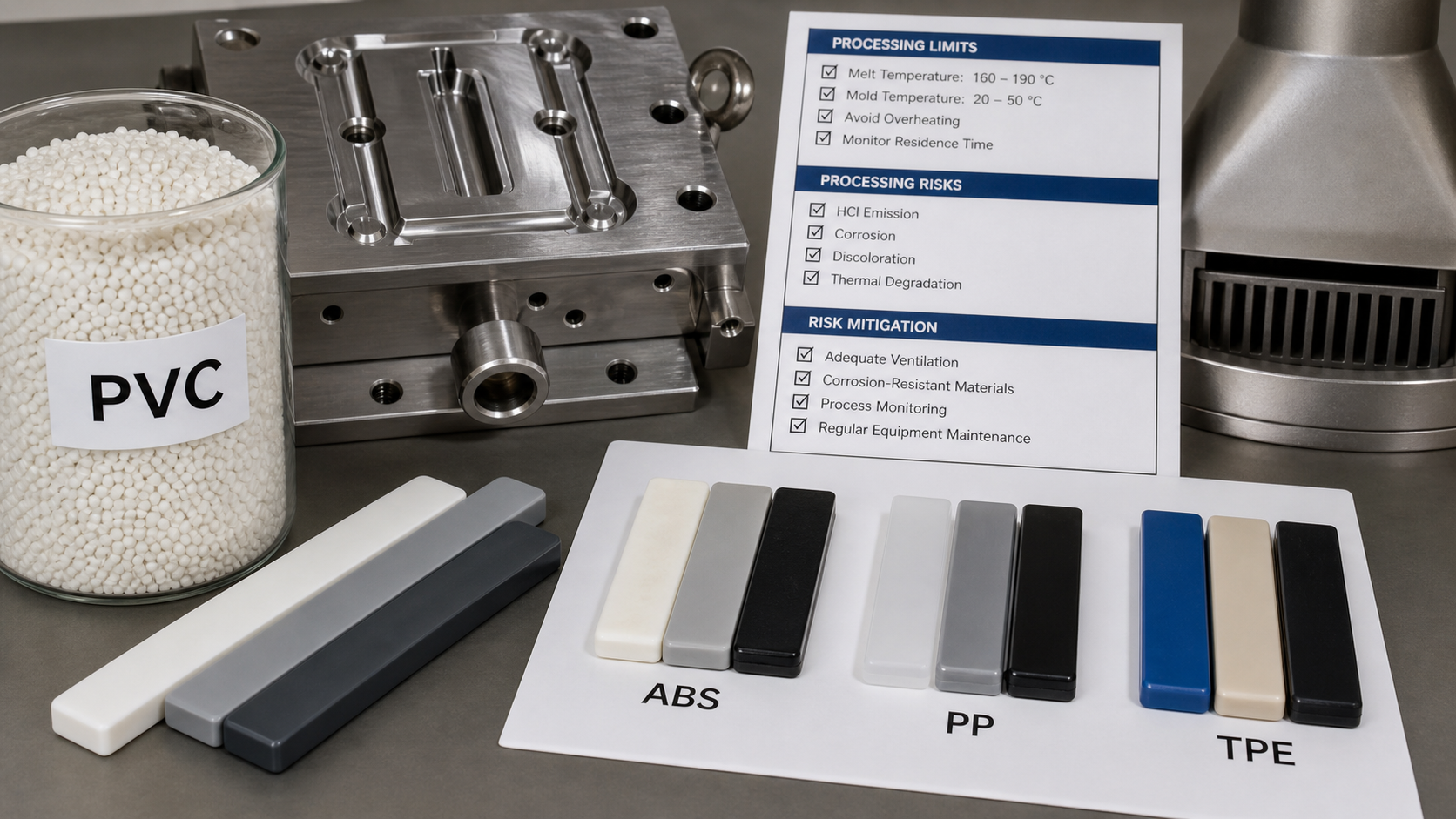
Le moulage par injection de PVC peut être utilisé pour certaines pièces en plastique rigides ou souples, mais il présente une marge de traitement étroite et peut dégager des gaz corrosifs en cas de surchauffe. Les concepteurs doivent donc examiner le contrôle de la température, le temps de séjour, le matériau du moule, la ventilation et la conformité, et déterminer si l'ABS, le PP, le TPE, le TPU ou un autre plastique constitue une alternative plus sûre.
Le PVC est utilisé dans de nombreux secteurs, mais ce n'est pas la résine la plus facile à utiliser pour un projet de moulage par injection sur mesure. Le choix doit tenir compte non seulement des performances de la pièce, mais aussi de la protection des équipements, des exigences réglementaires, de l'aspect esthétique et de la disponibilité à long terme.
Dans quels cas le moulage par injection de PVC peut-il être adapté ?
Dans certaines applications, le PVC est choisi pour sa résistance chimique, son comportement au feu, son coût ou sa souplesse. La qualité du matériau et la composition des additifs déterminent s'il peut être moulé de manière fiable.
| Cas d'utilisation | Pourquoi le PVC peut être envisagé | Vérification avant la fabrication des outils |
|---|---|---|
| Composant rigide | Résistance aux produits chimiques et rigidité | Fenêtre de traitement et fragilité. |
| Housse ou manchon souple | Disponibilité des qualités de PVC souple | Plastifiant, conformité et odeur. |
| Pièce d'origine électrique | Comportement au feu de certaines formulations | Certification et formulation exactes. |
| Pièce en contact avec les produits chimiques | Résistance à certains fluides | Température, contrainte et mélange chimique. |
| Pièce à coût maîtrisé | Économie des matériaux | Risques liés à la transformation et matériaux de substitution. |
Liste de contrôle des risques liés à la transformation du PVC
- Évitez la surchauffe et les temps de séjour prolongés.
- Utilisez des outils et des composants de machine résistants à la corrosion lorsque cela est nécessaire.
- Vérifiez que la ventilation est suffisante et assurez la surveillance du processus.
- Séparer le PVC des matériaux incompatibles lors de la purge et de la manipulation.
- Vérifiez dès le début la conformité aux directives RoHS et REACH, ainsi qu’aux exigences spécifiques à chaque application.
Alternatives au PVC à envisager
Un acheteur peut rechercher du PVC, mais la résine de production adaptée peut s'avérer être un autre thermoplastique une fois que les besoins réels ont été définis.
| Alternative | À utiliser lorsque | Compromis |
|---|---|---|
| ABS | Boîtiers rigides et pièces esthétiques | Résistance chimique inférieure à celle de certaines qualités de PVC. |
| PP | Résistance aux produits chimiques et matériaux à faible densité | Un retrait plus important et une rigidité moindre. |
| TPE / TPU | Il faut un manchon, un joint ou une gaine souple | Il convient de réexaminer l'adhérence et la déformation rémanente après compression. |
| PC-ABS | L'impact et la qualité du logement sont des facteurs importants | Coût plus élevé que celui des plastiques de base. |
| PBT | La stabilité électrique et dimensionnelle est importante | Différentes résistances et comportements à l'usinage. |
Liens internes pour un choix plus sûr des matériaux
Le choix du PVC doit être évalué en tenant compte de la conformité, de l'exposition aux produits chimiques, de la résistance au feu et de la capacité de production du fournisseur.
- Guide de conformité aux réglementations RoHS et REACH
- Guide de résistance chimique
- Guide des matériaux utilisés pour le moulage par injection de plastique
Questions fréquemment posées
Le PVC peut-il être moulé par injection ?
Oui. Le PVC peut être moulé par injection, mais cela nécessite un contrôle rigoureux de la température et du temps de séjour, une ventilation adéquate ainsi qu’une conception des équipements tenant compte des risques de corrosion.
Pourquoi le PVC est-il difficile à mouler par injection ?
Le PVC présente une plage de traitement étroite et peut se dégrader en cas de surchauffe, libérant ainsi des gaz corrosifs susceptibles d'endommager les équipements et d'altérer la qualité des pièces.
Quels plastiques peuvent remplacer le PVC ?
Selon les besoins, l'ABS, le PP, le TPE, le TPU, le PC-ABS ou le PBT peuvent remplacer le PVC pour certaines pièces moulées.
Faut-il utiliser du PVC pour toutes les pièces moulées souples ?
Non. Le TPE ou le TPU peuvent s'avérer plus adaptés pour certaines pièces souples, notamment lorsque l'odeur, la souplesse, l'adhérence ou la disponibilité à long terme sont des critères importants.